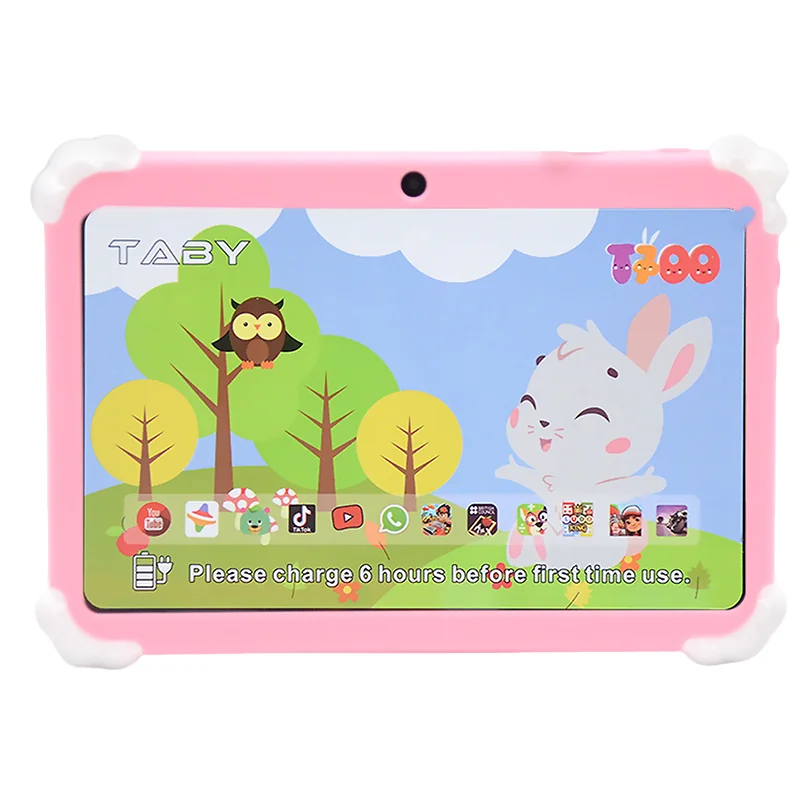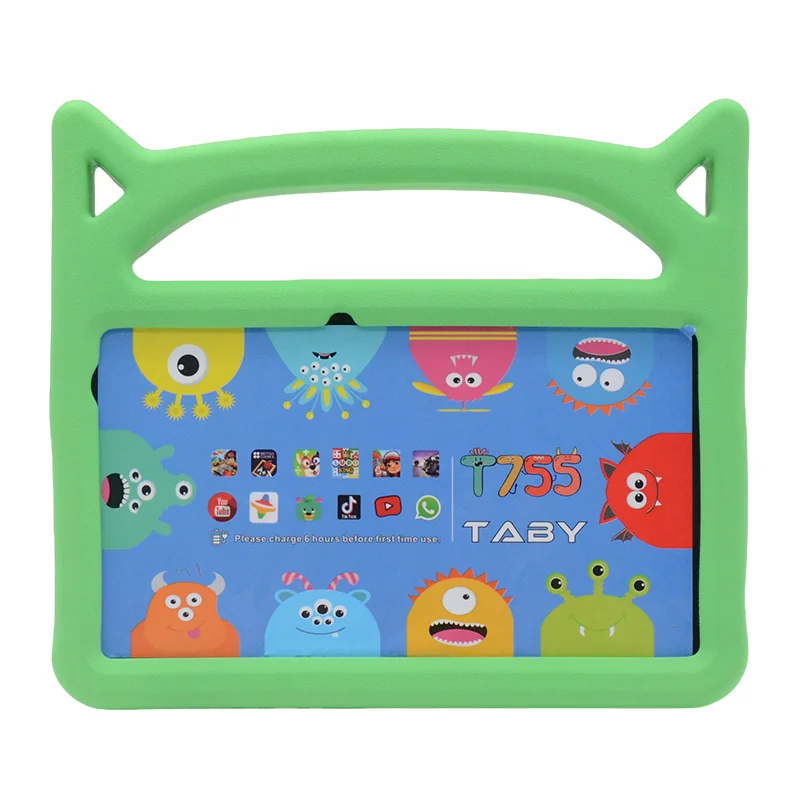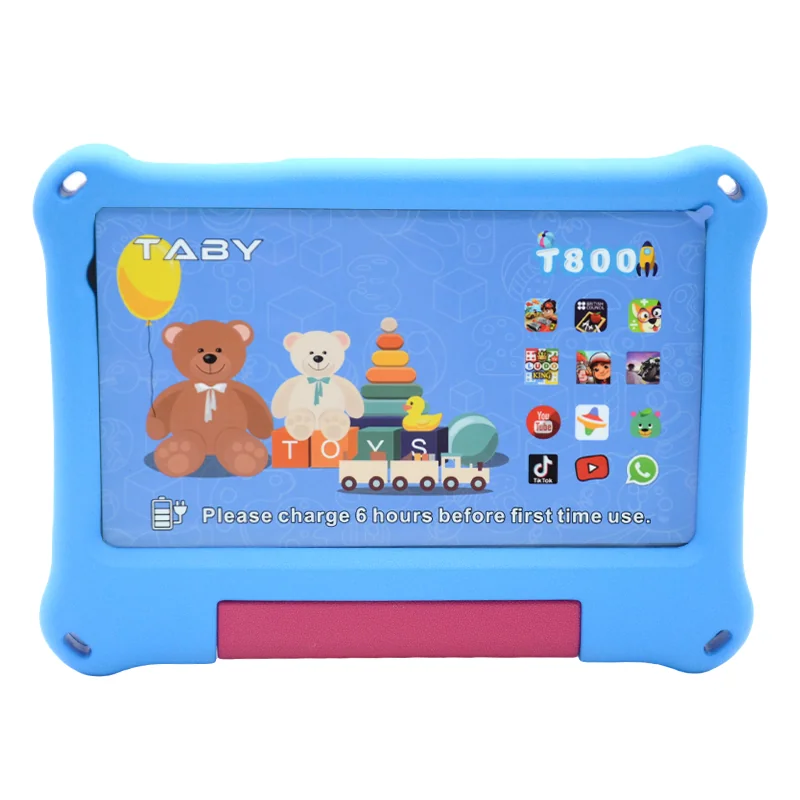
If you’re sourcing Android tablets for US K-12 classrooms, CPSIA compliance is the difference between a smooth deployment and a CPSC enforcement action that pulls devices out of classrooms. Here’s exactly what to demand from your supplier before you sign a PO. US CPSIA compliance for kids tablets requires third-party testing for lead (100 ppm substrate, 90 ppm surface coating), eight prohibited phthalates below 0.1%, ASTM F963-23 toy safety, a Children’s Product Certificate (CPC), and a permanent tracking label — all backed by a CPSC-accepted laboratory.
CPSIA for Kids Tablets: The 60-Second Compliance Checklist
Ask any supplier these four questions before discussing price:
- Third-party test report — from a CPSC-accepted lab, covering lead, phthalates, and ASTM F963-23.
- Children’s Product Certificate (CPC) — a legally binding document that certifies compliance, based on the test report.
- Tracking label — permanently affixed, identifying manufacturer, production date, and batch.
- Continuous testing — confirmation that every production batch, not just the first sample, is covered.
Procurement teams that treat compliance as a contract requirement instead of a last-minute checkbox save themselves weeks of delay. A supplier without these four items is not ready to serve US schools.
Why US K-12 Sourcing Is Now a Compliance Minefield
CPSC enforcement has stepped up across children’s electronics. Fines, import seizures, and corrective-action orders are no longer rare for kids’ devices that miss the mark on lead, phthalates, or labeling. For a school district, the operational impact is severe: devices already distributed to classrooms must be recalled and replaced, disrupting instruction and burning budget.
A common trap is assuming CE compliance covers the US market. It doesn’t. The EU uses EN71 and its own chemical restrictions, while the US enforces ASTM F963-23 plus 16 CFR 1303 and 16 CFR 1307 — and they are not interchangeable. A tablet bearing a CE mark can still be non-compliant in the US. Similarly, EU battery regulations impose separate requirements with no US counterpart — each market must be verified independently.
That’s why the compliance review belongs at the start of procurement, not at delivery. When you shortlist kids tablets for classroom use, ask for CPSIA documentation before you request pricing.
ASTM F963-23: What Exactly Must Your Kids Tablet Pass?
ASTM F963 is the mandatory US toy safety standard, and the 2023 revision (F963-23) is currently enforced by the CPSC. For a tablet, the relevant clauses cover:
- Mechanical hazards — no sharp edges, points, or small parts accessible to children.
- Flammability — casing and components must resist ignition.
- Electrical safety — battery compartments, charging circuits, and thermal behavior.
- Toxic substances — lead and other restricted heavy metals in accessible materials.
The key change in F963-23 versus F963-17 is the alignment of lithium battery requirements with recent CPSC rules and updated UL standards for accessible coin and button cells — directly relevant to tablets, which ship with rechargeable lithium batteries. Label durability requirements were also tightened: tracking and warning labels must survive normal use and cleaning.
Third-party testing happens at a CPSC-accepted laboratory — UL, Intertek, SGS, Bureau Veritas, and similar — where samples are subjected to mechanical, flammability, electrical, and chemical analysis per the standard. Ask for the actual test report with the lab’s name and report number, not a generic “complies with ASTM F963” statement.
| Requirement | ASTM F963-17 | ASTM F963-23 |
|---|---|---|
| Lithium battery safety | Referenced earlier UL battery standards | Updated to align with current CPSC battery rules and UL 4200A for accessible coin/button cells |
| Label durability | Durability test required | Tightened legibility and durability criteria |
| Mechanical hazards | Sharp edges, points, small parts | Carried forward with clarified test methods |
| Restricted substances | Lead, soluble metals per older limits | Aligned with current 16 CFR lead and phthalate rules |
Lead & Phthalate Limits: The Numbers That Can Shut Down Your Deal
The limits are not negotiable. Under 16 CFR 1303, lead in surface coatings is capped at 90 ppm, and lead in accessible substrate material at 100 ppm. Under 16 CFR 1307, eight phthalates — including DEHP, DBP, and BBP — are each restricted to 0.1% (1,000 ppm) in accessible components.
In a tablet, lead and phthalates typically hide in: solder joints on circuit boards, PVC cable insulation, plastic casing, and even screen-glass coatings. A compliant supplier designs for these limits from the start, using lead-free solder and phthalate-free plastics.
When you receive a test report, verify three things: the lab is CPSC-accepted, the test methods are current (CPSC-CH-E1001-08.3 for lead in paint, CPSC-CH-E1002-08.3 for lead in substrate), and the report date is recent enough to reflect current production. Expired or generic reports are a red flag.
Tracking Labels: The Details That Get Overlooked and Cause CPSC Issues
Under 15 U.S.C. 2063(a), every children’s product sold in the US must bear a permanent tracking label stating the manufacturer, the production location, and the date and batch or run. CPSC rules also require the label to be durable and legible through normal use.
This label is commonly missed — but its absence is treated as a defect and can trigger corrective action even when test results are clean. On a kids tablet, the label should be printed or molded into the back of the device (and repeated on the retail box), not on a loose insert that can be lost.
A compliant label looks like this: Manufacturer: Wintouch — Production date: 2025-03 — Batch: TW-2025-03-112 — Model: WT-T1000. Ask your supplier to show you the actual label on a production unit, not a mock-up.
How to De-Risk Your Kids Tablet Sourcing: Documents You Must Demand
Before issuing a PO, require this paperwork:
- Children’s Product Certificate (CPC).
- Full third-party test report from a CPSC-accepted lab.
- Tracking label attestation and a photo of the production label.
- Statement of continuous testing covering production batches.
Red flags: reports from labs not on the CPSC’s accepted-laboratory list, test dates older than the production run, or a supplier who hesitates to share the full report. At Wintouch, every kids-tablet order ships with complete CPSIA documentation — we treat certification scope as an engineering requirement, not a sales promise. Our T800 kids tablet and other classroom models are built and documented specifically for US school deployments.
The Cost of Non-Compliance: What a Single CPSC Violation Can Cost You
CPSC civil penalties reach up to $117,180 per violation (2024 figure, published in the Federal Register), and a single product line can generate multiple violations. Add recall logistics, legal fees, replacement units, and the operational cost of pulling devices from classrooms — and a “cheaper” non-compliant tablet becomes the most expensive mistake in your budget.
For resellers and districts, there’s also reputational risk: a recall involving children’s products attracts media coverage and parent scrutiny that no compliance clause can undo. Treat compliance as cost avoidance, not overhead.
Case Study: How a U.S. School District Sourced 1,500 Compliant Tablets
A district technology coordinator we worked with sourced 1,500 tablets for a 1:1 elementary program. Their RFP included a compliance audit as a scoring criterion. Three suppliers were shortlisted; two could not produce a current CPC and test report from a CPSC-accepted lab within a week — both were dropped. The third, Wintouch, provided the full documentation package, a labeled production sample for independent verification, and batch-level testing records.
The deployable lessons: start the compliance review at RFP stage, have a third party verify the lab’s CPSC acceptance, and document every certificate retained on file. “We kept the certificates with the asset register,” the coordinator noted. “If CPSC ever asks, we can produce everything in one folder.”
Over the past decade we’ve shipped more than 10,000 tablets to US school districts; every one went through the same process — third-party testing, CPC, tracking labels, and batch verification on our QC line before packing.
Next Steps: Get a Compliant Kids Tablet Quote
You don’t need to become a CPSC specialist to source compliant tablets — you need a supplier who is. At Wintouch we provide full test reports, CPCs, and durable tracking labels with every kids-tablet order, and we’re transparent about the scope and limits of each certification. Compare the T1000 kids tablet and T800 kids tablet for classroom specs, or ask about custom configurations with compliance built in from day one.
Request a CPSIA-compliant kids tablet quote — we’ll send pricing, datasheets, and a sample for your own third-party testing. A purchase order without CPSIA documentation is a liability; a quote from us is not.
FAQ: US CPSIA/CPSC Compliance for Kids Tablets
What is ASTM F963-23 and why is it required for kids tablets?
ASTM F963-23 is the mandatory US toy safety standard enforced by the CPSC. It covers mechanical hazards, flammability, electrical safety, and toxic substances for products intended for children under 14. Kids tablets fall under it because they are consumer products used by children, so CPSC requires third-party testing to F963-23 before sale.
What lead and phthalate limits apply to children’s tablets sold in the US?
Under 16 CFR 1303, lead is limited to 90 ppm in surface coatings and 100 ppm in accessible substrate. Under 16 CFR 1307, eight phthalates (including DEHP, DBP, and BBP) are each limited to 0.1% (1,000 ppm) in accessible parts. All limits are enforced through testing at CPSC-authorized laboratories.
Do kids tablets need a tracking label? What information must it include?
Yes. Under 15 U.S.C. 2063(a), a kids tablet must carry a permanent tracking label with the manufacturer’s name, production location, and date, plus batch or run information. The label must be durable and legible — CPSC treats a missing or illegible label as a defect.
How can I verify that a supplier’s test report is valid for CPSC compliance?
Check three things: the laboratory appears on CPSC’s accepted-laboratory list, the test methods are current (for example, CPSC-CH-E1001-08.3 for lead in paint and CPSC-CH-E1002-08.3 for substrate), and the report date covers the production batch you’re buying. A Children’s Product Certificate must reference this specific report and be signed by the responsible party.