What EU/US Certifications Do Kids Tablets Require?
For B2B buyers sourcing Android tablets for children in the EU and US markets, mandatory certifications include CE marking (EN71, RED, RoHS) for Europe and FCC Part 15, ASTM F963, and CPSIA compliance for the United States. Missing these can halt shipments at customs, trigger fines, or force recalls — directly impacting your go-to-market timeline and cost.
To secure a Featured Snippet, here is the direct answer: Tablets sold to children in the EU must carry CE marking backed by EN71-1/2/3 (mechanical, flammability, chemical safety), RED (radio equipment), and RoHS (hazardous substances). For the US, mandatory requirements include FCC Part 15 (RF emissions), ASTM F963-17 (toy safety), and CPSIA (lead and phthalates limits).
Below is a quick certification checklist for your sourcing RFQ:
- EU: CE (EN71-1/2/3, RED, RoHS), Declaration of Conformity (DoC)
- US: FCC Part 15 (SDoC), ASTM F963-17, CPSIA (lead < 100 ppm, phthalates < 0.1%)
- Both markets: IEC 62133 (battery safety), WEEE (EU waste directive)
Why Certifications Matter in B2B Kids Tablet Sourcing
Procurement managers often assume all OEM tablets come fully certified — a costly mistake. Here’s the real‑world pain: a client of ours once ordered a container of educational tablets from a low‑cost supplier that claimed “CE ready.” Upon EU customs inspection, the tablets lacked EN71 test reports. The container was held for six weeks, the client lost a €200k school district deal, and the OEM refused to cover the re‑testing cost.
According to the EU RAPEX safety gate report, electronics/children’s product recalls rose 15% year‑over-year in 2024, with the majority linked to missing chemical or flammability documentation. For B2B buyers, non‑compliance isn’t just a technicality — it’s a supply chain risk that erodes margin and trust with end‑customers.
When you source kids Android tablets with parental controls, verifying that each certification lives on the specific model—not just a generic company claim—is your first de‑risk step.
Comparison: EU vs US Certification Requirements
Understanding the exact differences helps you plan for dual‑market launches or prioritize a single region.
| Requirement | European Union (EU) | United States (US) |
|---|---|---|
| Toy safety standard | EN71-1/2/3 (mechanical, flammability, chemical) | ASTM F963-17 (includes sections on mechanical, flammability, toxicology) |
| Radio / wireless | RED (Radio Equipment Directive 2014/53/EU) | FCC Part 15 (RF emission limits, intentional radiators) |
| Chemical restrictions | RoHS (Restriction of Hazardous Substances) + REACH | CPSIA (lead ≤ 100 ppm, phthalates ≤ 0.1%) |
| Documentation | Declaration of Conformity (DoC) + technical file | Supplier’s Declaration of Conformity (SDoC) + test reports |
| Testing lab | Notified body (e.g., TÜV, SGS, Intertek) | CPSC‑accredited lab (ISO 17025) |
| Market surveillance | National market authorities (e.g., DGCCRF, BSI) | CPSC (Consumer Product Safety Commission) + FCC |
Key takeaway: EU RED is harmonized with FCC but not identical — you need separate module approvals. Also, EU requires a physical CE mark on the product and packaging; US requires an FCC label with the ID. For dual‑market tablets, design the label to include both marks.
How to Verify Your Supplier’s Compliance
Blind trust in a datasheet is not enough. Use these steps to validate before signing a purchase order.
- Ask for model‑specific test reports. Request the actual EN71 or ASTM F963 report from an accredited lab (e.g., TÜV, SGS, CPSC‑accredited). Cross‑check the model number on the report matches your tablet SKU.
- Check wireless module certifications. Every Wi‑Fi / Bluetooth chip must have its own FCC ID and CE RED certificate. If the tablet uses a module, ensure the OEM includes that module’s approval.
- Demand a compliance matrix. A single document signed by the manufacturer listing every applicable directive, the test standard, the report number, and the validity date. This becomes your evidence for customs and downstream customers.
- Request a sample for pre‑shipment testing. Send one unit to a third‑party lab before mass production to catch any last‑minute variation.
For a deeper walkthrough of the supplier evaluation process, see our Kids Tablet Buying Guide: What Most Buyers Get Wrong.
De‑risking Your Kids Tablet Sourcing with the Right OEM
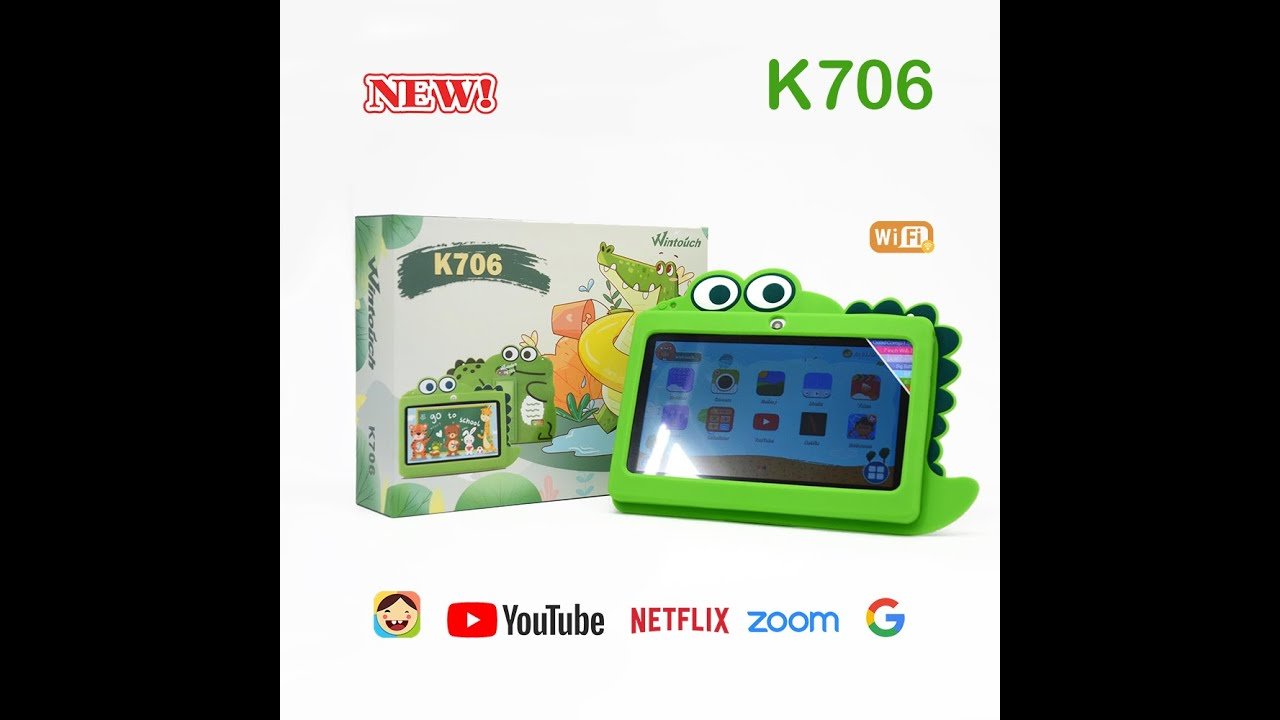
The most reliable route to compliance is choosing an OEM that builds certification into the product from the design phase — not one that retrofits it. Wintouch pre‑certifies its tablets for both EU and US markets, covering the full stack of CE, FCC, RoHS, EN71, and ASTM F963 on models like the K706. This means you skip the 8–12 week waiting period that custom certification typically requires.
Here is what that looks like in practice:
- Same model, both markets. The K706 ships with dual‑market marks, reducing inventory complexity and certification overhead for a single SKU program.
- Documentation included with every quote. You get the DoC, test reports, and compliance matrix — no additional NDA needed.
- No hidden costs. Certification charges vary by laboratory and scope, but Wintouch provides the full compliance package at a transparent B2B price. Request a sample and we will ship it with the certificate pack.
Interested in aligning your 2026 product line with the latest regulations? Check the 2026 Kids Tablet Industry Trends: Eye Care, AI, and Privacy Compliance to see how compliance is evolving.
Next step: Explore our certified Android tablets and include a certification checklist request with your quote form.
Frequently Asked Questions
What is ASTM F963 and why does it apply to kids tablets?
ASTM F963 is the US mandatory toy safety standard published by ASTM International. It applies to any product intended for children under 14, including educational tablets. The standard covers mechanical hazards (sharp edges, pinch points), flammability, and chemical limits for heavy metals. If your tablet has a carrying handle or a removable stylus, those components are tested under the same standard.
Do I need separate FCC and CE certifications for the same tablet model?
Yes. FCC Part 15 covers unintentional and intentional emissions for the US; CE RED covers radio and electromagnetic compatibility for the EU. While the testing overlaps (both use similar EMC limits), the approval processes, documentation, and labeling requirements are distinct. A single model can pass both, but you must have separate test reports and marks.
How long does it typically take to get a kids tablet certified for EU/US?
From sample submission to receiving the CE/FCC certificate, expect 8–12 weeks if you start from scratch. However, if your OEM already holds certification for the same platform, you can reuse it under the same model number — reducing the timeline to 2–3 weeks for a compliance matrix update. Pre‑certified ODM models like the Wintouch K706 ship with documentation ready.
Can I use the same tablet for both EU and US markets?
Yes, provided the tablet carries dual‑market certifications. This is common with ODM models designed for global distribution. Ensure the regulatory label includes both CE and FCC marks, and that the power adapter supports both 230V (EU) and 120V (US). Wintouch offers the K706 with a universal power supply and dual‑market compliance.
What happens if my tablets fail compliance inspection at customs?
The shipment will be detained at customs, and you may face fines, storage fees, and the cost of re‑testing or destruction. In the EU, market authorities can issue a ban on the product line. In the US, the CPSC can demand a recall. To avoid this, pre‑verify every certification before shipment and use an OEM that provides model‑specific test reports — not just a blanket “CE/FCC” claim.