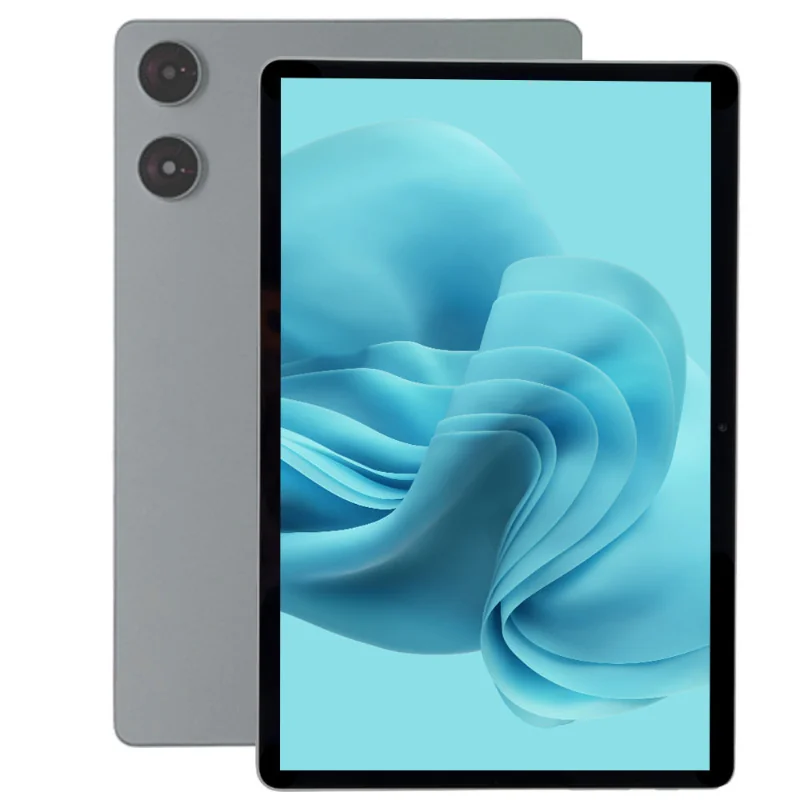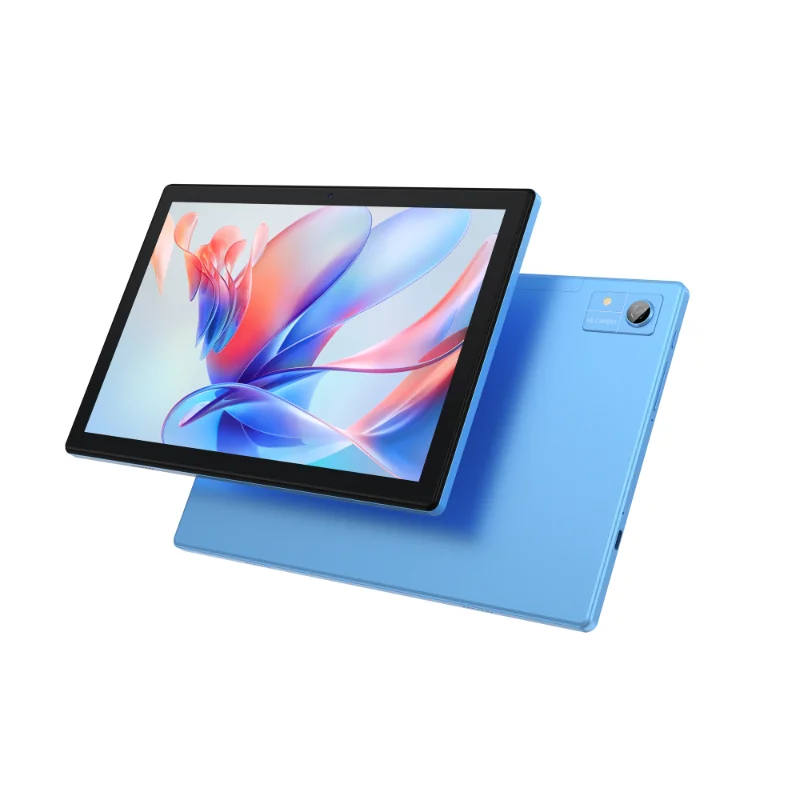

EU Battery Regulation 2027: What Article 11 Means for Your Android Tablet OEM Sourcing
From 18 February 2027, every portable electronic device sold in the EU — including commercial Android tablets — must have a battery that an end user can remove and replace with commercially available tools. This is Article 11 of the EU Battery Regulation (EU) 2023/1542, and it is a hardware-engineering requirement, not a compliance document. It changes how your tablet’s back cover is designed, how your IP rating holds up, what battery connector you spec, and ultimately how you choose an OEM. Most buyers are still sourcing glued-shut tablets that will be illegal to place on the EU market in six months.
Why the 2027 Battery Rule Is a Hardware Problem, Not a Paperwork Problem
The Digital Product Passport (DPP) is about data — which materials, which carbon footprint, which due-diligence records your tablet’s battery carries. Article 11 is about physics. The battery must be readily removable and replaceable by the end user, at any time during the product’s lifetime, using commercially available tools, without damage to the device or the battery.
That single sentence kills the industry-standard “glued-in battery under a sealed unibody” design used across most POS, retail, and kiosk tablets today. A battery that requires a heat gun, solvent, or pry bar to extract does not comply. The European Commission published guidance in January 2025 clarifying the rule and its narrow exemptions (wet-environment products and certain medical devices). Commercial tablets — POS, digital signage, retail kiosks — are not exempt.
In plain terms: if you sell or source Android tablets for the EU, your next production run must ship with a design that lets a technician — or an end user — swap the battery with a standard screwdriver or consumer tool, with no glue, heat gun, or special equipment. In practice that means the back cover must open mechanically and the battery must disconnect without permanent modification to the device. The consequence of ignoring this is concrete: a glued-in tablet cannot legally be placed on the EU market after 18 February 2027, so the redesign decision is not optional — it is a precondition of doing EU business at all.
Compliance Timeline for Tablet Buyers: What Lands and When
| Deadline | Requirement | What It Means for Your Sourcing |
|---|---|---|
| 18 Feb 2027 | Battery Regulation (EU) 2023/1542, Article 11 — portable batteries must be removable & replaceable by end user with commercial tools | Every EU-bound tablet must ship with a user-replaceable battery design. Glued-in batteries become non-compliant. |
| 31 Jul 2026 | Right to Repair Directive (EU) 2024/1799 transposed into national law | Spare parts, repair manuals, and repair data must be available for 7-10 years. Battery supply continuity becomes a contract term. |
| 18 Aug 2028 | Minimum durability standards for portable batteries (excl. button cells) | Battery cell quality and cycle-life become auditable compliance metrics, not marketing claims. |
| 2027-2028 | ESPR (EU) 2024/1781 repairability / recyclability horizontal measures for electronics & ICT | Full-device repairability score, disassembly instructions, and spare-part documentation for commercial tablets. |
DPP data obligations (battery DPP Feb 2027, electronics/ICT DPP 2027-2028) run in parallel — see our companion guide on the EU Digital Product Passport 2027 for the data side of the same deadline.
The Engineering Trade-offs You Must Decide Before You Order
A user-replaceable battery forces real design decisions. Here is where most buyers get surprised, because each one touches cost, MOQ, and reliability:
| Design Decision | Compliant Options | Trade-off |
|---|---|---|
| Back-cover access | Screwless clip-on cover / retained-screw cover / tool-free snap panel | Snap covers are fastest to service but must survive repeated open/close cycles without cracking. |
| Battery connector | Standard board-to-board / friction-lock connector, tooled for hundreds of cycles | Connector must be robust to repeated mating — a cheap connector becomes the first failure point. |
| Sealing vs. access | Gasket / O-ring seal on a removable cover instead of glue | Removable cover makes it harder to hold a high IP rating — a key question for dirty or washdown retail environments. |
| Cell standardisation | Off-the-shelf vs. custom battery pack | Standard cells are cheaper and easy to source as spares for 7+ years; custom packs lock you to one supplier. |
The single biggest conflict for commercial tablets: IP rating vs. serviceability. A fully sealed, glue-assembled tablet hits IP67/IP68 cheaply. A user-replaceable battery usually means a gasketed cover that holds IP54-IP65 and requires careful assembly tolerances. For POS, kiosk, and digital-signage deployments that’s usually acceptable — but it must be a conscious decision in your spec, not a surprise at the prototype stage.
How This Reshapes Your Procurement: 5 Things to Add to Your RFQ
- 1. Battery-replacement design statement. Require the OEM to confirm in writing that the tablet meets Article 11 — tool type, replacement procedure, and how many swap cycles the connector/cover are rated for.
- 2. IP rating under the new design. Ask for the rating with the removable cover fitted, and how it degrades if the cover is removed and refitted repeatedly.
- 3. Spare-battery and parts commitment. Lock in 7-10 year spare-battery availability and the repair documentation required by the Right to Repair Directive.
- 4. Battery durability data. Request cycle-life and capacity-retention data now, so you are ahead of the 2028 durability standard instead of retrofitting.
- 5. MOQ and tooling impact. A switch to a removable-cover design can change tooling, gasket sourcing, and MOQ. Get the new pricing before you commit — not at sampling.
What Happens If You Source a Non-Compliant Design
- Customs holds at EU borders once enforcement begins can delay shipments by weeks, blow out lead times, breach distributor contracts, and leave you holding inventory that can no longer legally be sold in the EU market.
- Retailer and distributor delisting. EU buyers are already auditing 2027 procurement against Article 11. A glued battery is a disqualifier.
- Public-tender exclusion. Education, healthcare, and government tablet tenders increasingly reference the Battery Regulation as an award criterion — a non-compliant glued-in design is grounds for disqualification before you even reach the pricing stage.
- Retrofit pain later. Redesigning a tablet around a replaceable battery after mass production is far more expensive than specifying it up front.
How Wintouch Helps You Comply Without Re-Engineering
Wintouch is an Android tablet factory in Shenzhen serving EU OEM and brand customers since 2012, with full WEEE, RoHS, REACH, CE, and ISO 14001 compliance. Our commercial tablet line (POS, retail, digital signage, kiosk) can be configured for user-replaceable battery designs, with the sealing, connector, and spare-parts program required for 2027 compliance — plus the DPP data and documentation covered in our DPP guide. We help you spec the Article 11 requirement into your RFQ before tooling is committed.
Frequently Asked Questions
Does the replaceable-battery rule apply to non-EU manufacturers?
Yes. Article 11 applies to any battery-powered product placed on the EU market, regardless of where it is made. Your factory — in China or elsewhere — must supply a user-replaceable battery design; the EU importer/authorised representative is legally responsible.
Can a sealed tablet keep its IP67/IP68 rating and still be compliant?
It is harder and depends on the design. Compliance requires the battery to be removable with commercial tools. A gasketed removable cover typically achieves IP54-IP65; the highest dust/water ratings usually rely on glue assembly. Decide the IP level you actually need for the deployment, then confirm the OEM can hold it with a serviceable cover.
Does the rule require the end user to replace the battery, or a technician?
The regulation requires the battery to be removable and replaceable by the end user using commercially available tools, for the lifetime of the product. In practice for B2B deployments a service technician performs the swap — but the design must not require irreversible tools (heat guns, solvents) or damage the device or battery in the process. If your deployment is a sealed kiosk or POS unit, you still need the physical design to allow access; how the swap happens operationally is up to you and your service partner.
What if my tablet already uses a removable battery?
Then you are most of the way there. Verify the connector cycle rating, spare-battery supply commitment, and the IP rating of the sealed cover — those are the remaining gaps, plus the DPP data side.
How much more does a replaceable-battery tablet cost?
Expect a small per-unit increase from gasketed covers and higher-grade connectors, plus possible tooling differences — but this is far cheaper than redesigning after a customs hold. Get an MOQ and pricing breakdown from your OEM for the compliant design before you commit.
Ready to spec your next tablet batch for the 2027 EU battery rule? Contact Wintouch for a design-and-compliance review — we will confirm Article 11 readiness, IP rating with a removable cover, spare-battery supply, and DPP documentation for your exact model.