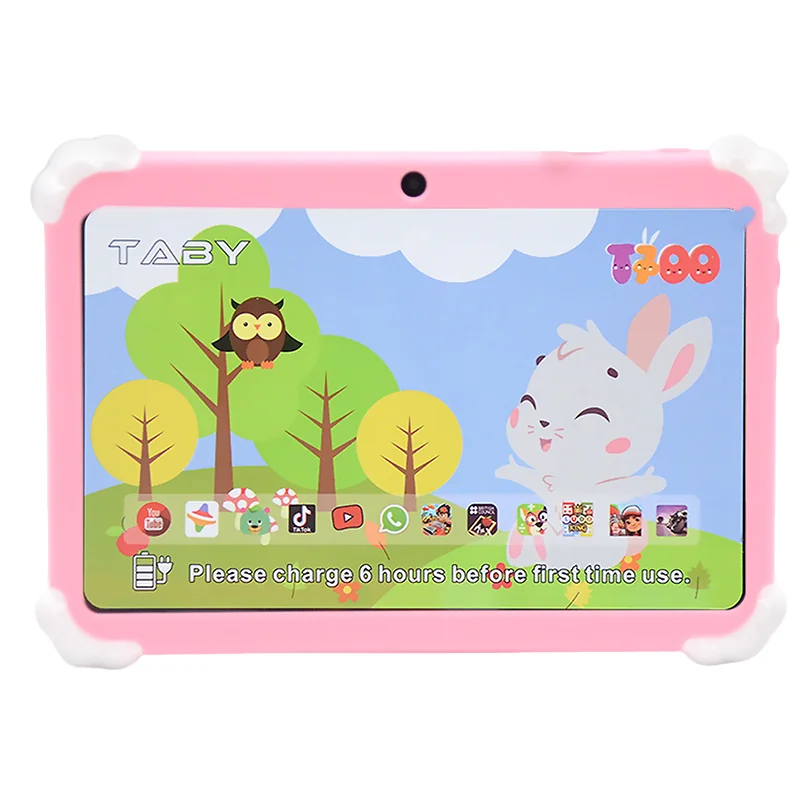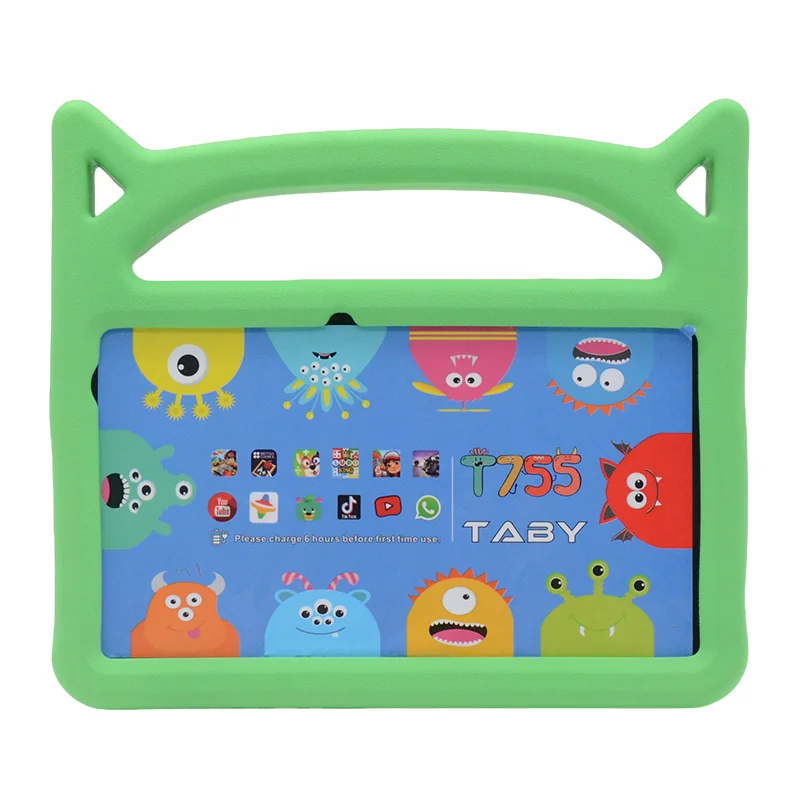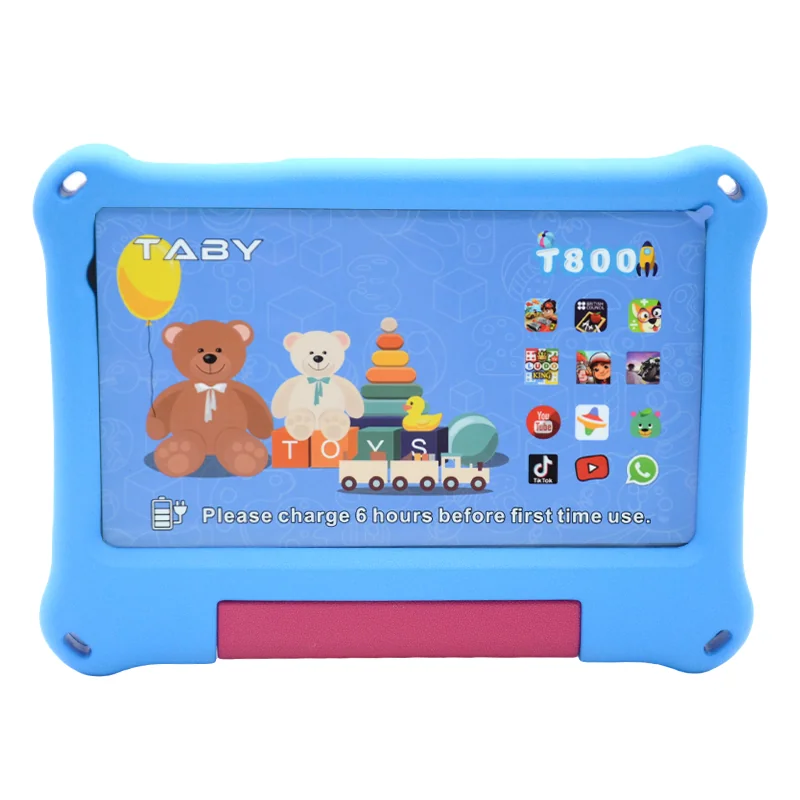

The first lever every Southeast Asian marketplace seller pulls is unit cost — and it is also the one most often mis-set. The price you negotiate per kids tablet is not the cost that decides your margin. Restock speed, defect replacement terms and marketplace-ready packaging decide whether a cheap order actually turns into profit once it is live on Shopee or Lazada.
Choose a source factory, not a trading company, when your kids tablet margin depends on fast restock and defect replacement. A factory sets MOQ per SKU, controls its own packaging line, and can replace a batch it produced; a trading company adds a margin layer and routes every claim through a third party. Verify MOQ, sample lead time, defect claim window and model-level certification scope in writing before your first order.
Decision Pain: Why Your Sourcing Supplier Makes or Breaks Your Marketplace Margin
Marketplace economics punish slow supply chains more than they punish a slightly higher unit price. On Shopee and Lazada, your listing’s visibility is tied to availability, cancellation rate and shipping performance. A stockout does not just cost you the sales you missed — it resets the momentum your listing accumulated, and you pay to rebuild it with ads.
Three cost traps follow from the wrong supplier type:
- Layered margin. A trading company buys from the same factory you could buy from, then adds its own margin before quoting you. You feel this most in the entry price bands, where per-unit profit is already thin.
- Locked capital. Inflated MOQs push your cash into inventory of a model you have not yet proven sells in your market. Dead stock is a cash-flow problem, not a warehouse problem.
- Absorbed defect batches. When a defect batch appears, a trading company usually has to negotiate upstream on your behalf. The result is often a credit note, not replacement units — so you eat the refunds, the return shipping and the negative reviews.
Platform positioning also matters when you decide which channel to push a higher-ticket tablet through. Lazada is generally the safer home for electronics and branded or warranty-sensitive goods, while Shopee tends to reward volume and price-led listings; Phanganist’s Lazada vs Shopee comparison (phanganist.com/shopping/guides/lazada-vs-shopee) makes that split explicitly for electronics and warranty-sensitive categories. That choice changes your tolerance for defect risk: a warranty-forward listing needs a supplier who will stand behind replacement, not just discount.
Kids Tablet Specs That Sell in Each Marketplace Price Band
Use the table below as a briefing template when you request quotes — not as market data. Validate it against your own listing analytics, then hand the supplier the exact configuration, OS floor and panel type you want. Confirm every line per SKU in the quotation.
| Price band | Typical display | RAM / storage | OS floor & panel | Buyer intent to design for |
|---|---|---|---|---|
| Entry | 7–8 inch | 2GB / 32GB | Android 12 or newer; G+P panel acceptable | First-time parent buyers, gift purchases, price-led comparison shoppers |
| Mid | 10.1–10.5 inch | 3–4GB / 64GB | Android 13 or newer; G+G panel preferred | Families buying for school prep and streaming; repeat marketplace buyers |
| Upper | 10.5–12 inch | 6–8GB / 128GB | Current Android release; G+G panel; rugged claim | Schools, tuition centres, B2B resellers, warranty-sensitive buyers |
Two spec decisions drive returns more than any other. First, the touch panel: G+G (glass-on-glass) bonding resists delamination and pressure damage far better than G+P (glass-on-plastic film), which matters because kids tablets take repeated drops and palm pressure. Second, OS version — an older Android build invites compatibility complaints as educational apps raise their minimum API. If you are planning a 2026 restock, review what a platform shift means for your SKU roadmap in our Android 16 sourcing roadmap for commercial tablets.
Where a supplier claims a rugged or drop-test standard such as MIL-STD-810G, ask for the test report itself and check three things: which lab issued it, which exact model it covers, and which test methods were run. A report for one model does not transfer to a different screen size or chassis.
Trading Company vs Source Factory: MOQ, Defect Batches and Marketplace Support
This is the comparison that most sourcing articles skip. It is also the one that decides your second order.
| Decision criterion | Trading company | Source factory (OEM/ODM) |
|---|---|---|
| MOQ per SKU | Often fixed, sometimes negotiable only by mixed-carton bundling | Set per SKU and per configuration; ask for tiered MOQ by model |
| Unit cost structure | Factory cost + trading margin built in | Factory cost only; savings scale with volume |
| Restock lead time | Depends on whether the item is held in stock locally | Depends on production scheduling — ask for a committed slot in writing |
| Defect batch handling | Claim routed upstream; outcome often a credit note | Replacement or rework decided by the party that made the units; QC records traceable to the batch |
| Packaging customisation | Limited to what the factory already stocks | Retail box, insert, barcode and marketplace labels designed to your spec |
| Listing assets | Generic photos and a basic spec sheet | Per-SKU datasheet, dimension and weight data, high-resolution product images on request |
| Certification support | Copies of certificates, coverage unclear | Model-level certificates and test reports tied to the SKU you are buying |
| Private label | Usually a sticker or box change | Full OEM/ODM: logo, boot screen, housing colour, packaging and accessories |
The defect-batch difference deserves detail, because it is where sellers lose money quietly. A practical test is to ask both supplier types the same four questions before ordering: Who pays return freight on a confirmed defect? Is replacement issued as units or as credit? How long after delivery can a batch be claimed? What batch or serial traceability do you keep? A factory can answer all four with reference to its own production and QC records. A trading company frequently answers the first two only.
Be realistic about limitations. No supplier, factory or trader, can guarantee zero defects, and no honest one will commit to an unlimited replacement window. What you can insist on is a written claim procedure with a defined window, a defined evidence requirement (photos, batch code, quantity) and a defined remedy. That written procedure is worth more to your marketplace rating than an extra percentage point off unit price.
How to Vet a Supplier for Marketplace Readiness: Risk & De-risking Checklist
Work through this list before you commit to a production order, and run it again before your second one.
- Certification scope. Request model-level certificates and test reports — CE and RoHS for the EU, FCC for the US, and toy-safety standards such as EN71 or ASTM F963 where the device is marketed to children. Confirm whether the certificate names the exact model you are buying or only a family reference. For Southeast Asian markets, Malaysia’s SIRIM and Indonesia’s SNI requirements apply at import level — verify current scope and applicability with your local importer rather than relying on a supplier’s summary.
- Sample units. Order a paid sample, test the touch panel response, charge port, speaker and battery behaviour, and physically drop the retail box. A box that survives your own courier test is your best proxy for what happens in marketplace fulfilment.
- Packaging spec in writing. Barcode format, marketplace label position, retail box dimensions and weight, master carton quantity. Get it on the PO, not in a chat thread. Compare this to how B2B buyers evaluate MOQ, warranty and landed cost on wholesale tablets.
- Listing assets. Ask for a datasheet, product photography, and dimension and weight data before the shipment leaves. Missing assets delay your launch and cost you ad spend.
- Defect claim drill. Simulate it. Submit a mock claim using the supplier’s stated procedure and see how quickly you get a substantive answer with a named contact. Response behaviour before the order predicts response behaviour after it.
- Landed cost modelling. Build unit cost, freight, duties, platform commission and return allowance into one number. Epic Sourcing’s 2026 Shopee and Lazada sourcing guide (epicsourcing.co) frames the same discipline — supplier vetting, quality inspection and freight consolidation handled so that landed cost is priced in from day one. If your margin only works at ex-works price, it does not work.
Frequently Asked Questions
What is the minimum order quantity for kids tablets on Shopee/Lazada?
MOQ is set by the supplier and varies by model, configuration and whether the order is a repeat. There is no platform-imposed minimum — Shopee and Lazada do not require a specific order size, only that you can fulfil orders you accept. Ask each supplier for a tiered MOQ table per SKU, and clarify whether mixed-model orders can be combined to reach a carton quantity. Get the agreed MOQ written into the quotation.
How do I handle a defect batch from a Chinese kids tablet supplier?
Handle it before it happens. Confirm in writing who pays return freight on confirmed defects, whether replacement is issued as units or credit, the claim window measured from delivery, and the batch or serial traceability the factory retains. On receipt, quarantine the batch, record batch codes, and photograph defects consistently so your claim is evidence-based rather than a negotiation. Then negotiate remedy, not blame.
What certifications do kids tablets need to sell on Shopee/Lazada?
The platforms require sellers to comply with the destination market’s regulations; they do not issue the certifications themselves. Typical requirements are CE and RoHS for the EU, FCC for the US, and toy-safety standards such as EN71 or ASTM F963 where the product is marketed to children, plus market-level import requirements such as SIRIM in Malaysia or SNI in Indonesia. Verify current scope with your local importer and request model-level documents from the supplier.
Can I get private label kids tablets for my marketplace store?
Yes, through an OEM/ODM factory. Typical private-label scope includes your logo on the housing, a custom boot screen, retail box and insert design, and accessories. Discuss the minimum quantity for custom tooling or packaging separately from the standard MOQ, since those are usually quoted independently. Start from a proven platform — for example the Wintouch T1000 kids tablet or the Wintouch T800 kids tablet — and then customise branding and packaging around it rather than commissioning a new chassis first.
Next Step: Request Your Kids Tablet Sourcing Quote for Shopee/Lazada
Send us your target price band, target MOQ, required certifications and destination country. We will come back with a configuration recommendation, marketplace-ready packaging options and a per-SKU quotation you can model against your landed cost. If you are planning a larger catalogue or a school-channel line, review our 10.36-inch T606 business tablet as a step-up SKU for buyers who outgrow the entry band.
Request a kids tablet supplier quote for Shopee/Lazada — include your price band, quantity and packaging requirements, and ask for a paid sample before you commit to production.