
Quick answer
Android 16 is the version most commercial and enterprise tablet programs should standardise on in 2026. It offers the longest remaining security-patch runway (vendor commitments commonly run to late 2028, with paid extended support reaching 2031), supports Google’s EDLA enterprise certification and the Android 16 STIG hardening baseline, and is mature enough that firmware images, MDM agents and line-of-business apps are already proven on it. Android 17 is fine for a controlled pilot, but it is a riskier default for a fleet you must support for five years.
Why the Android version is a sourcing decision, not a spec line
Buyers rarely get burned by a CPU model. They get burned by an OS version that stops receiving patches two years into a five-year deployment. On an Android tablet the OS version decides three things that hit your budget directly:
- Security-patch runway — how many years the OEM will still ship monthly security patches for that hardware/firmware combination.
- Enterprise certification — whether the device can carry Google Mobile Services legally and pass an EDLA / enterprise licensing check, which many corporate IT and public-sector tenders now demand.
- Deployment tooling — whether zero-touch enrolment, kiosk lockdown and the MDM agent your IT team already runs will behave on that image.
This is why a 2026 procurement should start from the OS version and its support window, then work back to the CPU, memory and screen that fit the budget — not the other way round.
Which programs should standardise on Android 16 in 2026
- Retail & POS fleets — you need Play Store access for payment and analytics apps plus a long patch runway; Android 16 is the safe default.
- Warehouse, logistics and field service — device life is 4–6 years; a 2026 purchase on Android 16 still has patch cover for most of that window.
- Public-sector and regulated tenders — Android 16 STIG profiles give you an auditable hardening baseline out of the box.
- Kiosk and digital-signage programmes — mature lockdown behaviour and a stable GKI-based kernel reduce custom firmware work.
Programs that should pilot rather than standardise on Android 17: any deployment where an unproven baseline could break a payment terminal, a safety workflow, or a signed enterprise app.
Android version comparison for commercial tablets (2026)
| Factor | Android 14 | Android 15 | Android 16 | Android 17 |
|---|---|---|---|---|
| Status in 2026 | Legacy / maintenance | Maintenance | Recommended for new fleets | New — pilot only |
| Remaining patch runway (typical OEM commitment) | Shorter, often ending 2026–2027 | Ends ~2027–2028 | Commonly to late 2028; extended support to 2031 | Longest, but unproven firmware |
| EDLA / enterprise GMS certification | Widely available | Available | Available | Still maturing in 2026 |
| STIG hardening baseline | Older profiles | Older profiles | Android 16 STIG published | Not yet |
| MDM / zero-touch maturity | Proven | Proven | Proven | Varies by agent |
| Best for | Existing fleets only | Cost-driven, short-life projects | New 5-year commercial deployments | R&D, controlled pilots |
Note: exact patch end-dates are set per model by each OEM and per chipset vendor. Always confirm them in writing for the specific SKU you order — a “runs Android 16” claim without a dated patch commitment is not enough.
Hardening and certification: what to put in the tender
Two certifications separate a consumer tablet from a commercial one, and both are version-dependent:
- EDLA (Enterprise Devices Licensing Agreement) — Google’s licensing route for commercial and enterprise Android devices. It is what legally brings Google Play Services and core Google apps to a business tablet, together with enterprise-grade security features. A device can be GMS-certified and still not be EDLA-approved for your use case — ask which one you are buying.
- Android 16 STIG — the Security Technical Implementation Guide published for Android 16, with official configurations for corporate-owned and COPE management modes (Android Enterprise announcement). Even outside US federal procurement, it is a defensible hardening checklist to hand your security team.
Also confirm the kernel story. Modern Android builds use the Generic Kernel Image (GKI) with the Treble vendor interface, which is what lets a future OS upgrade happen without re-writing every driver. Ask your OEM whether the model ships a GKI-compliant kernel — it is the difference between a device that can be upgraded and one that is frozen at its shipping version.
Five questions to ask any Android 16 tablet OEM before you sign
- What is the documented security-patch end date for this exact SKU, and is extended support available and at what cost?
- Is the device EDLA-certified (not just GMS), and can you supply the certificate?
- Does the firmware ship a GKI-compliant kernel with Treble, and will you support at least one OS upgrade in its life?
- Which MDM / zero-touch enrolment platforms are validated on this image — does it work with the one we already run?
- What is the BOM stability commitment? Will the CPU, RAM and screen stay identical across the whole production run, so a reorder in 2027 matches a 2026 unit?
Answers to these five decide total cost of ownership far more than the purchase price per unit. A cheap tablet that must be replaced in year three costs more than a slightly dearer one that survives to year five.
Common sourcing mistakes to avoid
- Specifying “Android 16” without a patch end-date. The version number is marketing; the patch commitment is the asset.
- Assuming GMS equals EDLA. They are different approvals for different use cases.
- Standardising on the newest OS for a paid-for fleet. Android 17 is right for a pilot, not for 2,000 devices you must support until 2031.
- Ignoring BOM continuity. A mid-run component swap silently breaks your MDM image and your spare-parts plan.
Build your 2026 Android 16 fleet with a factory that documents it
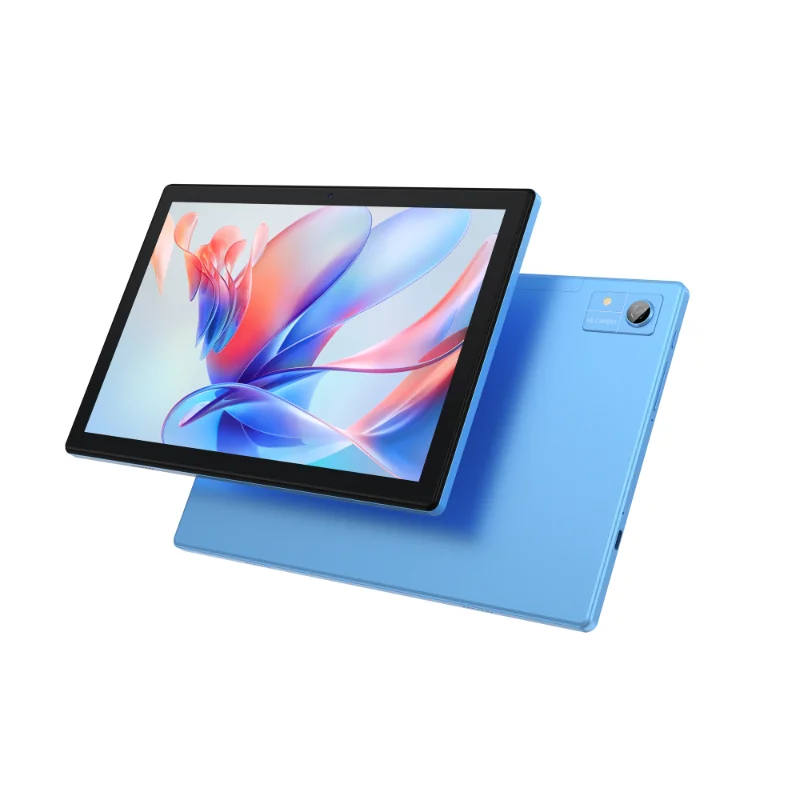
Wintouch (operated by Dongguan Liontek Technology Co., Ltd., est. 2011) builds Android commercial tablets for OEM/ODM programmes — with OS-version selection, firmware customisation, EDLA/GMS planning and compliance documentation confirmed per SKU and target market. Our A80 business tablet already runs Android 16, and our OEM/ODM programme covers branding, memory, ports, MDM preload and export packing.
Tell us your deployment scenario and target market, and we will return a model recommendation with a dated patch commitment, certification status and MOQ — plus a sample path in 14 days and mass production in 35.
Request a model recommendation & quote → | Request a sample | See business deployment solutions
Frequently asked questions
Is Android 16 good for business tablets in 2026?
Yes. For a new commercial fleet in 2026, Android 16 offers the best balance of a long remaining patch runway, published STIG hardening profiles, EDLA enterprise certification and proven MDM/app compatibility. It is the lowest-risk default for a five-year deployment.
Should I buy Android 17 tablets instead?
Only for a controlled pilot. Android 17 has the longest theoretical support window, but in 2026 its firmware, MDM agents and enterprise apps are less proven. Standardising a large paid-for fleet on it adds avoidable deployment risk.
How long will an Android 16 tablet be supported?
Patch end-dates are set per model by each OEM. Commercial vendors commonly commit Android 16 security patches into late 2028, with paid extended support sometimes reaching 2031. Always get the exact date in writing for the SKU you order.
What is the difference between GMS and EDLA?
GMS (Google Mobile Services) means the device carries Google Play and core Google apps. EDLA (Enterprise Devices Licensing Agreement) is Google’s specific licensing and certification route for commercial and enterprise devices. A device can have GMS without EDLA — for corporate or tender use, specify EDLA explicitly.
Does the Android version affect MDM and zero-touch enrolment?
Yes. Zero-touch enrolment and kiosk lockdown are validated per OS version by each MDM vendor. Standardising on a mature version such as Android 16 means your existing MDM agent is more likely to already be certified on the image.
Sources & references
- Android 16: productivity, security and more features — Google (official Android 16 platform announcement)
- Android 16 STIG is now live — Android Enterprise Community (COBO / COPE hardening configurations)
- Generic System Image releases — Android Developers (GKI / GSI build and patch-level reference)
Vendor-specific figures (patch end-dates, EDLA status, MOQ) are indicative and must be confirmed per SKU and target market before purchase.