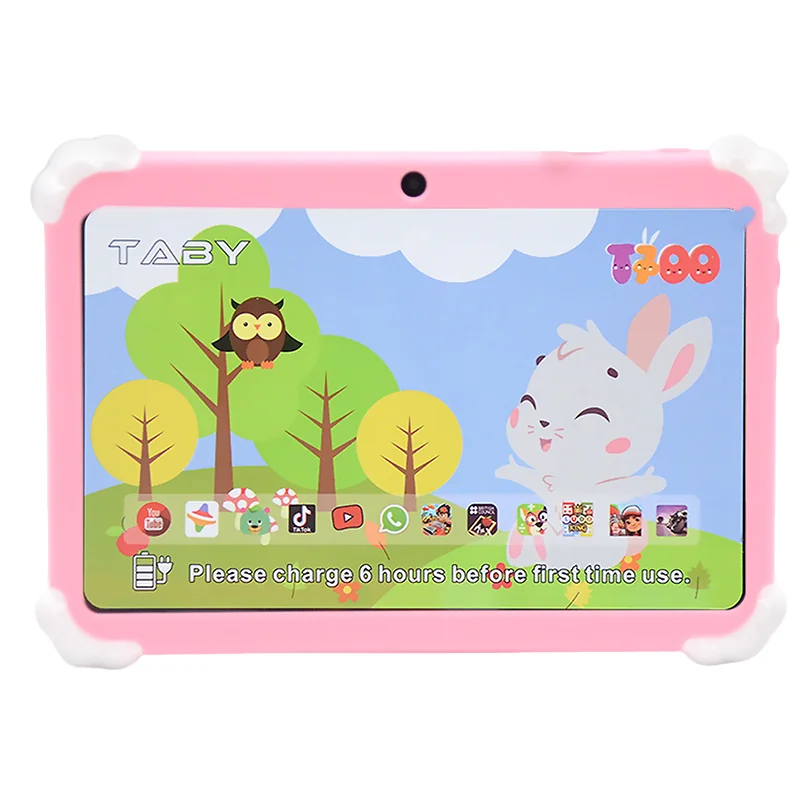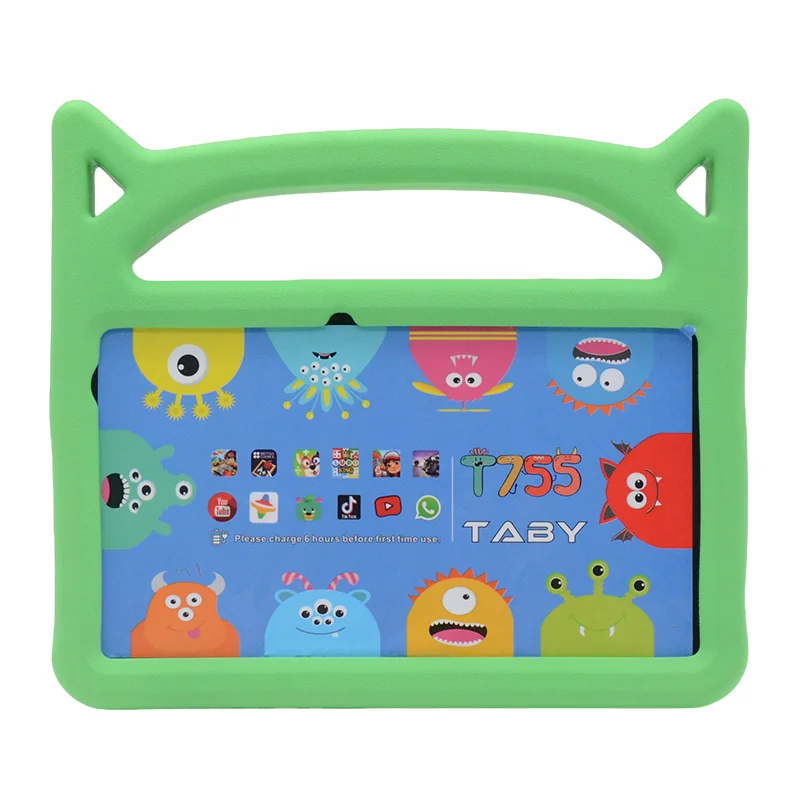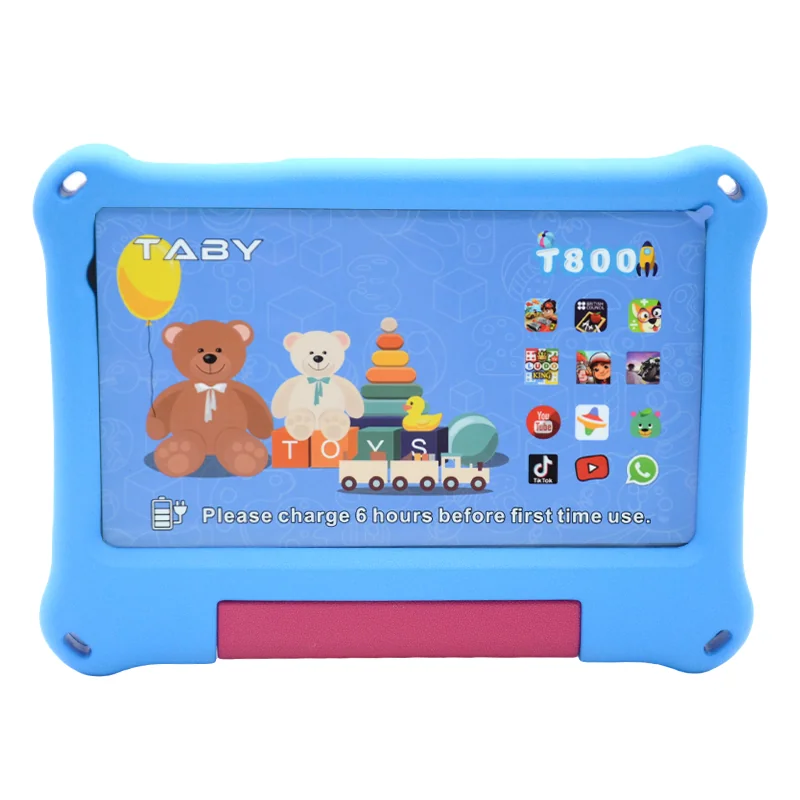

Buying kids education tablets with AI tutoring is no longer a spec-sheet decision — it’s a compliance decision. A single AI feature that records a child’s voice or analyzes typed answers without lawful consent can trigger federal enforcement in the US, GDPR fines in the EU, and a public-relations crisis at your school. Here is the compliance checklist you must demand from any supplier before you sign.
Under COPPA (16 CFR Part 312) and the EU GDPR Chapter II Article 8, AI tutoring on kids tablets is lawful only when the vendor collects minimal data, obtains verifiable parental consent — or school-based consent under COPPA’s education exception — prohibits training AI models on children’s data without separate consent, and honors deletion rights. The decisive procurement test is the supplier’s data-processing agreement and a contractual compliance warranty, not a marketing certification. If a vendor cannot map which AI feature processes what data, that tablet is a legal liability.
Why AI tutoring features raise COPPA and GDPR-K compliance red flags
AI tutoring is categorically different from passive educational apps. It listens to a child read aloud, interprets typed answers, tracks response latency, and infers frustration or confusion from behavioral signals. Each of those activities collects data that qualifies as “personal information” under the COPPA Rule and “personal data relating to children” under the GDPR. Every conversational turn with an AI tutor is a data-processing event — and every data-processing event needs a lawful basis.
The buyer’s pain is concrete: US school districts face FTC enforcement actions and parent class-action suits when an AI microphone stays active beyond consent, while EU schools face regulatory inquiries when a tutor profile is built without an Article 8 consent flow. No single certification covers all AI features; you must audit each vendor’s data processing record. A tablet that passed generic app-filtering certification can still fail compliance if its AI tutoring module records voice by default.
How AI tutoring is deployed in US and EU classrooms (and what changes legally)
Scenario 1: 1:1 classroom tablets with an AI reading assistant. In the US, COPPA allows the school to provide consent in place of parents for educational purposes under 16 CFR Part 312.5(c)(2) — but the school must post a privacy notice and still give parents the right to review and delete data. In the EU there is no school-consent exception: GDPR Article 8(1) requires the child to be at least 13 — or 16 in most member states — and demands verifiable parental or guardian consent before any AI tutoring processing begins.
Scenario 2: Home-use tablets assigned via school. Sending school-owned tablets home with an AI tutor is why many districts now prefer a dedicated kid-safe device rather than letting children borrow Mom’s iPad. In this scenario COPPA’s school-consent exception still applies to school-issued devices, but any app the child installs at home re-triggers full parental consent obligations. In the EU, home-use AI tutoring requires direct, verifiable parental consent — the school has no authority to consent on the parent’s behalf.
Across 500+ classrooms, we’ve seen how AI moderation flags a child’s mispronunciation and auto-deletes the audio clip within seconds — the difference between compliant and non-compliant products lives in these micro-decisions. In EU deployments, those clips cannot even be captured without a prior opt-in; voice processing demands separate consent under GDPR, regardless of whether the tablet was issued by a school.
COPPA vs GDPR-K: a compliance comparison table for AI features
“GDPR-K” is shorthand for the GDPR’s children’s-data framework (Recital 38 and Article 8), not a separate law. The COPPA Rule at 16 CFR Part 312.5 and GDPR Art. 8(1) set different consent thresholds. Here is what each requires for the five data flows you must vet before procurement:
| Data flow | COPPA (US, 16 CFR Part 312) | GDPR-K (EU, Art. 8 + Recital 38) |
|---|---|---|
| Voice recording | Parental consent required; recording must be deleted promptly after the session if not used for a learning profile | Separate, explicit parental opt-in for voice use; strict data minimization; retention limited to stated purpose |
| Text analysis of answers | Notice and consent required; school can consent for educational purposes | Legitimate-interest defense unavailable for children; must apply data minimization by design |
| AI model training on student data | Prohibited without verifiable parental consent; school consent does not cover model training | Training needs a separate legal basis; profiling children is banned unless explicitly consented by parents |
| Behavioral / usage analytics | Consent or clear notice-and-choice at collection | Requires DPIA under GDPR Art. 35 for large-scale child data processing |
| Deletion rights | Parents and schools may review and delete data at any time | Article 17 erasure applies from birth; no school-consent exception to deletion |
The EU column is almost always the stricter one. If a tablet meets GDPR’s children’s-data rules, it will usually satisfy COPPA’s core requirements — the reverse is not true. Use the GDPR column as your ceiling, not the floor.
Risks of non-compliance and how to de-risk your tablet procurement
Financial exposure is material. The FTC can levy civil penalties up to $43,280 per COPPA violation (inflation-adjusted), and GDPR penalties reach €20 million or 4% of global annual turnover — whichever is higher. For a district, one systemic violation — an AI tutor silently storing thousands of children’s voice recordings — can translate into hundreds of thousands of dollars in fines plus parent lawsuits. The reputational damage is worse: media scrutiny of kids’ data breaches destroys parent trust and lands districts on non-renewal lists.
De-risk your procurement with these five contract requirements:
- Demand the supplier’s SOC 2 report and a completed DPIA (GDPR Art. 35) specific to its AI tutoring features.
- Require a data-processing agreement (DPA) that names every AI sub-processor and the purpose for each data flow.
- Insert deletion APIs and a parental dashboard into your RFP — you need a technical path, not a promise.
- Demand AI explainability documentation for any automated decision (GDPR Art. 22), including adaptive tutoring that changes a child’s learning path without human review.
- Add an indemnification clause: the supplier must indemnify your district if its AI feature violates COPPA or GDPR.
Both the FTC’s official COPPA guidance for schools and the EDPB’s “GDPR Children’s Data” guideline stress that controllers must be able to demonstrate consent. A contract that fails to assign data-controller duties to the vendor puts your district — not the manufacturer — in the regulatory crosshairs.
Next step: choosing a compliance-ready kids education tablet
Use this 5-point checklist when evaluating any kids tablet with AI tutoring:
- Data map of every AI feature — what it captures, why, and how long it’s retained.
- Consent flows that match your deployment — school consent (US) or verifiable parental opt-in (EU).
- Deletion compliance — the vendor must expose a real endpoint or dashboard for purge requests.
- Parental dashboard — parents can review and delete their child’s tutoring history at any time.
- Third-party verification — an FTC COPPA Safe Harbor seal (TRUSTe or PRIVO) plus an independent GDPR audit.
Most vendors sell identical hardware with different software states; compliance is a firmware and service-layer decision, not a plastic-shell decision. Before bulk ordering, request a sample of a device like our compliance-ready T1000 kids tablet, review the DPA line by line, and ask for a written gap analysis against both US and EU rules — because one product fails both if it doesn’t meet the stricter GDPR. For deployments that need extra drop protection, our rugged T800 education build ships with the same compliance documentation stack.
Frequently asked questions on AI tutoring compliance
Does COPPA allow schools to consent for AI tutoring?
Yes, for educational use. Under 16 CFR Part 312.5(c)(2), a school may consent in place of parents when students use the tablet for an educational purpose, provided the school posts an online notice and gives parents the option to review or delete data. That consent does not extend to AI model training or any commercial use of children’s data.
What is GDPR-K and how is it different from COPPA?
“GDPR-K” is an informal term for the GDPR’s children’s-data provisions (Recital 38 and Article 8). COPPA allows school-based consent and sets the threshold at age 13, while GDPR requires verifiable parental consent for under-13s — or under-16s in most EU states — bans profiling for marketing, and carries fines up to €20 million or 4% of global annual turnover.
Can AI features on kids tablets be trained on student data?
Not without separate, explicit parental consent. Under COPPA, school consent does not cover model training; under GDPR, children’s data cannot be used for profiling or training without parental consent and a dedicated legal basis. Most compliant vendors prohibit model training on student data by default.
What are the penalties for violating COPPA or GDPR-K?
COPPA enforcement brings FTC civil penalties up to $43,280 per violation, per child. GDPR violations for children’s data can reach €20 million or 4% of global annual turnover, whichever is higher — plus class-action exposure in both jurisdictions and mandatory breach notification.