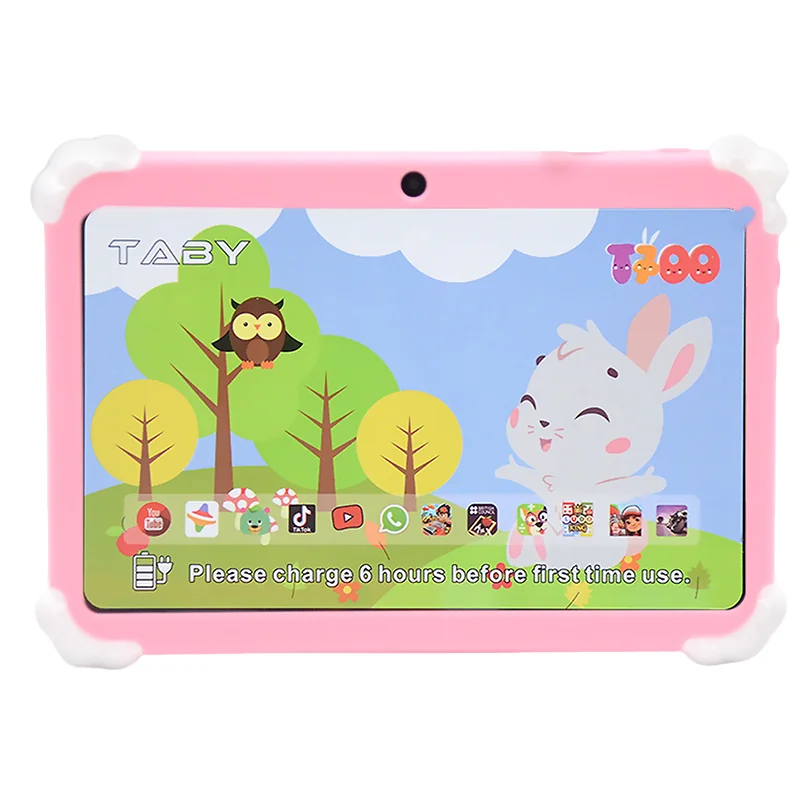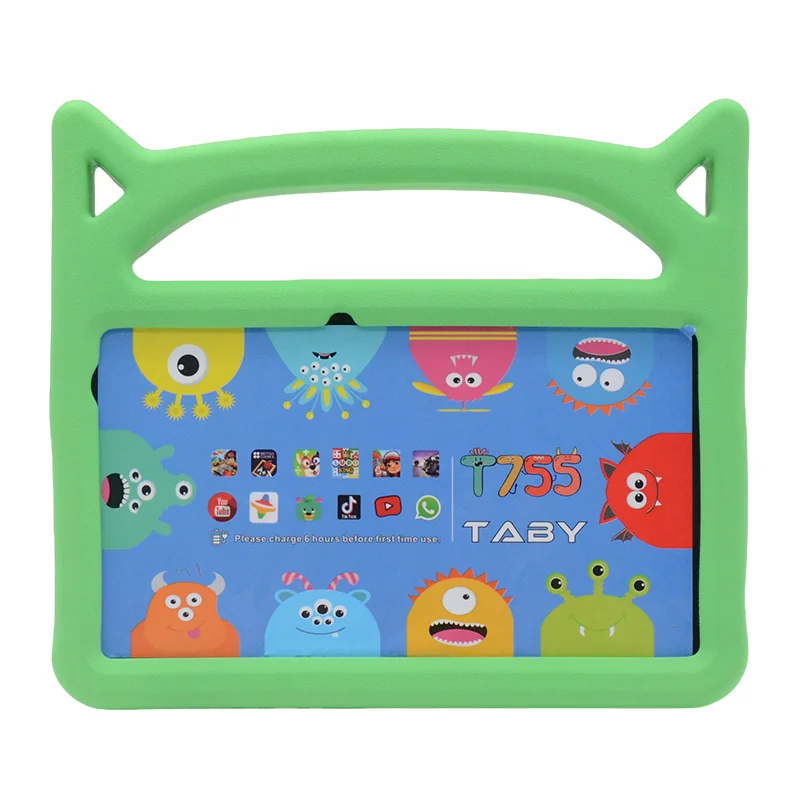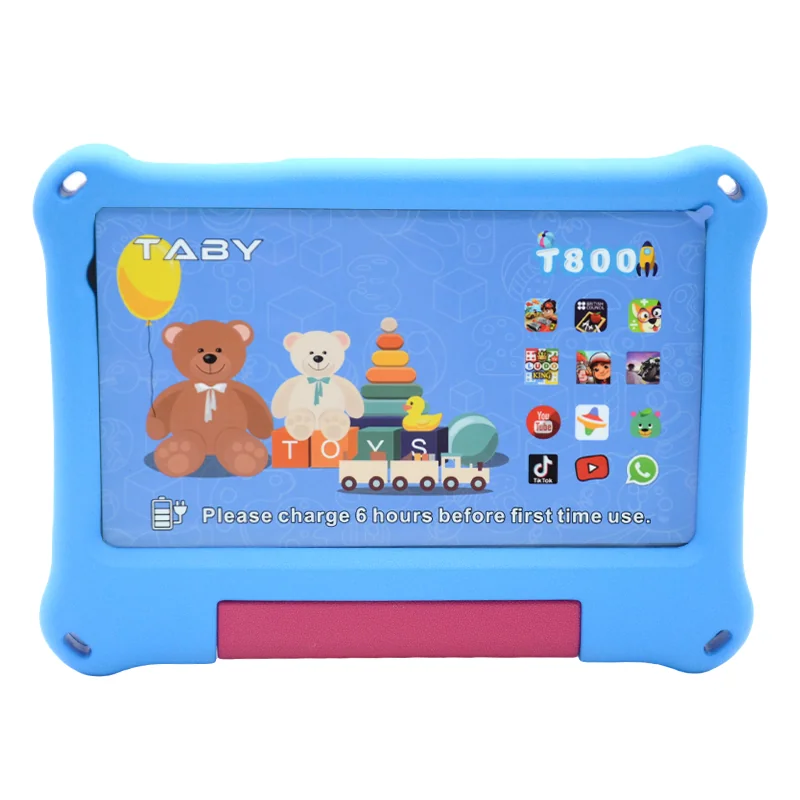
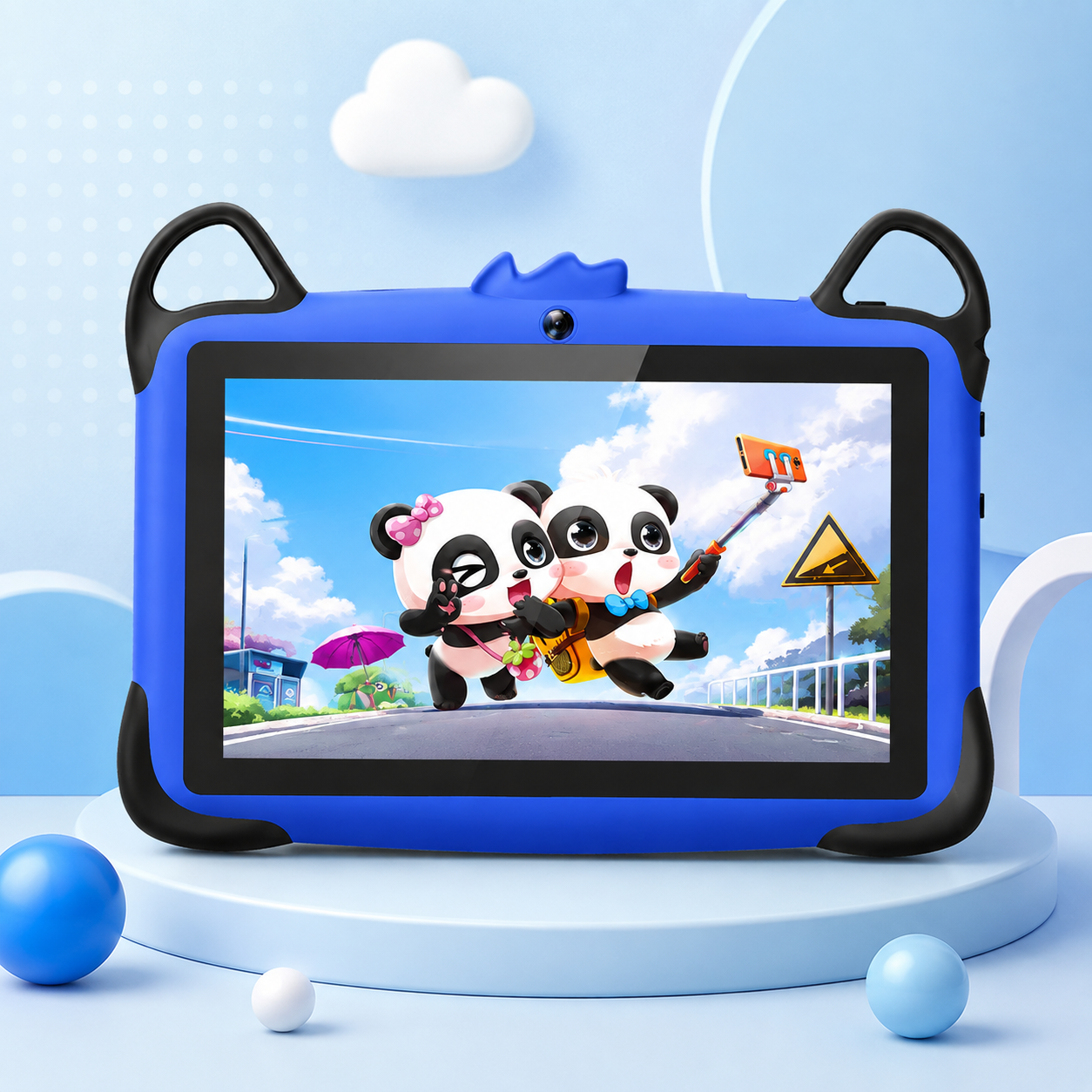
For a B2B buyer sourcing kids tablets for the European Union in 2026, “eye protection” and “parental control” are not nice-to-have features — they are the two gates that decide whether your product clears compliance, gets listed on retail shelves, and survives a consumer-safety complaint. A kids tablet that passes EU compliance but lacks real parental control will not be bought by schools or parents; one with great apps but no documented low-blue-light or toy-safety certification will not clear customs. This guide maps all three pillars — hardware eye-safety, OS-level parental control, and EU legal compliance — into a single RFQ so you evaluate every supplier on the same checklist.
Why the three pillars belong in one RFQ
Most kids-tablet RFQs are written like phone specs: screen size, CPU, RAM. That ordering causes two real mistakes in EU sourcing. First, it lets the supplier quote the cheapest board and treat eye-protection as a “software filter” bolted on later. Second, it scatters compliance across departments — a parent-company factory may hold CE/RoHS on the unit but forget EN 71 on the bundled silicone case, and the whole shipment gets held. Put all three pillars on one sheet so one supplier is accountable for the whole device, not just the motherboard.
Pillar 1 — Hardware eye-safety: what actually matters
EU buyers are moving away from vague “low blue light” marketing toward measurable hardware claims. The checks that survive an audit are hardware-level, not post-processing:
- DC / flicker-free dimming at low brightness levels (children often use tablets in dark rooms).
- Hardware low-blue-light panels or certified low-blue-light modes, with the certification document (e.g. TÜV Low Blue Light or equivalent) as a deliverable in your RFQ — not a marketing slide.
- Auto-brightness + ambient light sensor that works without user setup, because parental controls can’t fix a screen a child won’t adjust.
- Bundled hardware compliance: if you ship a silicone bumper case (most kids tablets do), that accessory needs its own EN 71 toy-safety assessment — a gap that repeatedly delays EU shipments.
Pillar 2 — Parental control: built-in Android vs. a branded app
In the EU, parental control is increasingly treated as a consumer-protection expectation (think COPPA-style scrutiny applied to children’s data, plus Google Play’s family policy). You have three viable models, and your choice changes the RFQ:
| Model | Who manages it | Best fit | RFQ implication |
|---|---|---|---|
| Google Family Link + Kids Space (GMS) | Google / parent | Retail & mainstream schools | Requires certified GMS device, updated Google Play policies |
| Branded parental-control app (your own) | Your team | Private-label brands, data control | Needs an engineering + GDPR review; server costs |
| White-label MDM/kiosk layer | Distributor or school IT | Government & education tenders | Needs kiosk/multi-user APIs, provisioning docs |
Ask each supplier directly: “On this model, which Android version, and how long are Play Protect and security updates guaranteed?” A device stuck on Android 12 in 2026 cannot carry Family Link cleanly and will fail a security audit — put the OS support window in writing in the RFQ.
Pillar 3 — EU compliance: the checklist your factory must prove
The documents below are the current EU framework that applies to a consumer kids tablet. Specific directive versions and any 2026 additions change — have your factory’s compliance or legal team confirm the latest texts before you commit; do not rely on this article alone for a legal decision.
| Area | What it covers | RFQ deliverable to request |
|---|---|---|
| CE (RED / EMC / LVD) | Radio, electromagnetic compat., electrical safety | CE DoC + test reports, current directive version |
| RoHS & REACH | Restricted hazardous substances in materials | Declarations + test reports |
| EN 71 (toy safety) | Physical/mechanical safety, including accessories | Report covering the unit and bundled case |
| GPSR | General product safety / responsible economic operator | Named EU responsible person + registration |
| GDPR | Children’s personal data handling by software | DPA/DPIA for the app + privacy policy |
| WEEE / battery | E-waste & battery directives | Registration, recycling compliance |
The de-risk checklist: 5 questions to ask before you sign
- “Please provide the original low-blue-light and EN 71 certificates, including the accessory.”
- “Who is the named EU responsible person under GPSR, and can you share their registration?”
- “What Android version ships, and what is the guaranteed Play Protect / security-update window?”
- “Is parental control Family Link on GMS, a branded app, or MDM — and who owns the child-data flows for GDPR?”
- “Can you supply the RFQ as one price that includes these documents, or are certs charged separately?”
Next step
Stop comparing spec sheets — compare suppliers against this single three-pillar RFQ. If you’re sourcing a kids tablet line for the EU, request a quote, sample, or our compliance document pack and we’ll walk you through which of our certified models (starting at Android 14 with GMS) fit your target market, retail tier, and tender requirements.