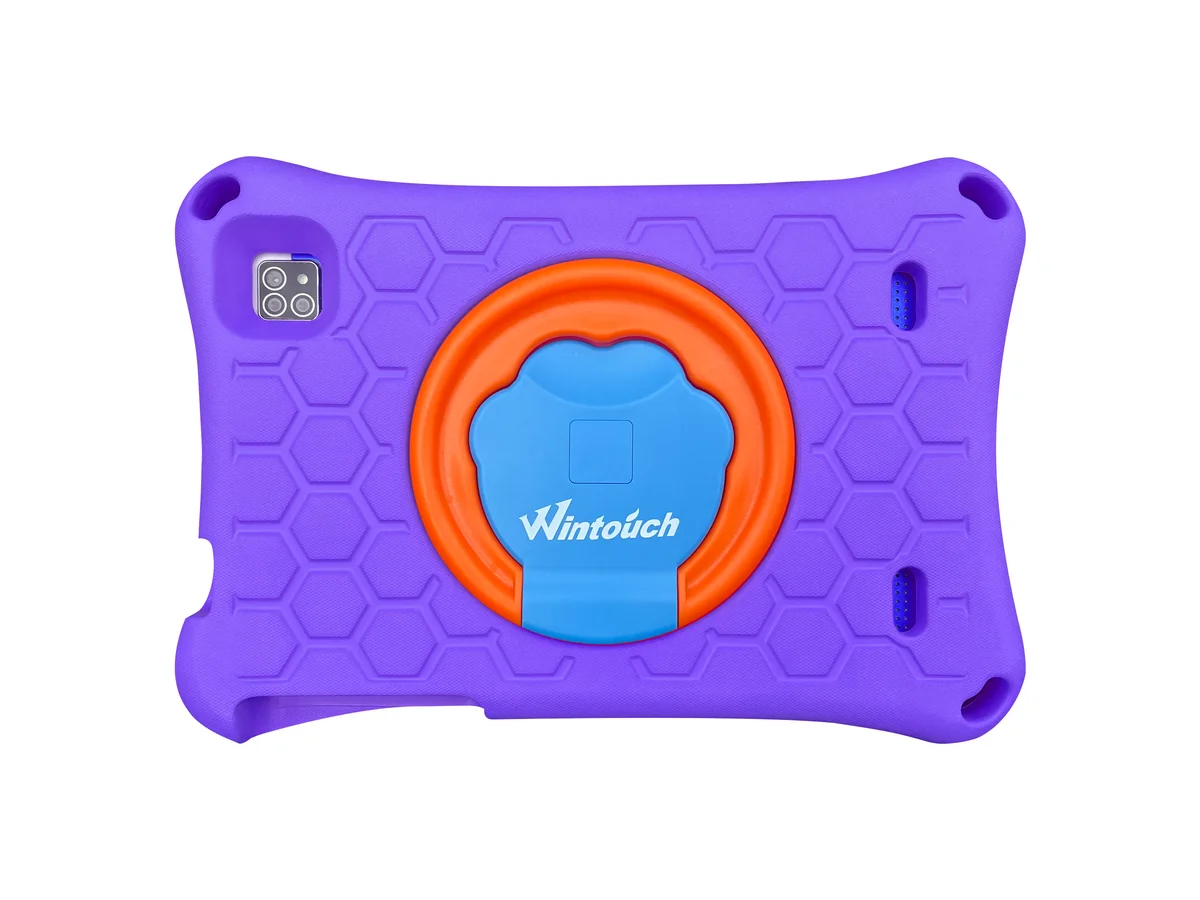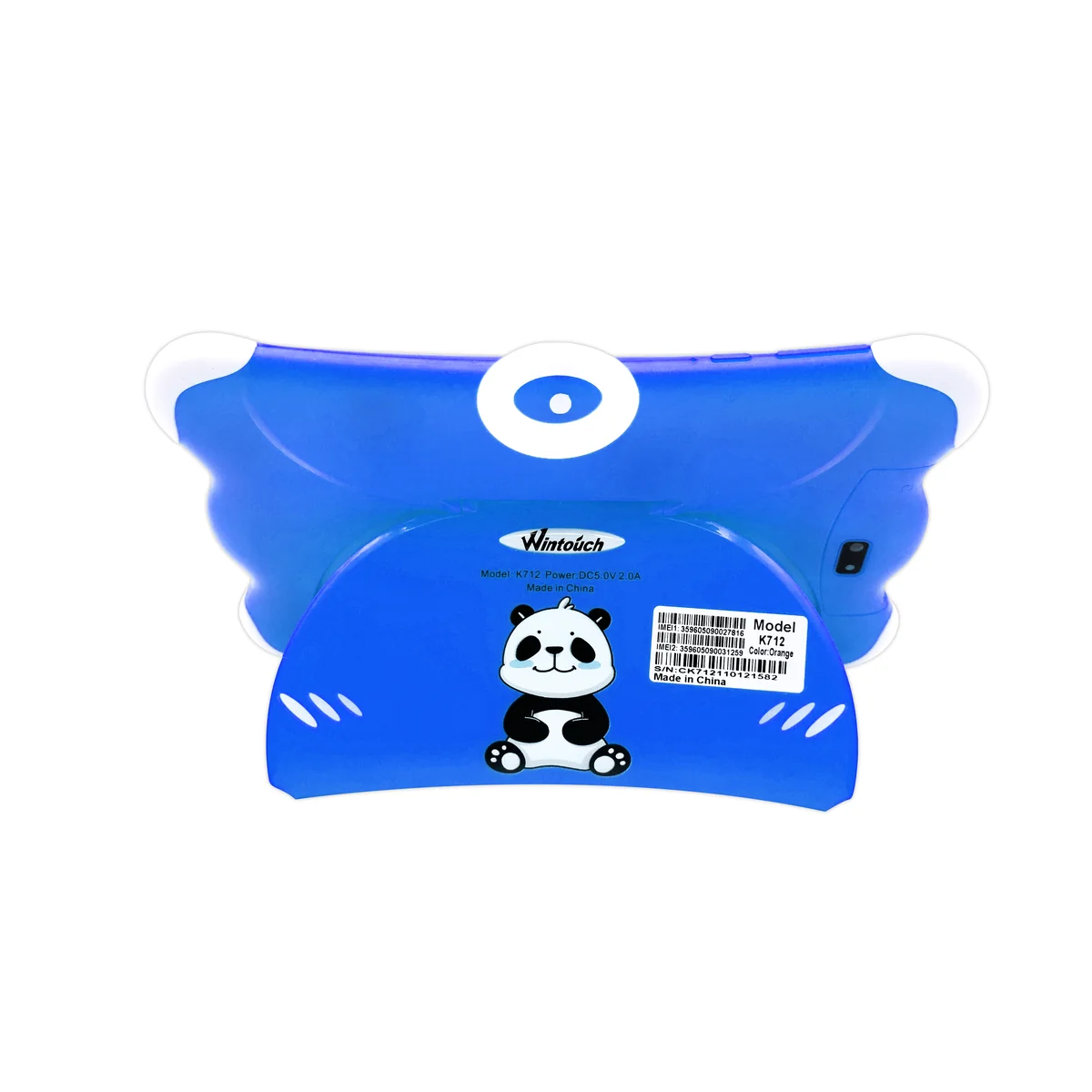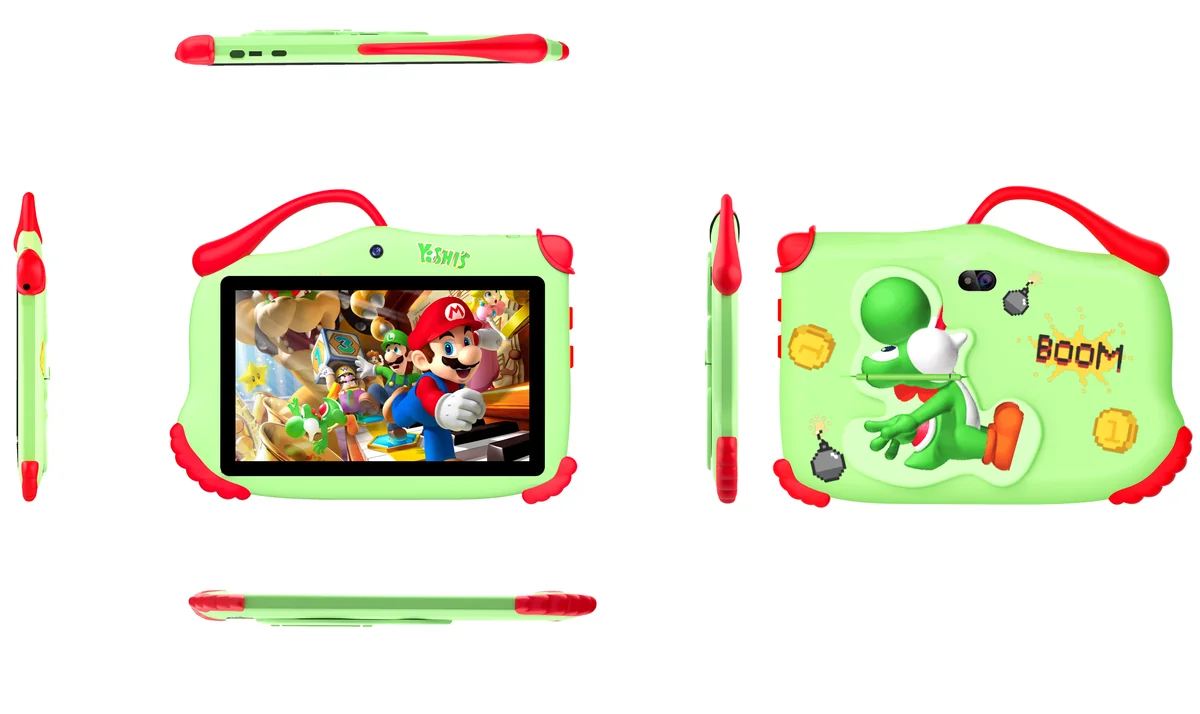

Procuring OEM kids tablets from China isn’t a single transaction — it’s a 6-stage operational chain: RFQ → Sample Evaluation → Factory Audit → Contract & IP → Production QC → Shipment & Post-Delivery. Most first-time buyers lose 30-60 days and $5,000-$15,000 at stages 2-4 because they skip evaluation steps or accept factory word over documentation. This playbook gives you a checklist-driven workflow so every stage confirms the next, and no commitment happens without evidence.
Already clear on certifications and OEM/ODM model choice? Read the companion guide: Kids Tablet OEM Sourcing — The Complete B2B Buyer’s Guide for 2026 first, then return here for the execution workflow.
Stage 1: RFQ — Write It to Filter, Not Just to Price-Shop
A bad RFQ gets you 20 quotes you can’t compare. A good RFQ gets you 3-5 comparable bids from factories that can actually deliver. Here’s what to include beyond price:
| RFQ Section | What to Ask | Why |
|---|---|---|
| Target certification | ASTM F963-23 + CPC? EN71-1/2/3 + EU TSR 2025/2509? Both? | Filters factories without lab relationships |
| MOQ & tier pricing | 500 / 1,000 / 3,000 / 5,000 unit pricing. Sample cost (deductible from order?) | Reveals true production capacity tier |
| Lead time breakdown | Tooling (if custom) + production + certification lab turnaround + shipping | Separate real lead time from optimistic promises |
| Parental control stack | Pre-installed or custom launcher? COPPA-compliant data handling? Google Family Link compatible? | Filters consumer-grade vs. B2B-grade suppliers |
| Existing lab reports | Request valid ASTM/EN71 test reports for a similar past model | Saves $3,000-$8,000 in re-testing if base report exists |
Red flag: Factory quotes without asking which market you’re selling into. A factory that doesn’t ask about target certification doesn’t understand compliance risk — they’re shipping consumer-grade tablets, not children’s products.
Stage 2: Sample Evaluation — 8-Point B2B Checklist
A retail unboxing is not a procurement evaluation. B2B buyers need to test samples against contractual specs, not consumer impressions:
- Physical safety test: Drop from 1.2m onto concrete (3 angles). Check for small-part detachment. This is ASTM F963 §4.6 small-parts requirement in practice.
- Screen & bezel integrity: Press firmly on edges — does the LCD ripple? Cheap tablets show pressure distortion; a kids tablet needs reinforced frame bonding.
- Battery runtime under load: Run a looping video at 70% brightness. If it dies before the spec sheet claims, the battery is under-specced.
- Parental control penetration: Can a savvy 12-year-old factory-reset it, sideload APKs, or bypass the launcher? Test it.
- Thermal under charge: Charge while streaming video. Does the back exceed 45°C? Hot spots near the battery are a safety fail.
- Wi-Fi stability: Stream for 30 minutes on the far side of a wall from the router. Drops = antenna or shielding issues.
- Button & port life: Plug/unplug USB-C 50 times, press power button 100 times. Loose ports are the #1 return driver for education deployments.
- Packaging compliance: Does the retail box have tracking labels, age grading, and country-of-origin? Missing CPSC tracking label = customs rejection.
Red flag: Factory sends a “golden sample” that’s clearly hand-assembled and finished differently from what you’d see in production. Ask: “Is this from the production line or the engineering lab?” If they hesitate, demand a production-line random pull.
Stage 3: Factory Audit — Virtual First, On-Site When Serious
Not every buyer can fly to Shenzhen. Start with a structured virtual audit, then escalate:
| Audit Mode | Cost | What It Reveals | When to Use |
|---|---|---|---|
| Virtual walkthrough (live video) | Free | Production floor organization, SMT line presence, ESD protocols, worker density | Shortlist stage (3-5 factories) |
| Third-party audit (SGS/BV/TÜV) | $1,500–$3,000 | ISO 9001 compliance, social compliance (BSCI/SEDEX), environmental, full CAP | Before signing contract (1-2 finalists) |
| On-site visit | $2,000–$5,000 (travel) | Everything — plus management quality, engineering depth, real production capacity | OEM deals > $50,000 |
Virtual audit cheat sheet: Ask them to show you (a) the SMT line — is it running or idle? (b) the QC station — what instruments are on the bench? (c) the成品 warehouse — how many units in stock and for which brands? An empty warehouse with a busy SMT line = contract manufacturer; a full warehouse with an idle SMT line = trading company with a showroom.
Stage 4: Contract & IP Protection — What Goes Wrong and How to Prevent It
Three contract failures sink kids tablet procurement deals:
4.1 The Certification Clause
Don’t accept “factory will provide CE/FCC.” Require: “Supplier shall provide valid, in-date third-party test reports from a CPSC-accepted or EU Notified Body laboratory for ASTM F963-23 / EN71-1/2/3 / TSR 2025/2509, with the Buyer’s brand name on the certificate, before final payment.” Without your brand name on the cert, customs may reject it — and the factory’s generic cert covers their brand, not yours.
4.2 The NDA + NNN Agreement
A standard NDA is insufficient in China. Use an NNN (Non-Disclosure, Non-Use, Non-Circumvention) agreement, enforceable under Chinese law. It prevents the factory from using your mold/tooling for other clients and from contacting your end customers directly.
4.3 Payment Terms That Protect You
Standard safe structure: 30% deposit (T/T) → 70% against B/L copy or before shipment. Avoid 100% upfront on first orders. For orders above $50,000, consider a Letter of Credit (L/C) at sight — it costs ~$200 in bank fees but ensures payment only against compliant shipping documents.
Stage 5: Production QC — Catch Defects Before They Ship
Three inspection points, not one:
| Inspection Point | When | What to Check | AQL Standard |
|---|---|---|---|
| In-line inspection (DUPRO) | 20-30% production complete | Assembly quality, component conformity, early defect patterns | AQL 4.0 (informational) |
| Pre-shipment inspection (PSI) | 100% produced, 80%+ packed | Function, appearance, packaging, labeling, barcode scan, accessories completeness | AQL 2.5 (Major), AQL 4.0 (Minor) |
| Container loading supervision | During loading | Carton count, carton condition, container seal, correct product variant loaded | N/A (100% count) |
Kids tablet-specific QC items: (1) Bumper case fit — does it stay on after 10 drops? (2) Parental PIN — test 5 units, confirm PIN can’t be bypassed with factory reset without re-entering. (3) Charger safety — USB charger must carry UL/CE mark; cheap chargers without certification are a fire hazard and a customs rejection risk even if the tablet itself is compliant.
Stage 6: Shipping, Customs Clearance & Post-Delivery
Shipping Mode Decision
| Mode | Transit Time | Cost per Unit (est.) | Best For |
|---|---|---|---|
| Air Express (DHL/UPS/FedEx) | 3-7 days | $8-15 | Samples, small orders (<200 units) |
| Air Freight | 7-12 days | $3-6 | Urgent medium orders (200-1,000) |
| Sea Freight (FCL) | 25-40 days | $0.50-1.50 | Volume orders (1,000+) |
| Sea Freight (LCL) | 30-45 days | $2-4 | 500-2,000 units, sharing container |
Customs Documentation Checklist
- Commercial Invoice (with HS code — kids tablets typically 8471.30)
- Packing List
- Bill of Lading (sea) or Air Waybill
- Children’s Product Certificate (CPC) — US mandatory
- EU Declaration of Conformity + test reports — EU mandatory
- FCC SDOC (US) / CE EMC report (EU)
- Country of Origin certificate (if claiming preferential tariff)
Post-delivery must-do: Random-sample 2% of units within 48 hours of receipt. If defect rate exceeds AQL limits, file a claim immediately — most factory warranties require notification within 7 days of delivery.
Summary: The 6-Stage Procurement Checklist
- ✅ RFQ sent with certification, MOQ, lead time, OS requirements — not just price
- ✅ Sample evaluated on 8 B2B criteria, not retail unboxing
- ✅ Factory audited (virtual minimum, third-party if $50K+)
- ✅ Contract signed with certification clause, NNN, and staged payments
- ✅ DUPRO + PSI inspections passed at AQL 2.5
- ✅ Shipment received, spot-checked, documentation archived
Frequently Asked Questions
How long does the full procurement cycle take for a first-time kids tablet order?
Plan 90-150 days: RFQ + shortlist (2-3 weeks), sample evaluation (2-4 weeks), factory audit + contract (2-3 weeks), production (30-60 days for ODM, 60-90 for custom OEM), shipping (1-6 weeks depending on mode). The biggest variable is certification lab turnaround — ASTM/EN71 testing adds 2-4 weeks if no existing report exists.
What’s the minimum budget to launch a kids tablet brand?
ODM route with existing tooling: $15,000-$30,000 (500 units at $25-40/unit + certification + shipping). OEM route with custom tooling: $50,000-$120,000 (3,000+ units + tooling amortization + full certification suite). White-label (logo only): $5,000-$10,000 (100-200 units).
Which certification is the hardest to pass for kids tablets?
The EU’s new Toy Safety Regulation 2025/2509. It introduced stricter chemical migration limits, mandatory digital product passports, and cybersecurity requirements for connected devices — all of which are new territory for tablet factories accustomed to the older EN71 framework. Budget $6,000-$10,000 for testing and allow 6-8 weeks.
Can I use the same tablet model for US and EU markets?
In principle yes, but in practice you’ll need separate SKUs. The US requires CPC with ASTM F963-23, the EU requires EN71 + TSR 2025/2509 with CE marking. The charger, packaging labeling, and parental control data-handling policies must also differ. Most OEMs maintain US and EU variants with shared core hardware but different firmware and packaging.
What’s the #1 mistake first-time kids tablet buyers make?
Treating certification as a post-production checkbox rather than a pre-production gate. If the plastic case formulation, paint, or battery supplier changes after certification, the original test report becomes invalid. Lock the BOM (Bill of Materials) before certification and contractually require factory notification of any component change.
Related resources:
- Kids Tablet OEM Sourcing: The Complete B2B Buyer’s Guide for 2026 — certification deep-dive, OEM/ODM model comparison, age-specific hardware specs
- View All Wintouch Kids Tablets →