
The short answer: what actually sets your tablet’s country of origin
Country of origin follows where the tablet was substantially transformed — where a set of components became a new article — not where the carton was sealed or the invoice was issued. US Customs and Border Protection (CBP) decides that from your bill of materials and the manufacturing process, and a supplier’s Vietnam address settles nothing on its own.
That single sentence should reorganise your supplier shortlist. If a Chinese SoC, a Chinese panel and Chinese battery cells are shipped to a leased bay in Vietnam for screw-down, final test and boxing, the article is generally still China-origin for US tariff purposes. Krieg DeVault’s importer note on the US–China tariff truce makes the point directly: “Even goods assembled in third countries may retain Chinese origin for tariff purposes if they incorporate substantial components from China.” The same note recommends revisiting country-of-origin determinations and manufacturing footprints now, while trade tensions are in a holding pattern (kriegdevault.com).
Two separate questions are usually blended into one in sales conversations. Origin is a legal determination about where the goods were substantially transformed. Duty is whatever the Harmonized Tariff Schedule of the United States (HTSUS) plus any applicable Section 301 or IEEPA action says on the date of entry. An OEM can be honest about the first and wrong about the second, because rates move and press coverage lags. For the statutory backdrop your broker will reference, the Congressional Research Service overview of US–China tariff actions since 2018 is the cleaner starting point than any news article (congress.gov/crs-product/IF12990).
So the purchase decision is not “which OEM says it has a Vietnam line.” It is “which OEM can put component-level origin evidence in front of me, in writing, per SKU, before I sign.” What follows is the six-document pack that answers it.
The six-document pack at a glance
| # | Document | What it must contain | What it replaces |
|---|---|---|---|
| 1 | BOM with origin column | Origin country per line item, not a single header claim | A one-line “Made in Vietnam” letter |
| 2 | Process disclosure | Which operations run in-country vs. what arrives pre-kitted | A factory address and photo |
| 3 | HS classification rationale | Declared line (8471.30 vs. 8473), reasoning in writing, invoice consistency | “Our forwarder handles that” |
| 4 | Cost and volume inputs | FOB, freight, tooling, ramp and re-qualification cost per site | A quoted duty percentage from memory |
| 5 | Site and ramp evidence | Line, shift, capacity share, first-article and yield schedule | “We also build in Vietnam” |
| 6 | Contract terms | Origin warranty, indemnity, audit and change-control clause | A verbal assurance |
1. A BOM with an origin column — not a certificate of origin
A one-line COO certificate is the weakest document in a sourcing pack. It records a conclusion with no working shown, and it is worth exactly as much as the supplier’s willingness to be audited behind it. Ask for origin per line item on the BOM instead.
For a tablet, five component families decide the answer in practice:
- SoC / CPU module — where the silicon is fabricated and where the module is assembled are different questions; ask both.
- Display stack — LCD/OLED panel, touch sensor and lamination, including where lamination happens.
- Battery cells — cells, protection circuit and pack assembly are three separate origin lines.
- Main PCB — bare board fabrication and SMT assembly sites, which are rarely the same country.
- Enclosure and mechanicals — tooling, moulding and any secondary decoration.
Then ask the follow-up that actually determines whether your China+1 plan is real: which of these are single-sourced from China, and what is the qualified substitution path? A China+1 story with no second source for the panel and the SoC is a change of shipping address, not a change of origin.
Reject “we can declare any origin you need.” A supplier willing to write the answer you want is a misdeclaration risk that lands on you as importer of record, not a solution.
2. Evidence that final assembly performs real transformation
Move past the site address. Ask what operations physically run in the claimed country versus what arrives kitted from China for final assembly. Signals that support the claim include in-country SMT, in-country display lamination, in-country functional test and calibration with local fixtures, and packing with locally printed packaging. Weak signals include a leased bay doing final test and boxing only, or a site that receives fully populated mainboards with the same part numbers your China build uses.
Two verification methods work when you cannot fly: a live video audit walked against your own BOM (SMT lines, test stations, calibration benches, serial-number traceability at each station), and a serial-number trace on three finished units showing which station and which country each critical component passed through. Ask for the same trace on a unit built in China so you can compare the process, not just the plant.
3. HS classification and where tariff engineering crosses the line
Confirm the declared classification in writing. Finished tablets generally sit under HS 8471.30; parts declarations under 8473 change both the duty line and the origin analysis, and a mid-program switch between the two without a product change is a question you want answered before entry, not after. Ask the OEM to state the classification rationale and to confirm the commercial invoice, packing list and entry summary agree.
Legitimate tariff engineering changes the product or the process so that a different legal outcome applies. It is lawful. What is not lawful is document shuffling — re-invoicing through a third country, splitting a shipment, or re-labelling without a process change. The distinction a broker will apply is substantial transformation, not the last point of shipment; for a tablet that means asking whether the assembly process in-country created a new article, and whether the Chinese content is so dominant that it did not.
4. A landed-cost model you build yourself, line by line
Do not accept a duty percentage in a quotation email, and do not carry a rate you read in a news article into a board paper. Build the model and fill it with the HTSUS rate and any Section 301 or IEEPA action live at the time of entry:
- Unit FOB price at the quoted volume band.
- Freight and insurance per unit, by mode and lane.
- Duty = applicable HTSUS rate at entry × customs value.
- Merchandise processing fee and brokerage, allocated per unit.
- FX buffer and payment-terms cost.
- Safety-stock carrying cost created by the longer or shorter lead time.
- For a site switch: tooling, first-article approval, re-qualification, re-certification and parallel-build cost during ramp.
The number that decides the deal is not the duty delta — it is the break-even duty delta. How many percentage points of duty must the second site save before it beats a China quote with better yield, shorter lead time and an already-approved compliance file? Line 7 is where most China+1 business cases quietly fail, because re-qualification cost is counted once while the duty saving is counted monthly.
5. A reality check on “we already moved to Vietnam / India”
Tier-one brands are genuinely relocating volumes. Reported context: Lenovo has produced 12 million units in India and planned to grow toward 17 million; HP said 90% of US-bound products would be made outside China by a stated October; ASRock announced a move of manufacturing to Vietnam and Taiwan (finance.yahoo.com — publisher date not verified in the supplied excerpt, so treat as directional context rather than current market data).
Translate that for a 5,000–50,000 unit buyer: large brands buy dedicated lines and absorb ramp cost. You are buying residual capacity. Ask which line, which shift, what share of that site’s output your PO represents, and what happens to your slot when a larger customer arrives. If the site is new, get the ramp schedule in writing — first-article approval, yield learning curve and test-fixture duplication all land on your timeline, not the factory’s. And check the trap of a China+1 option that only activates above a minimum volume your forecast never reaches.
6. Contract terms that put the origin risk where it belongs
- Origin warranty and indemnity. The supplier warrants the declared country of origin and HS classification, and indemnifies you against penalties, additional duties and seizure arising from misdeclaration.
- Audit and records. Right to audit BOM, sub-supplier list and production records, with a retention period that matches how far back an entry can be reviewed.
- Change control. No sub-supplier, component or site change without written notice and your approval. Silent resourcing is how a compliant origin becomes non-compliant mid-program.
- Exit and transition. Tooling ownership, firmware handover and test-jig duplication rights, so a second site stays a real option rather than a negotiating story.
The same documentary discipline that carries you through a customs review is what carries a connected-device program through platform compliance — the EU AI Act Android tablet OEM documentation checklist and the Zero-Touch Enrollment pre-provisioning checklist follow the same principle: get the evidence before the PO, not after the audit.
Five answers that should stop the PO
- “Origin is whatever you want on the paperwork.” Misdeclaration exposure passes to the importer of record — you.
- “Our Vietnam factory” with no separate BOM, no separate test fixtures and identical module part numbers shipped in from Shenzhen.
- A COO certificate with no BOM behind it, and a refusal to state origin per component in writing.
- A duty rate quoted from memory or from a year-old article instead of the HTSUS at entry.
- No indemnity and no audit clause in the draft contract, while still claiming a China+1 footprint.
What this means by segment
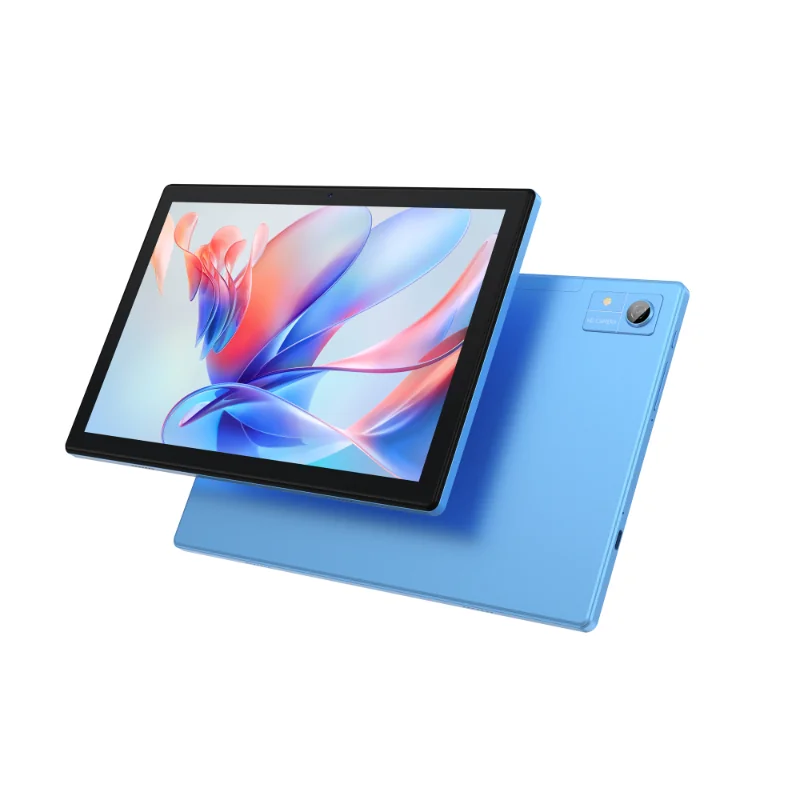
POS and kiosk. Peripheral integration, certification and uptime usually outweigh a marginal duty delta. Quantify the delta against the cost of re-integrating a payment or scanning module before you move a site for tax reasons alone — see the business tablet platforms used in these builds, such as the T616 11.97-inch business tablet or the T606 10.36-inch business tablet.
Digital signage. Long-life SKUs with multi-year support windows make a mid-program site change expensive. Weight total re-qualification cost heavily and favour a supply plan that keeps one qualified site per SKU for the life of the deployment.
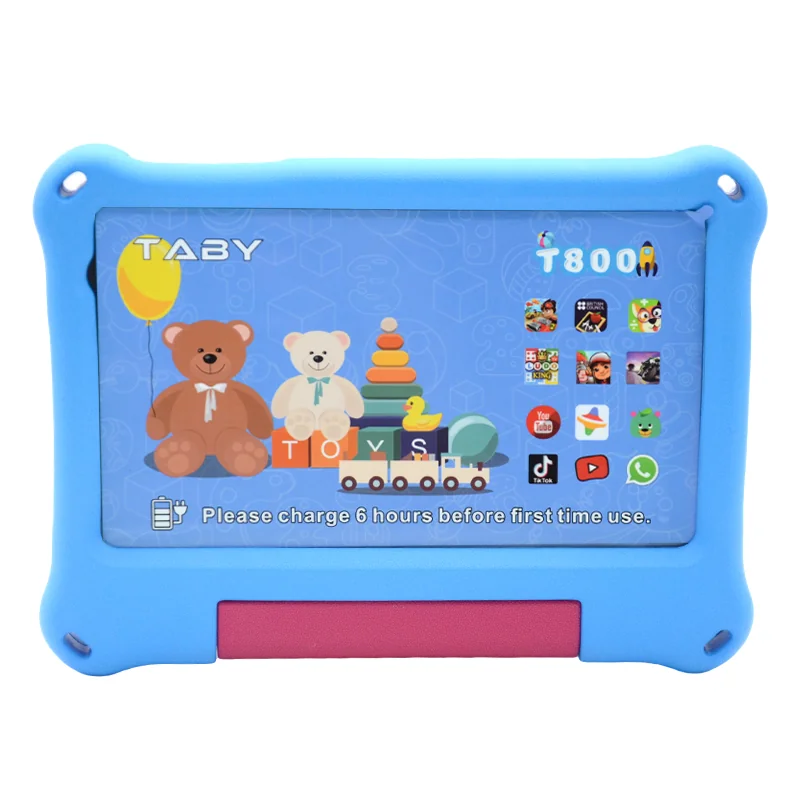
Kids education 1:1 deployments. Child-facing safety and compliance re-testing at a new site can erase the tariff saving. Sequence compliance before cost. Hardware in this category, such as the T1000 kids tablet, is typically re-certified per production site, so site change is a compliance event first.
Next step: get the origin answer for your actual BOM
Origin is determined by CBP, not by your OEM and not by us. We do not provide legal or customs advice, and we do not issue binding rulings — the final authority on your file is your licensed customs broker or a CBP binding ruling request before you contract. Duty rates must be pulled at the time of entry, not copied from any article including this one.
What a manufacturing partner should be able to give you is the evidence trail: documented BOM origin by component, disclosure of which processes run at which site, a written HS classification rationale, and contract-ready origin warranty and change-control wording you can put in front of counsel.
Request a country-of-origin and landed-cost review against your BOM and target volume. Send the BOM, destination and annual volume for one SKU — for example a WT8662 tablet configuration — and ask for the six-document pack plus a landed-cost worksheet you fill with live rates, so the China versus China+1 comparison is made on evidence rather than on a factory address.