Android Tablet OEM vs ODM: Which Sourcing Model Fits Your Brand?
OEM (Original Equipment Manufacturer) builds your Android tablet to your own hardware specifications — custom PCB layout, specific components, and a unique industrial design — so you own the design, the IP, and the differentiation, at the cost of higher upfront investment, higher MOQs, and longer lead times. ODM (Original Design Manufacturer) adapts a proven factory reference design with your branding, casing, memory, battery, and select software options, getting you to market faster and cheaper at the cost of hardware uniqueness. Choose OEM when you need differentiated hardware and can absorb the investment; choose ODM when speed and budget outweigh uniqueness. Your MOQ, certification burden, and total cost of ownership differ sharply between the two — this guide maps that decision for a branded tablet program.
Quick Answer: OEM vs ODM for Android Tablets
OEM (Original Equipment Manufacturer) builds your Android tablet to your exact hardware specifications — custom PCB layout, specific components, and unique industrial design. ODM (Original Design Manufacturer) adapts a proven reference design with your branding, casing, memory, battery, and select software options. Choose OEM when you need differentiated hardware and can absorb higher investment and longer timelines; choose ODM when speed and budget outweigh hardware uniqueness.
Why the OEM vs ODM Choice Determines Your Tablet’s Success
Your sourcing model is not a factory detail — it is a strategic product decision. It determines how you differentiate in crowded segments like POS, retail, and digital signage, where the tablet is the customer-facing device. It sets your launch window and your total cost of ownership across the product lifecycle — not just the per-unit price, but engineering, tooling, certification, and update responsibility.
Choose wrong and two failure modes appear. Over-invest in OEM engineering for a standard task and you burn months and budget on capabilities your deployment never uses. Default to ODM without checking differentiation and you ship the same hardware as three competitors, competing on price alone. The goal of this guide is to match the model to your actual product risk.
OEM Model: Full Customization for Unique Hardware
With OEM, the factory manufactures to your specifications: a custom PCB layout, your choice of applications processor, specific I/O ports, battery capacity, enclosure design, and component sourcing decisions. You own the design and, in most cases, the intellectual property.
Choose OEM when you need a genuinely differentiated device — niche industrial hardware, rugged terminals, medical or highly specialized retail equipment with uncommon ports or embedded peripherals. It also fits companies with an in-house R&D team that can define and verify a specification, and brands that need IP protection. If your POS fleet depends on a unique customer display or a custom card-reader integration, OEM is the only route (see how that plays out in our Android tablets for POS systems sourcing guide).
Expect the trade-offs: MOQ thresholds that are materially higher than ODM, engineering and tooling investment before the first unit ships, and development cycles measured in months because you add PCB design, prototyping, and tooling. Critically, you carry the certification burden — a custom design must pass compliance runs in each target market (for example CE in the EU and FCC in the US), and if your device preloads Google apps, GMS certification (part of Google’s Android compatibility program) is part of your launch plan. Ask the factory to document, in writing, the full compliance scope and timeline before any OEM program begins.
ODM Model: Proven Design, Faster Sourcing
With ODM, the factory offers an existing, shipping platform — a reference design already tested and often already certified — and lets you customize the surface: branding, color, casing, memory and storage options, battery capacity, and sometimes preloaded software and launcher. You get a working device fast, without hardware engineering effort.
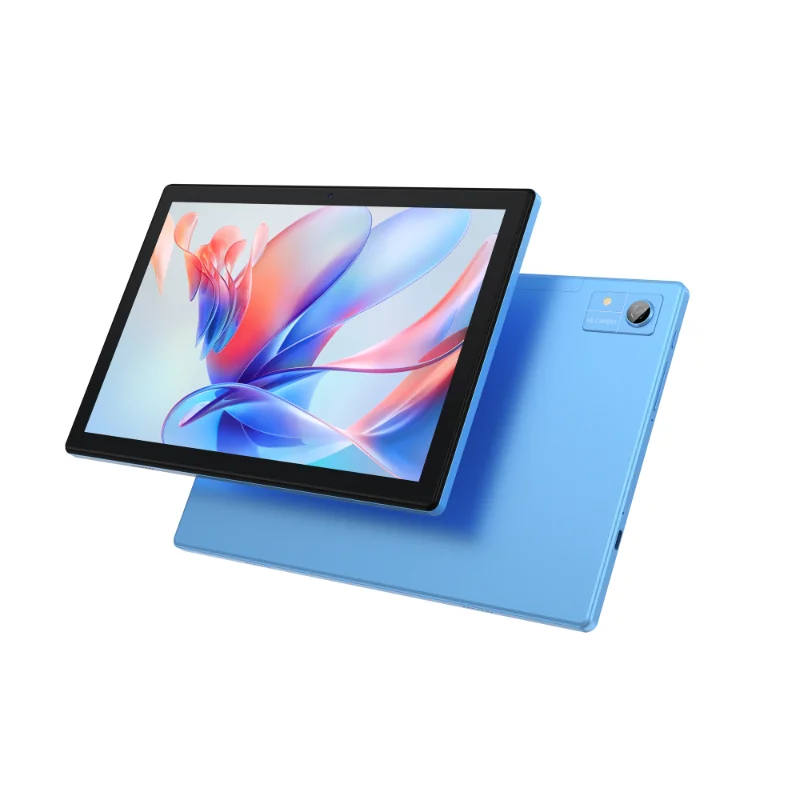
ODM is the pragmatic choice for brands that need quick market entry, have limited budgets, or lack hardware engineering capability — a common profile for retail integrators and commercial resellers. A proven production-ready business tablet platform shows the model in action: you take an existing design and make it yours through branding and configuration rather than reinventing the board.
The cost profile differs from OEM. MOQ thresholds are lower, lead times are shorter because no new tooling is required, and you avoid engineering fees — but you pay per unit for the convenience, and your customization ceiling is limited to what the platform supports. For most commercial deployments — POS, kiosks, signage — this is the right starting point. Our commercial tablet specs guide lays out the specification baseline to evaluate any ODM platform against.
OEM vs ODM: A Side-by-Side Comparison
| Factor | OEM | ODM |
|---|---|---|
| Customization level | Total — custom PCB, components, enclosure | Surface-level — branding, memory, battery, software |
| Development cost | High — engineering, tooling, prototyping | Low to none — pay per unit |
| MOQ | Higher threshold, project-dependent | Lower threshold, project-dependent |
| Lead time | Months — design through certification | Weeks — adaptation of existing platform |
| IP ownership | Yours | Factory’s design, your branding |
| Certification responsibility | Yours — design must pass compliance | Often pre-certified platform |
| Update flexibility | Full control over future revisions | Limited to factory’s roadmap |
| Best fit for | Unique hardware, IP protection, in-house R&D | Fast launches, standard commercial use |
The table is a directional starting point, not a fixed contract. Actual MOQs, lead times, and engineering fees depend entirely on project scope. Take the shortlist you build here and request written figures from every factory you evaluate.
Actionable guideline: if your deployment needs standard commercial performance, ODM gets you to market faster and cheaper. If you need a specific I/O port, an embedded peripheral, or a differentiated industrial design, OEM is necessary — budget for it accordingly.
Key Risks to Watch in Each Model
OEM risks: engineering cost overruns, slip in development timelines, the possibility of design flaws discovered only in certification, and a compliance responsibility you cannot delegate. A custom device that fails GMS or regional certifications delays launch and burns budget.
ODM risks: limited differentiation, dependency on the factory’s reference design, exposure if the factory discontinues the platform, and less control over component quality and future updates.
Mitigate both with the same discipline: select a factory with a verifiable track record (audit certifications and past projects — do not take marketing claims at face value), sign agreements that define MOQ, lead time, warranty, and component sourcing, and request physical samples before any mass production commitment. Most professional buyers develop this verification habit over time — the search behavior of B2B tablet buyers shows exactly which factors they weigh before ordering.
How to Choose the Right Model for Your Business
Work through this checklist before contacting factories:
- Budget: Can you absorb engineering and tooling costs, or do you need per-unit pricing only?
- Timeline: Is there market pressure to launch within weeks, or a product roadmap that allows months of development?
- Required uniqueness: Does your use case demand custom hardware — specific ports, embedded peripherals, rugged design? Or is standard performance sufficient?
- In-house technical capacity: Can your team define and verify a hardware specification, or do you need a turnkey solution?
- Volume: Will your order volume justify the MOQ an OEM program requires, or fit within ODM thresholds?
Startups and small brands usually begin with ODM to validate the market and build a track record. Established companies with a clear roadmap and a differentiated product thesis can justify OEM. Between the two sits a hybrid most guides ignore: semi-ODM — taking a proven ODM base and requesting minor board-level modifications, such as an extra I/O port or a different memory configuration, to balance cost and differentiation without a full from-scratch design.
Frequently Asked Questions
What is the difference between OEM and ODM for Android tablets?
OEM manufacturing builds a tablet to your custom hardware design — PCB, components, enclosure — so you own the design and control differentiation. ODM manufacturing adapts an existing factory design with your branding, memory, battery, and software options, trading customization depth for speed and lower cost.
Which is cheaper: OEM or ODM for bulk tablet orders?
ODM is cheaper upfront because you avoid engineering and tooling fees, and per-unit cost is usually lower on a proven, volume-tested design. OEM carries non-recurring engineering costs and typically higher MOQs, but can be justified when custom hardware enables features competitors lack. Request written quotes for your exact volume before deciding.
Can I get my logo and custom software with an ODM tablet?
Yes. Branding, casing color, memory and storage options, battery capacity, and preloaded software or a custom launcher are standard ODM customization points. What you cannot change is the underlying hardware design — that is the trade-off for the faster, lower-cost model.
What is the minimum order quantity for OEM vs ODM tablet manufacturing?
ODM thresholds are typically lower because no new tooling is required, while OEM thresholds are higher to amortize engineering and tooling investment. Exact MOQs vary by factory and project scope, so request current thresholds in writing from every candidate manufacturer.
Next Steps: Get a Factory Assessment
You do not have to decide alone. Share your product requirements — target market, volume, needed I/O, certification region, and differentiation goals — and an engineering team can recommend the model that fits, including whether a semi-ODM compromise makes sense. Feasibility assessments and sample evaluation are part of the process; do not commit to a model until you have seen what the factory can actually ship.
Got a project? Talk to our engineers about OEM vs ODM options and request a quote or sample to compare OEM & ODM options for your Android tablet project. Browse a production Android tablet you can adapt to anchor the conversation.