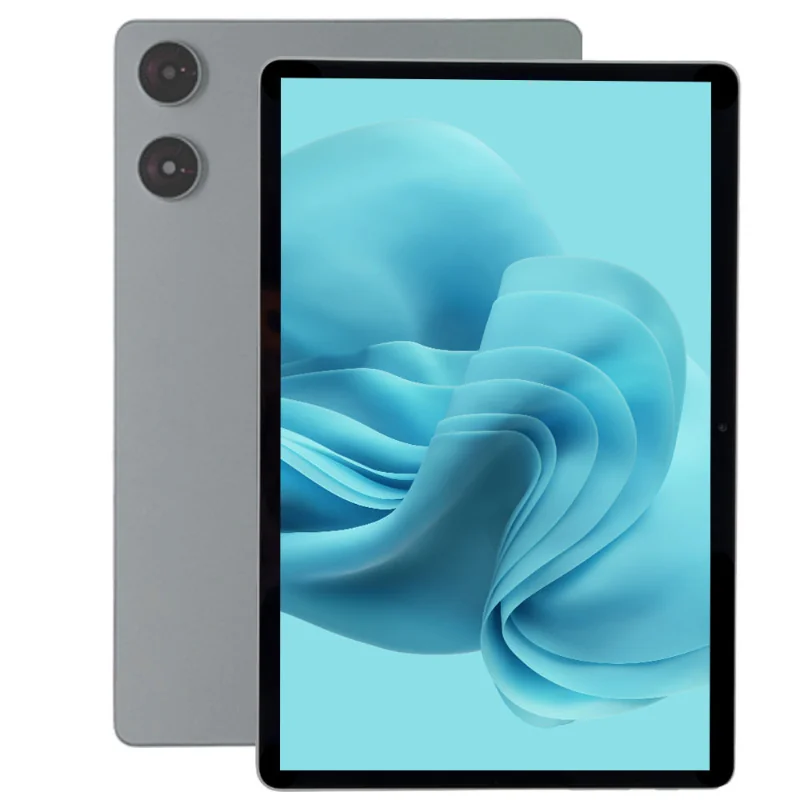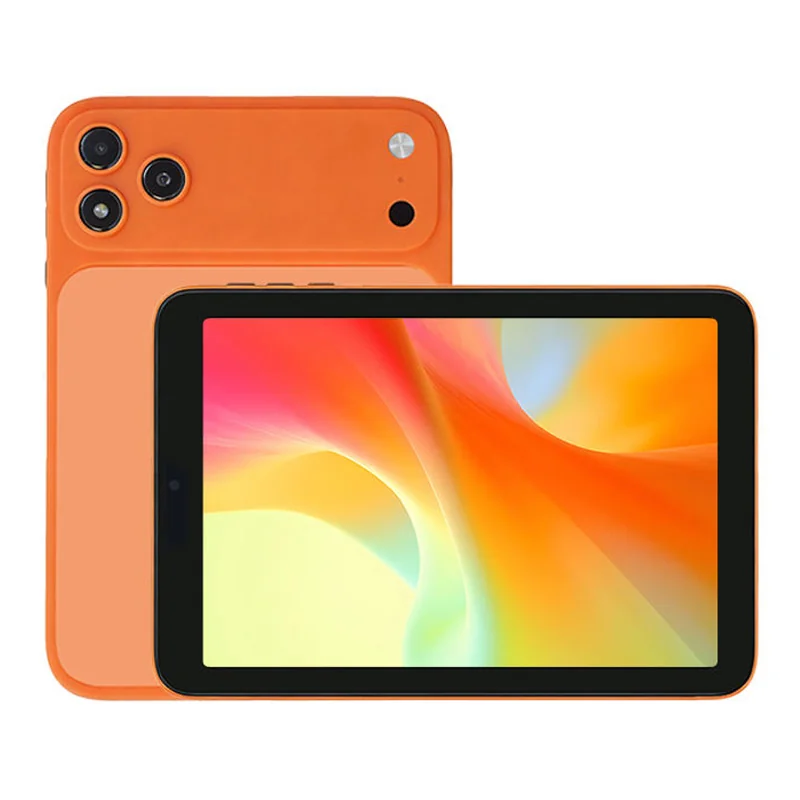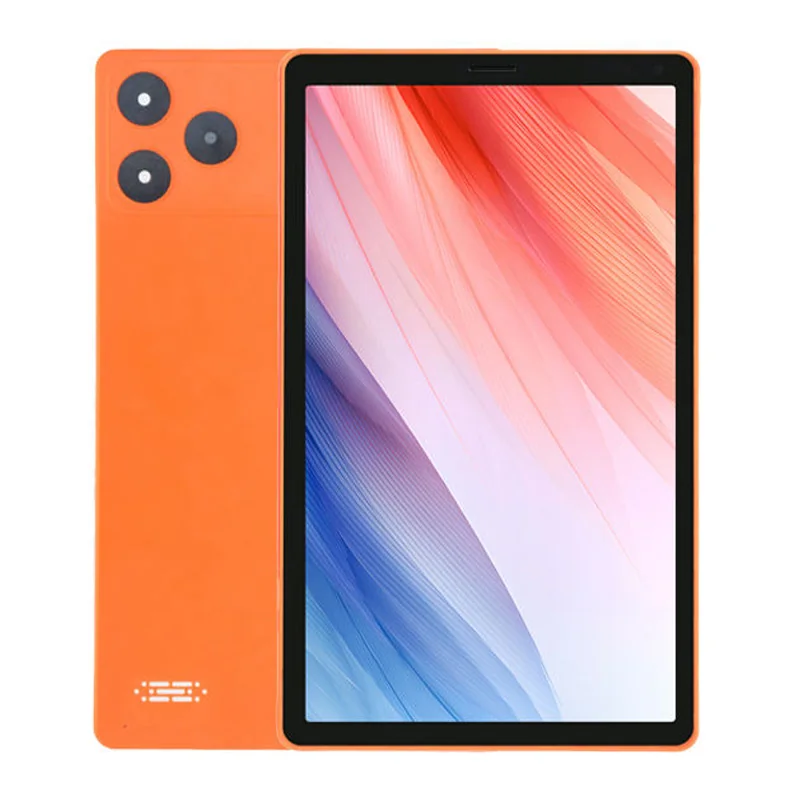
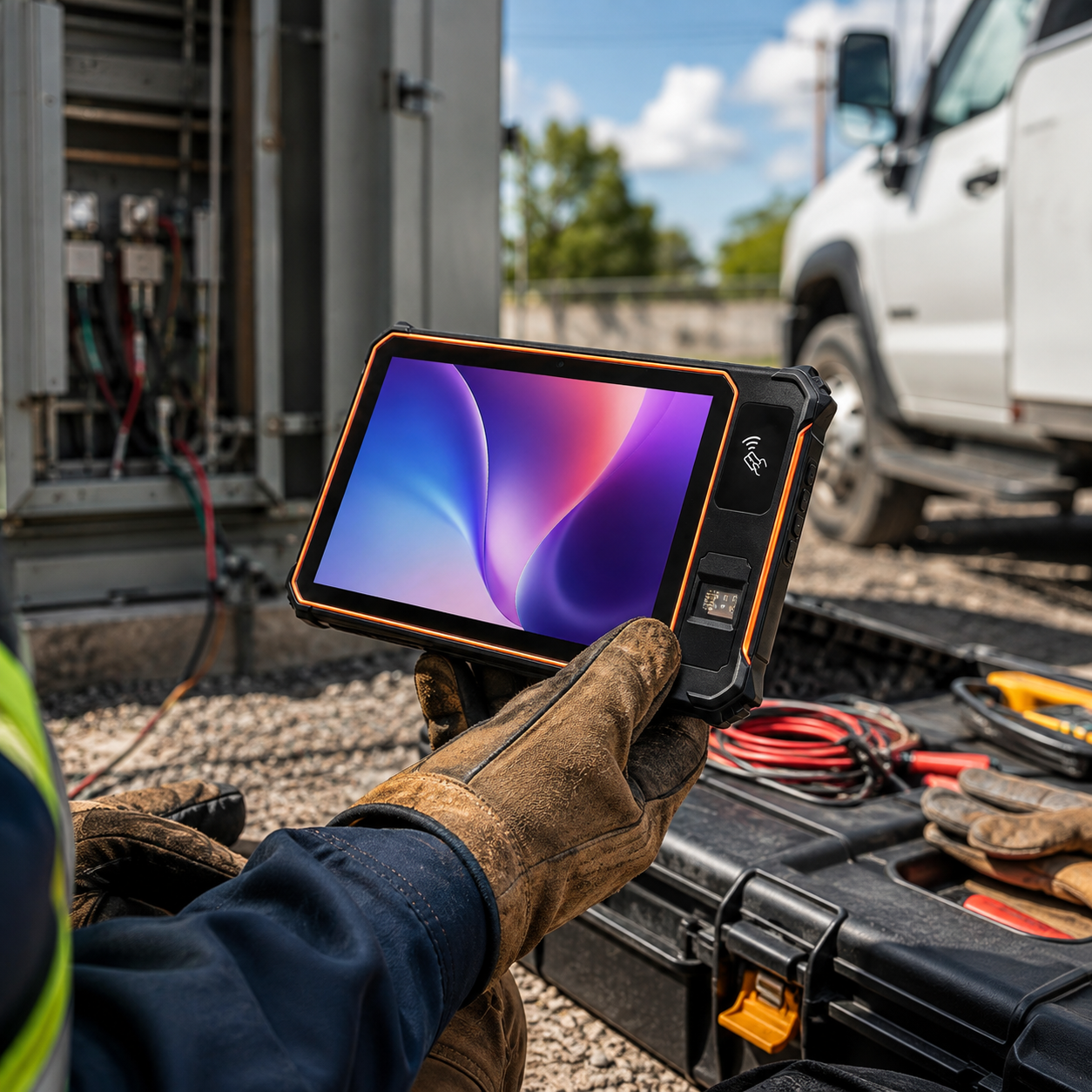
Retail IT and procurement teams evaluating AI-powered checkout tablets in 2026 face a familiar trap: pay for specs you don’t need, or undersize the hardware and watch checkout lag. This comparison breaks down the specs that actually drive smart checkout performance — NPU, RAM, storage, camera, and I/O — so you can align the configuration with your real workload instead of guessing.
For smart checkout in 2026, prioritize NPU performance, at least 8GB RAM, and fast storage. The right balance depends on your AI workload — a vision-based self-checkout needs stronger NPU and camera specs than a simple item-recognition setup. Use the comparison framework below to match specs to your deployment, not the other way around.
Why Most Retailers Over- or Under-Spec Their AI POS Tablets
Spec sheets are easy to over-read. A 10% push in NPU TOPS might add 15–20% to unit cost, yet deliver zero perceptible speedup if your checkout AI runs mostly on a server or only processes barcodes. Conversely, skimping on RAM to hit a price point is the classic failure we see in mid-size chains: the Android POS interface swaps memory, the camera feed stutters, and the customer walks away mid-pay.
Overspending hurts ROI; underspending hurts the checkout experience. The decision should start with the workload — not with a marketing-ready “AI tablet” claim. That’s why our sourcing guidance for AI POS buying risks separates the specs that move the needle from the ones that just inflate the quote.
Deployment Scenarios: How AI Workloads Vary by Retail Type
Your retail category dictates the hardware floor. Three common patterns:
- Quick-service restaurants (QSR): Vision-based order confirmation and object detection run continuously on-device. This demands a higher NPU tier, a front camera capable of clean 30fps capture, and enough RAM to keep the vision pipeline resident. If you also anticipate future model updates, budget for storage headroom.
- Convenience stores: Self-checkout with simple item recognition — barcodes plus a handful of SKUs — runs comfortably on mid-range hardware. A lower NPU count is acceptable; RAM and storage become the binding constraints for smooth UI interaction.
- Department stores and multi-camera setups: Inventory tracking across multiple cameras needs additional USB ports for peripheral cameras and expandable storage for logs. Dual-screen checkout (cashier + customer display) also adds a video output requirement that some chipsets cannot drive cleanly.
If you’re deciding between fixed kiosks and tablet checkout, cost structure changes the spec math. Our tablet vs kiosk OPEX comparison shows where tablet hardware amortizes versus a kiosk’s higher upfront investment.
2026 AI POS Tablet Spec Comparison: What Each Spec Means for You
| Spec | What it means for smart checkout | When to upgrade |
|---|---|---|
| CPU | Handles the Android OS, UI rendering, and general transaction logic. Multi-core performance matters when the POS app opens, prints receipts, and interacts with payment hardware simultaneously. | Upgrade if you run a heavy third-party POS stack or multiple services (payment, inventory, loyalty) on the same tablet. |
| NPU (TOPS) | The neural processing unit accelerates on-device inference for object detection, item recognition, and model-based error checks. Lower TOPS means inference runs slower or must be offloaded to the cloud. | Upgrade only if you deploy vision-based models on-device. For barcode-only workflows, a modest NPU is sufficient. |
| RAM | Keeps the OS, POS app, and AI runtime resident simultaneously. Under-provisioned RAM causes stutters at the worst moment — during a transaction. | Start at 8GB for normal checkout. Go to 12GB if you run vision models plus a customer-facing display app on the same unit. |
| Storage | Holds the OS, app, model files, and local transaction logs. AI models and regression-test data grow quickly, and slow eMMC storage becomes a visible bottleneck. | Choose eMMC at minimum; upgrade to UFS or add expandable storage if you keep long audit logs or frequently update models. |
| Camera | Camera quality defines recognition accuracy in self-checkout. A low-resolution or slow shutter camera will fail vision checks and frustrate customers. | Require at least a 13MP front camera with autofocus if you rely on visual item identification. For barcode-only, a basic camera suffices. |
| Dual-screen output | Cashier facing + customer-facing display increases engagement but demands a chipset that can drive two displays without dropping frames. | Needed for QSR and department-store layouts. Verify the SoC’s display engine supports your intended panel resolution and refresh rate. |
| I/O ports | USB host ports, serial, and network headers connect payment terminals, barcode scanners, printers, and secondary cameras. Inadequate I/O forces expensive dock adapters. | Count your peripherals first. Multi-camera setups and printer-heavy POS configurations typically need 3+ USB-A ports and a dedicated power input. |
The chipset itself (for example, Rockchip RK3588 or a Snapdragon 600-series) often bundles CPU, NPU, and GPU in one SoC, so your platform decision drives several rows of this table at once. That’s why we talk about platform choices before individual spec line items.
Buyer’s Checklist: Questions to Ask Your OEM/ODM
Before you sign a specification, verify these five points with your supplier — in writing:
- Confirm your AI models run on-device. Ask which NPU framework the chipset supports (e.g., RKNN, TensorFlow Lite delegate) and whether your specific model is compatible. A vendor’s “AI-ready” claim means nothing if your model can’t execute on that NPU.
- Test with your actual app on a sample unit. Our typical consultation walks this exact path: we run the client’s checkout app on a reference business tablet, benchmark latency under load, and compare results across RAM and storage configurations — so you see real performance before committing.
- Verify compliance certifications for your target markets. CE, FCC, and RoHS cover EU/US sales, but don’t assume factory-level ISO certification equals model-level CE/FCC compliance. Ask for the specific model’s test reports, not a generic factory certificate.
- Get a software update and patch SLA in writing. Android OS versions and security patches have fixed lifetimes. A POS tablet that doesn’t receive updates becomes a compliance liability in years two and three.
- Request warranty and return terms explicitly. Our standard terms include a defined warranty period and a clear return policy for defective units — and we supply evaluation samples precisely so you can validate fit before a bulk order.
For broader market context on where Android POS is heading, review our 2026 Android POS market data — it explains the shift toward on-device AI and why hardware choices made today will lock you into a three-year cost structure.
Next Step: Get a Custom Hardware Evaluation
Stop comparing spec sheets in a vacuum. Request a Free AI POS Hardware Evaluation Checklist, and our OEM/ODM engineers will walk your actual checkout workload against reference units — measuring latency, memory pressure, and camera accuracy so you buy the configuration you need, not the one a marketer wants to sell.
Frequently Asked Questions
What is the minimum RAM for AI POS tablets?
For 2026 smart checkout, treat 8GB as the practical minimum. Barcode-only workflows may run on 6GB, but once you add vision-based item recognition, a customer display, or a third-party POS stack, 8GB is the floor to avoid mid-transaction stutters.
How many TOPS NPU do I need for smart checkout?
There is no universal TOPS number because it depends on the model size and inference frequency. A simple item-recognition model for a convenience store can run on a low-TOPS NPU; a QSR vision pipeline needs a higher tier. The only reliable way to know is to benchmark your actual model on candidate hardware.
Can I use a non-AI tablet for checkout?
Yes, if your checkout flow is barcode-only and doesn’t require on-device vision. But you lose future flexibility: adding AI features later forces a hardware swap. If you expect to roll out vision-based checkout within 2–3 years, spec an NPU-equipped platform now.
How do I ensure compliance for AI POS tablets in the EU/US?
Ask the OEM for model-level CE, FCC, and RoHS test reports — not a generic factory certificate. Verify the Android security patch level and the vendor’s update SLA, and confirm the unit’s radio and power certifications match each country where you deploy. Request these documents in writing before purchase.