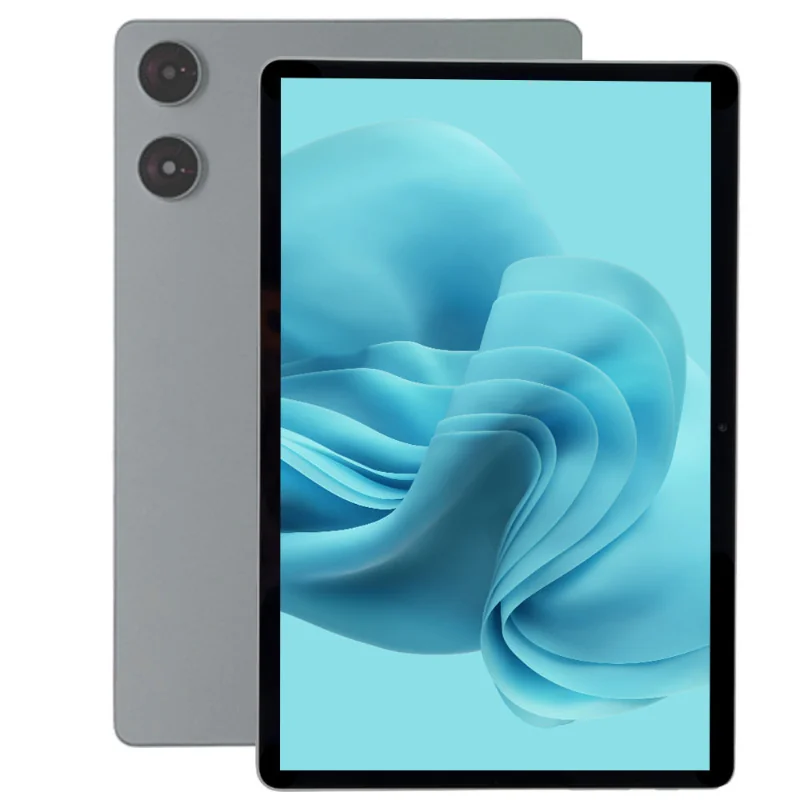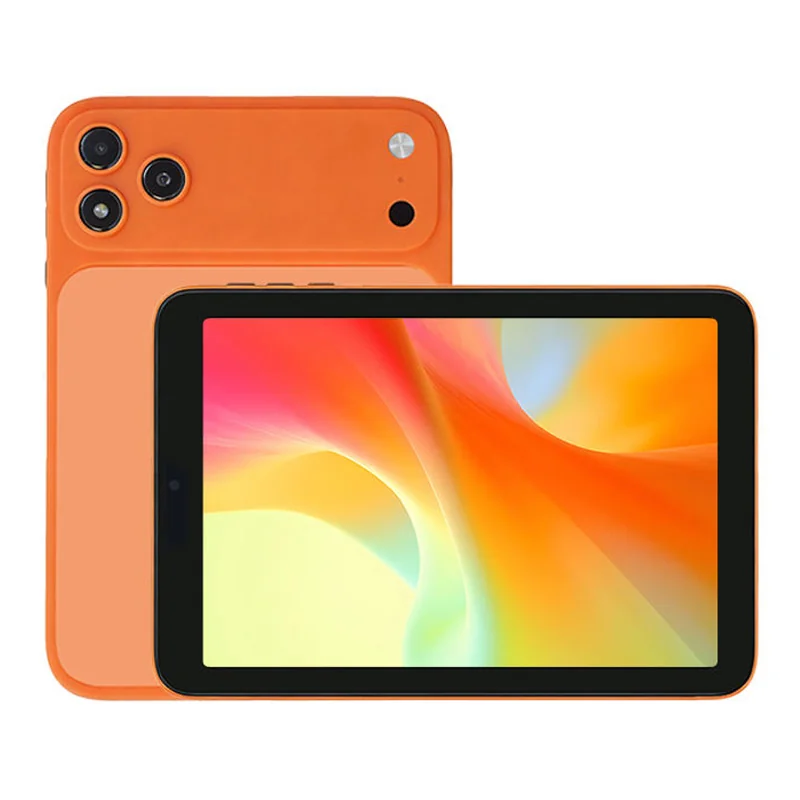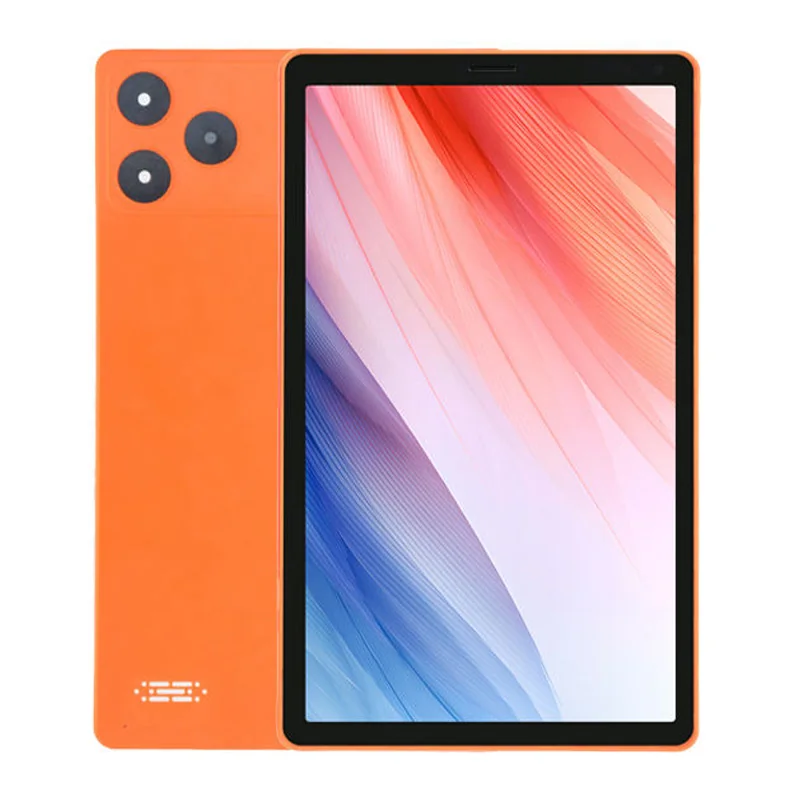
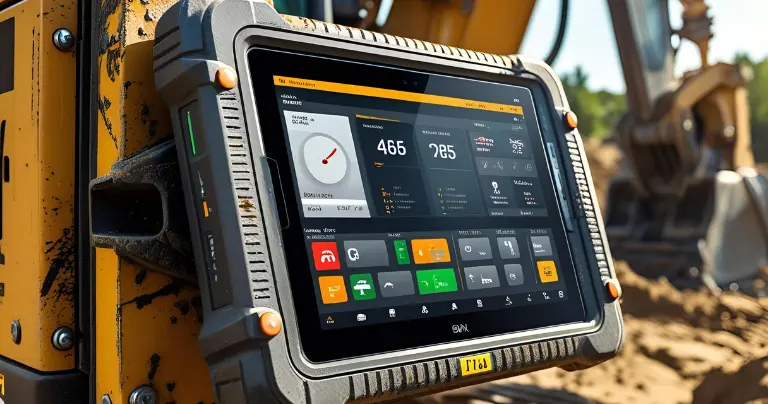
For a B2B buyer sourcing payment or display hardware in 2026, the question is no longer “does Android work at retail” — it is “how do I lock in an Android supplier before the market doubles?” The Android POS market is projected to grow from USD 15.34 billion in 2024 to USD 133.72 billion by 2033 (27.2% CAGR, SkyQuest), while tablet POS systems alone move from USD 8.2 billion in 2025 to USD 16.8 billion by 2033 (9.4% CAGR, Dataintelo). Meanwhile the overall tablet market is flat (+0.1% YoY in Q1 2026 per Omdia) — meaning growth is concentrating in enterprise, not consumer, devices. If your buying decision is driven by cost-per-unit rather than total cost of deployment, you are evaluating the wrong metric.
Why enterprise Android is where the growth actually is
The 2026 macro picture is counterintuitive. The global tablet market grew just 0.1% year on year in Q1 2026, with Apple still shipping 14.8 million units (+7.9%) and Huawei (+28%) and Lenovo (+20%) the fastest risers. Consumer demand is soft. Yet Android still holds 52.7% of the tablet OS market (Coherent Market Insights), and the enterprise slices — POS, self-checkout, digital signage — are compounding at double-digit rates.
That divergence matters for sourcing. A consumer-tablet supplier optimizes for flashy specs and price. An enterprise supplier optimizes for reliability, certification, management tooling, and supply continuity — the things that actually determine whether your POS network survives 5 years in the field.
The hot topic: AI moved from promise to production at retail
AI was the unavoidable headline of NRF 2026, and it has stopped being a buzzword. In January 2026 NCR Voyix shipped an AI-accelerated suite spanning POS, self-checkout, supply chain, analytics, and loyalty. Industry surveys put 91% of retail IT leaders ranking AI as their top technology priority (Scandit). Critically, the trend for 2026 is not new hardware — it is maturation: better self-checkout UI, weight-sensor calibration, and staffed-attendant models that cut theft without creating bottlenecks (Troc Global).
What this means for hardware buyers: the “smart” capability increasingly lives in the software and the SoC, not the enclosure. Your Android tablet must carry enough compute headroom (CPU + AI/NPU) to run current and next-gen apps, because you will not want to re-deploy a fleet for 2-3 years.
Real specs you should be comparing, not marketing sheets
| Decision factor | Consumer tablet | Enterprise POS / signage tablet (what to demand) |
|---|---|---|
| OS & management | Stock Android, no fleet tooling | Android Enterprise (device owner / kiosk / MDM-ready, zero-touch provisioning) |
| SoC / compute headroom | Entry-level, app-only | Mid-to-high tier with AI/NPU headroom for retail analytics |
| Connectivity | Wi-Fi only | 4G/LTE/5G + Ethernet-ready for POS and signage stability |
| Peripherals | None guaranteed | MSR, barcode scanner, cash drawer, printer, USB/RS232 ports |
| Certifications | Basic consumer | CE, FCC, RoHS, and target-market certs (write them into the contract) |
| Lifecycle & supply | Short product cycles | Long-life supply, stable BOM, custom branding/OEM available |
Digital signage is the other compounding bet
The digital signage market is projected to climb from USD 31.1 billion in 2025 to USD 58.4 billion by 2033 (Grand View Research), with DOOH advertising growing even faster at 12.09% CAGR and US DOOH ad spend up 14% in 2026 alone (eMarketer). Connected displays are forecast to grow from 91.5 million (2023) to 149.4 million by 2028 (Berg Insight). A large share of that runs on Android, where 24/7 uptime, remote provisioning, and LED/HDMI-out configs matter more than megapixel camera specs.
De-risking your sourcing decision
- Certification first, not last. For EU/US buyers, demand CE/FCC/RoHS plus any vertical cert (EMV, PCI-PED for payment) in the RFQ — not as a post-sale surprise.
- Total cost, not unit cost. Lower unit price usually hides shorter field life and fleet re-deployment costs. Model 5-year TCO.
- Demand Android Enterprise readiness. If the device can’t be provisioned and managed at fleet scale, it is a consumer tablet wearing a retail sticker.
- Secure supply. In a flat-then-doubling market, long-life supply and a stable BOM are negotiating leverage — ask for the 2026-2028 roadmap.
- OEM/ODM optionality. Factory-direct gives you custom branding, pre-loaded apps, and kiosk configs a brand tablet can’t.
Next step: put the numbers to work on your spec
Market forecasts tell you the direction; a hard spec sheet tells you the price. If you’re planning a POS, self-checkout, or digital-signage fleet for 2026-2027, request a quote or a datasheet with your deployment size and region — and read how the tablet industry reshuffle is changing who you should source from. Bring your MOQ, target markets, and cert requirements, and we’ll respond with a line-item spec and lead time that matches the data above, not a marketing brochure.