
The question to settle before you sign a 2027 purchase order
If your DRAM allocation is cut in 2027, can you still ship a tablet that meets the specification your customer signed? That is the sourcing question. Price matters, but the decision that protects a program is made at BOM and contract level: which memory configurations are locked by contract, which substitutions are pre-approved, and how quickly an alternate can be qualified. Buyers who answer only the price question sign a 2027 PO with no fallback path.
Three failure modes deserve planning, and they are not the same problem:
- Allocation shortfall on a qualified part. The part exists and is compliant, but your share of supply is reduced or deferred.
- End-of-life or density-step discontinuation. The specific density or package you qualified is being retired, or replaced by a step that requires re-qualification.
- Terms that lock volume you cannot absorb. A minimum-order quantity or non-cancellable, non-returnable (NCNR) window converts a supply problem into an inventory problem.
Set the decision deadline backwards from your first 2027 shipment window, not forwards from today. Memory qualification, customer spec approval and any tender or framework-agreement amendment must close before the PO is issued. If a substitution requires a spec-sheet revision that your customer must countersign, that revision sits on the critical path.
The market context is publicly attributed and third-party, so treat it as planning input rather than our own measurement. IDC’s published commentary states that tight conditions in memory are not a short-term anomaly and that the spot-buying, short-contract model is increasingly unworkable, with buyers rethinking long-term agreements, dual-sourcing and design choices (IDC, June 2026). Reporting based on market sources states that major DRAM manufacturers had pre-allocated part of their 2027 capacity (TradingKey, August 2026). Neither source is a forecast for your program, and neither gives you a quota. What they support is a planning assumption: plan for an allocation-driven 2027, and write your sourcing documents accordingly.
Checklist step 1 — Split 2027 volume into LTA, buffer and spot, quarter by quarter
The deliverable is a mix, not a single percentage. Build one row per quarter and record four things: committed long-term agreement (LTA) volume, safety buffer, open or spot requirement, and the commercial event you cannot afford to miss in that quarter.
| Quarter | LTA volume | Safety buffer | Open / spot | Cannot-miss event |
|---|---|---|---|---|
| Q1 | Volume covered by signed agreement | Line-keeping stock only | Uncovered demand, bought at market | e.g. pilot batch, certification build |
| Q2 | As above | As above | As above | e.g. education tender delivery window |
| Q3 | Weight the LTA toward this row | Largest buffer sits here | Minimise | e.g. back-to-school or retail refresh |
| Q4 | As above | As above | As above | e.g. signage rollout, year-end budget spend |
Weight the LTA toward the quarter where a stockout is commercially fatal, rather than spreading commitment evenly. A flat 25% per quarter protects no one.
Then ask the supplier one question in writing: what is the allocation basis? Per part number, per package type, or per customer rolling forecast. The answer determines whether your LTA actually protects you. An LTA quoted against a die family does nothing if allocation is administered per package type.
Record the NCNR window and any take-or-pay floor for each line. An agreement that fixes volume but removes flexibility can be worse than buying spot. We deliberately publish no quota percentages or lead-time weeks here: those are supplier-, part- and quarter-specific, and a number from a web page is not a commitment. Request them in writing against your own forecast.
Checklist step 2 — Agree which configurations can be downbinned before the customer asks
Split every SKU’s memory attributes into two categories: fixed by contract and engineering discretion. Only the second is negotiable under allocation pressure, and “discretion” means a pre-approved path with a re-test — not a free swap.
| Memory attribute | Downbin allowed? | Who approves | Evidence required | Contract / spec action |
|---|---|---|---|---|
| Declared RAM capacity on a public datasheet | No, unless the customer agrees | Customer + program owner | Written customer acceptance | Datasheet revision, new SKU code |
| RAM tied to a certified or validated application stack | No | Application owner | Re-validation report on that stack | None — out of scope |
| RAM named in a tender or framework response | No | Contract owner | Contract amendment | Amendment before substitution ships |
| Density step within the same die family and same bus width | Conditional | OEM engineering + program owner | Stress test and regression results | Internal deviation record |
| Package-equivalent alternate (e.g. PoP vs discrete, where the SoC supports both) | Conditional | OEM engineering | Datasheet revision confirming pin compatibility | Spec annex listing approved alternates |
| Second-vendor part at the same density and generation | Conditional | OEM engineering + customer QA | Qualification report | Approved-alternate list in supply agreement |
Write the allowed substitutions into the master supply agreement as a named list, with a notice period before use and a re-test obligation. A generic “equivalent or better” clause will not survive a customer audit, and it will not help you when the cut arrives on a Friday.
Checklist step 3 — Treat LPDDR4X as a qualified fallback window, not a cost claim
An older memory generation is only a fallback if three things are true: the SoC still supports it, the interface can be routed on the board, and the customer accepts the consequence. Verify in that order.
- SoC memory support. Check the SoC vendor’s published memory support matrix before promising anything. Not every current SoC still supports an older LPDDR generation, and some support it only at reduced bandwidth or reduced maximum density. LPDDR4X and LPDDR5/5X differ in interface, signalling and pinout, so a server-side “just swap it” instruction is not a plan.
- Board and package implications. Moving generation usually means a PCB re-layout or a package change (package-on-package versus discrete placement), which pulls in re-validation of the memory interface, thermal behaviour and the spare-part structure.
- Application consequence. Lower sustained bandwidth changes app-switching and multi-window behaviour at your workload. Require the OEM to evidence it on your application set, not on a marketing figure.
The cost of the fallback is therefore mostly schedule, not silicon: layout, interface re-validation, OS and application memory-pressure re-test, and a spec-sheet revision. That is why the fallback must be qualified while the primary node is still available. Keep the primary in the BOM as the default and list the fallback as an approved alternate, so a future allocation cut becomes a purchasing decision rather than a requalification project.
We make no claim here about pricing or availability levels for any memory generation. Ask each supplier for written lifecycle and allocation status for the exact part number you intend to use.
Checklist step 4 — Dual-source and dual-package qualification gates
Two axes are needed, not one: a second supplier for the same part, and a second package option for the same die. The package axis protects you when allocation is administered per package type — which, as noted above, you should confirm in writing.
Reserve calendar time for each gate and treat the gates as fixed:
- Sample availability — including whether the alternate is sampling at the density you need.
- Board bring-up and interface validation — memory training, signal integrity, and confirmation that the datasheet revision actually supports the configuration.
- Memory stress and thermal test — at the ambient range your deployment target requires.
- OS and application regression — including any certified application stack named in the customer contract.
- Customer or certification sign-off — the gate most often forgotten, and the one that cannot be compressed.
Publish an internal rule for how much qualification float each program holds, and require program-owner approval for any request that shortens it. Purchasing should not be able to trade away a gate to hit a quarter.
Require written cross-reference and pin-compatibility confirmation traceable to a datasheet revision, not to a sales email. Then add the lifecycle side: obtain the supplier’s product-discontinuance notice period in writing and make it a pass/fail item. Second-source qualification is the cheapest hedge against an end-of-life notice you did not see coming.
For programs already shipping, memory changes interact with other compliance workstreams — battery shipping documentation, for example, is covered in our UN38.3 shipping requirements checklist for tablets, and should not be re-run in the same week as a memory requalification if you can avoid it.
Checklist step 5 — Manage the inventory and cash-flow side of the same decision
An over-committed LTA converts a supply problem into a write-off problem. Cap committed volume at demand you can defend from signed customer orders or binding forecasts, and separate two kinds of stock:
- Strategic buffer — memory that keeps a committed line running. This belongs in the 2027 program plan.
- Speculative stock — memory bought on an expectation. This belongs in a separate approval with its own risk owner.
Define the obsolescence trigger in advance: for example, the point at which the alternate configuration replaces the original in the field. Agree who absorbs residual stock at that point. Align buffer timing with your customer’s own acceptance window, because memory bought early but shipped late still carries firmware-version and warranty-start risk. We publish no holding-cost percentages; request written buffer and consignment options from the supplier instead.
When paying a premium for allocation is rational — and when it is not
Pay for allocation when all three conditions hold: the shipment it protects is contractually committed, the penalty for missing it exceeds the premium, and the premium buys a named part number with a written delivery commitment.
Do not pay when the premium buys an unnamed “allocation priority”, when the volume is speculative, or when the same protection is available by switching to an already-qualified alternate. Book the premium as its own line in the program business case so commercial approvers see it as risk cost rather than hidden BOM inflation.
Price-lock mechanics, quotation validity windows and escalation clauses are a separate decision from allocation, and we keep them out of this page deliberately — this checklist is about whether you can ship to spec, not about how the number is fixed.
What to put in the RFP so the answers are comparable
Ask every candidate OEM for the same six items, in the same template:
- Memory option list per SKU, including approved alternates.
- Downbin approval path, with the matrix above completed.
- Alternate supplier and alternate package status, per part number, traceable to datasheet revisions.
- Lifecycle and product-discontinuance notice terms in writing.
- Allocation basis and NCNR terms for the target quarters.
- Qualification lead time for a substitution, gate by gate.
Score each item pass/fail before comparing price. A quote with an unqualified memory path is the most expensive program in the shortlist, because the risk lands after the PO is signed.
Questions buyers ask us most often
Can we still design a 2027 Android tablet on LPDDR4X if LPDDR5 allocation is tight?
Possibly, but only after checking the SoC’s published memory support matrix, the board and package implications, and the sustained-bandwidth consequence at your workload — and only with the customer’s written acceptance if the generation is named in the specification. Treat it as a qualified alternate in parallel with the primary node, not as a late rescue.
Which tablet memory specifications can be downgraded without breaching a customer contract?
Only attributes already classified as engineering discretion in the supply agreement, and only with the evidence and notice period that clause names. Declared capacity on a datasheet, memory tied to a certified application stack, and any figure named in a tender response are contractually fixed until amended in writing.
How long does it take to qualify a second DRAM supplier or an alternate memory package for a tablet?
It is gate-bound, not calendar-bound: sampling, bring-up, stress and thermal test, OS/app regression, and customer or certification sign-off. We do not publish a week count, because it depends on your certification scope and customer approval speed. Ask each OEM to propose its gate sequence and lead time for your configuration, in writing, and hold float against it.
Is the memory shortage expected to ease before 2027, and what should we lock now?
Third-party commentary, including IDC’s, points to tightness persisting into 2027 rather than resolving quickly. Do not build a plan on a reversal. Lock what you can defend — committed LTA volume weighted to your critical quarter, a pre-agreed downbin matrix, and one qualified alternate per critical memory line.
Request a 2027 memory sourcing and configuration review
We run this review with program teams before a 2027 build is quoted. In sequence: we assemble the memory option list for your SKUs, cross-check package and spare-part implications, map the downbin approval path to your customer contracts, and confirm which alternates can be qualified before your first shipment window.
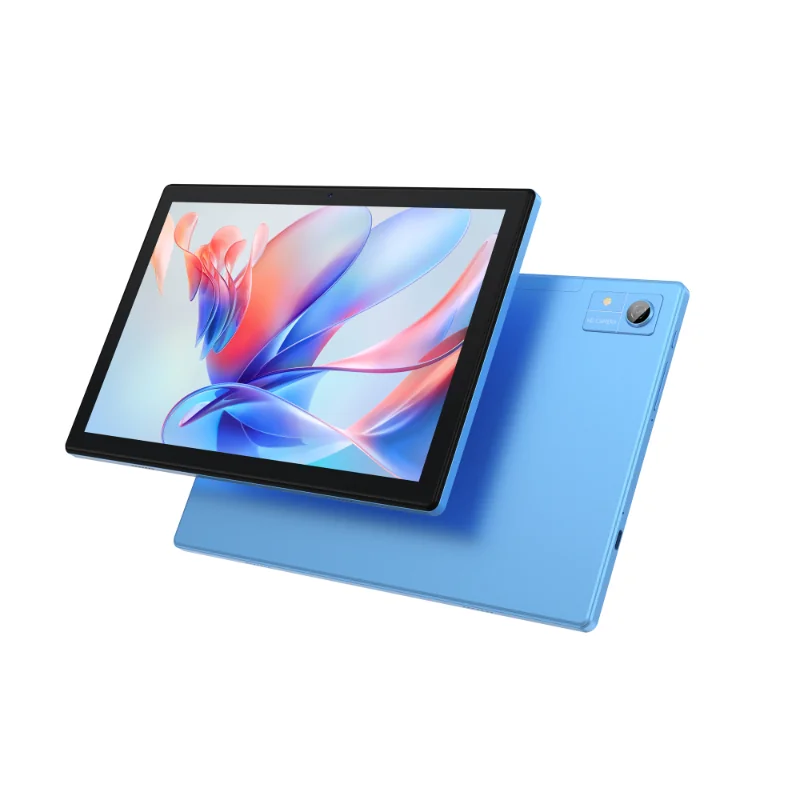
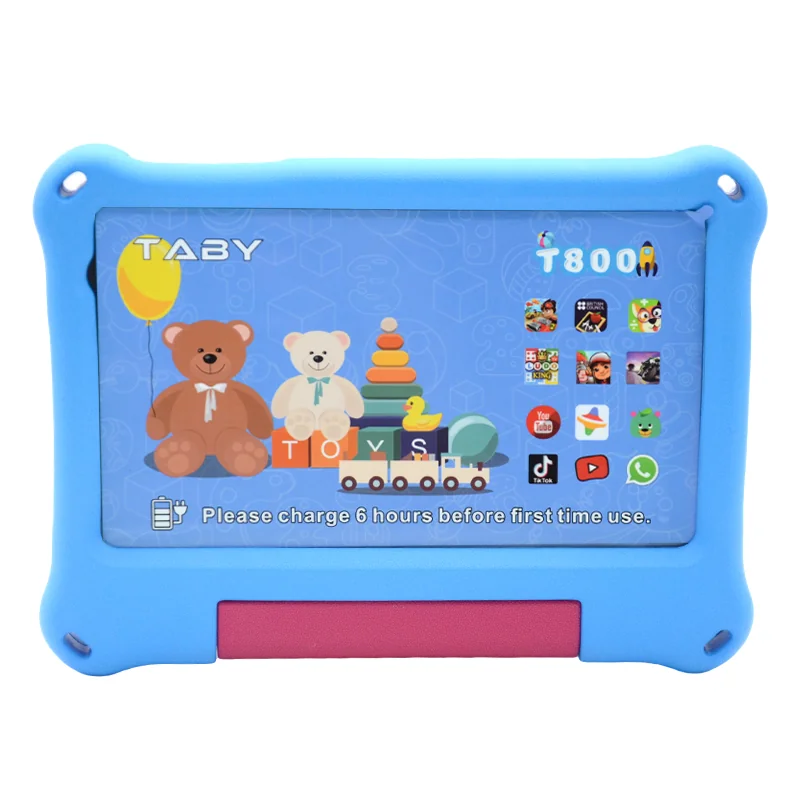
Send us your target volumes by quarter, deployment market and any memory specification already committed to a customer, and we will return a BOM memory options list plus a downbin impact assessment for your program. Review our platform options as a starting point — the Snapdragon 685 11.97-inch business tablet, the T616 10.51-inch business tablet, and the T1000 kids tablet for education and classroom deployment — or ask us to match the specification you have already tendered.
Request the 2027 memory sourcing and configuration review here and include the quarter in which a stockout would be commercially unacceptable. That single date sets the whole qualification calendar.