
The short answer: a tablet is never “PCI MPoC certified.” Your SoftPOS app vendor owns the MPoC solution listing and the monitoring obligation; the Android tablet OEM owes you model-specific hardware, firmware and OS-lifecycle evidence that supports that listing. Before you order samples, get that evidence in writing, tied to the exact model and hardware revision, and verify the solution provider’s PCI SSC listing ID yourself. Anything else is a brochure.
Two limits up front, because they shape every question below. First, acquirer and scheme onboarding requirements differ by market and change over time — a document pack supports due diligence but does not guarantee approval. Second, the tablet OEM cannot certify, list or vouch for someone else’s SoftPOS application, and hardware evidence never substitutes for a PCI SSC listing.
The responsibility split: what to demand, and from whom
Most SoftPOS programmes stall not on technology but on an unassigned task. Use this matrix to see where your onboarding risk actually sits before an acquiring bank asks the question for you.
| Buyer question | Evidence to request | Who owns it | Why it gets asked |
|---|---|---|---|
| Is the SoftPOS solution actually listed? | PCI SSC listing ID, listing type, version, scope and the legal entity named on it | SoftPOS solution provider | Scheme testing and acquirer onboarding start from a valid complete-solution listing |
| Does this tablet model work for contactless acceptance? | NFC controller part number, antenna description, model-specific read-range test report | Tablet OEM | Read performance depends on the antenna and mechanical design, not the chip alone |
| Where do payment secrets live? | Secure element / TEE / StrongBox availability and key-storage architecture description | OEM (hardware) + solution provider (key management logic) | Key isolation is a core MPoC evaluation area |
| How does device integrity get reported? | Hardware-backed attestation APIs available on the model, build-signing process, support letter | OEM supplies capability; solution provider runs monitoring | Attestation reporting to a monitoring service is part of the app’s certification |
| Will the OS still be patched in year three? | Written patch cadence, update window, end-of-life notice period, PCN process | Tablet OEM | An unpatched fleet becomes a finding during customer audits |
| Is PIN entry in scope? | Display and touch performance data, screen-protector behaviour, keypad evaluation support | Solution provider (keypad) + OEM (display/touch/secure environment) | PIN-on-glass keypad security is evaluated under MPoC |
Map the MPoC scope before you argue about hardware
The single most common misunderstanding in SoftPOS procurement is treating “MPoC certified” as one thing. MPoC listings exist at different levels, and a listing for a component — software, SDK, attestation or monitoring — is not the same as a complete solution listing.
Ingenico’s 2026 SoftPOS commentary makes the practical consequence explicit: Mastercard’s certification process requires a full MPoC solution listing before scheme testing can start, and a component listing is not enough on its own. Read that as a sequencing rule for your programme: if the solution provider holds only partial coverage, your go-live date is gated on their remaining certification work, not on your tablet order.
Ask for the listing ID, the listing type, the version, the scope and the legal entity that owns it — then check it on the PCI SSC site rather than on anyone’s marketing page. Evaluation pathways run from focused software reviews to complete solution validation through a PCI-recognised laboratory; if your provider cannot describe which pathway they completed, they do not have the paperwork you need. SISA’s PCI MPoC laboratory page is a useful orientation to how those pathways are structured.
One historical detail matters for older proposals. PCI MPoC consolidated the earlier CPoC (contactless only, no PIN) and SPoC (“PIN on glass”) standards after the 2022 PCI SSC release, and now covers a broad requirement set spanning key management and remote device monitoring. Any supplier still citing a CPoC or SPoC certificate should map it to current MPoC evidence rather than have you accept the old label at face value.
Where does the tablet OEM sit? Model-level hardware, firmware, secure storage and OS support evidence. Where does the acquirer sit? Onboarding and scheme acceptance. Three owners, three document sets — and no one party can fill another’s gap. For the broader document-by-document OEM checklist, including certificate types and factory-audit questions, see our Android POS MPoC certification OEM document checklist; this page stays on the SoftPOS-on-tablet hardware side.
Hardware evidence checklist: request this before you commit to samples
Each item below should come back in writing and be tied to a specific model, hardware revision and production configuration. If an answer is “standard” or “as required,” treat it as unanswered.
- Model and revision lock. Exact model name, hardware revision, BOM lock point and product change notification (PCN) process, so evidence cannot silently migrate to a different production batch.
- NFC implementation detail. NFC controller part number, antenna design description and a model-specific read-range test report. Ask how the report treats typical cards, worn or damaged cards, phones and wearables — and whether testing was done with the final enclosure.
- EMVCo Contactless Level 1 evidence where required. If your solution provider needs it, request approval evidence for the exact tablet model. A chip vendor datasheet or a generic “NFC compliant” statement is not the same document.
- Key storage architecture. Whether a secure element, TEE or StrongBox is available, and whether payment keys can be isolated from the Android application processor. Ask how key access is controlled and what happens on a factory reset or bootloader unlock.
- Hardware-backed attestation support. Which Android key attestation APIs are available on the model, and how custom or non-GMS builds affect attestation results. Attestation outcomes are central to the app’s integrity reporting.
- OS lifecycle commitment. Android version, security patch cadence, committed update window and end-of-life notice period, in writing.
- Build hardening. Locked bootloader, verified boot, debug interfaces disabled in production, CTS/VTS status, and the OEM signing process for production firmware.
- PIN-on-glass support if PIN is in scope. Display and touch performance data, behaviour with tempered glass and matte screen protectors, and how the OEM will support the solution provider’s keypad security evaluation.
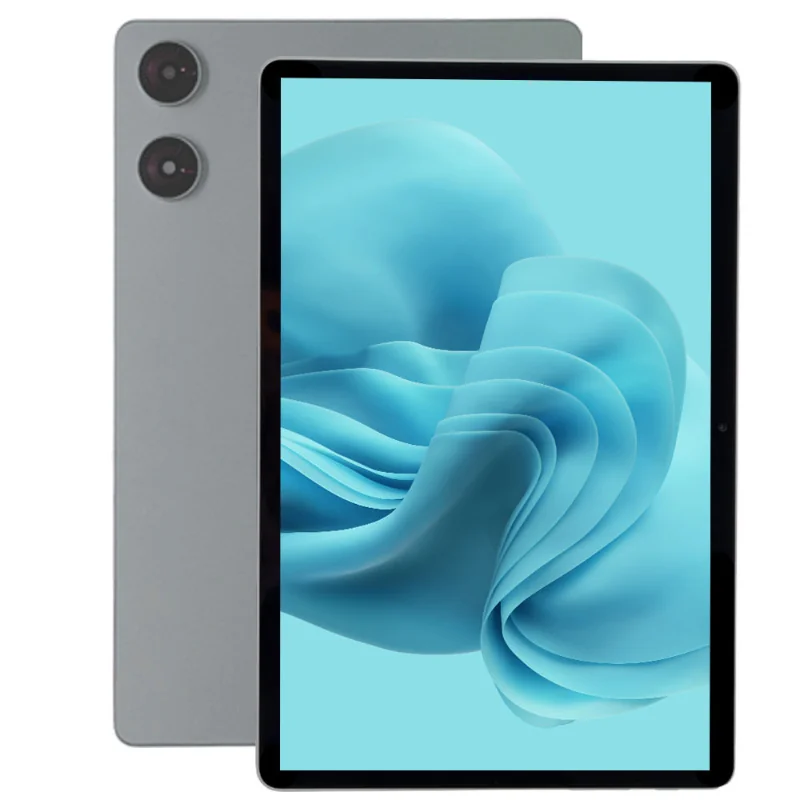
If you are selecting models for an EU, UK or North American rollout, ask the same questions of every candidate — for example on our Snapdragon 685 11.97-inch business tablet and T616 11.97-inch business tablet, the answer set is documented per model rather than as a generic platform claim. A larger screen changes the PIN-on-glass usability question, so do not assume a phone-derived test result transfers.
Attestation and monitoring: the OEM support letter that satisfies due diligence
Under MPoC, the SoftPOS application reports device integrity to a monitoring service, and the solution provider remains responsible for that monitoring. The OEM’s job is to make the underlying signals trustworthy.
The OEM can provide: hardware-backed keystore support, factory provisioning of device identity, production build signing, a documented patch process, and root or tamper detection support at the platform level.
The OEM cannot provide: the application’s PCI MPoC listing, the solution provider’s monitoring service, or any guarantee that an acquirer will approve the deployment.
Ask for a model-specific support letter naming the attestation APIs available, the Android version and patch process, and an escalation contact for certification testing. A letter naming a product family but not the exact model is close to useless when the technical file is assembled.
PIN on glass, secure element and key injection: draw the line explicitly
Where PIN entry is supported, MPoC evaluates the security of the on-screen keypad. The solution provider owns that keypad implementation; the OEM owns the display, touch subsystem and secure execution environment it depends on. Neither can evaluate the other’s half alone, which is why the joint test plan belongs in the project schedule, not in a post-launch fix.
Get a written statement that the tablet OEM does not receive, store or inject payment keys unless a separate key-injection service is explicitly contracted. If an injection service is proposed, request the key-injection policy, tamper-evident packaging and factory key-ceremony controls — and confirm that the arrangement is acceptable to the solution provider and your acquirer before production.
Also keep terminology honest. MPoC SoftPOS evidence and PCI PTS terminal certification are different scopes. Do not let anyone describe a tablet as a “PCI PTS terminal” unless that exact product holds the relevant approval.
OS lifecycle and patch commitment: the requirement that bites in year three
SoftPOS deployments are usually planned on a multi-year device life, while Android support windows are finite. Close that gap contractually:
- A written security-update commitment covering your expected deployment life, with patch cadence, severity response and end-of-life notice.
- Model lifecycle and PCN notification commitments, so a mid-program component change does not invalidate the evidence pack you submitted.
- A/B update support, rollback behaviour and staged rollout capability for fleets.
- Clarity on non-GMS or custom ROM implications for attestation, app distribution and acquirer acceptance — decided before you choose a low-cost build, not after.
Memory and component sourcing can also shift a model’s configuration mid-programme; if that risk is live in your planning, our tablet DRAM allocation and sourcing checklist covers the change-control questions worth asking alongside the security ones.
Red flags in an OEM’s MPoC documentation pack
- “MPoC compliant” with no PCI SSC listing ID, listing type or named legal entity.
- A component listing or an app vendor’s certificate presented as if it were the tablet’s own approval.
- Evidence for a different model, a different chip vendor or an engineering build.
- No model-specific NFC or read-range report — only a controller datasheet.
- No written patch, update-window or end-of-life commitment.
- A claim that the tablet OEM “certifies” the SoftPOS app or can guarantee acquirer approval.
- Refusal to supply a production-firmware sample for validation, or reluctance to support attestation testing.
- Pressure to place a volume order before listing IDs and model-specific evidence have been verified.
Market context is worth keeping in proportion while you weigh options. One published estimate cited by ZCS, drawing on Grand View Research’s 2026 SoftPOS analysis, puts Android at 58.4% of 2025 SoftPOS revenue — a publisher estimate about the market, not a measurement of any tablet’s suitability, and not evidence about your deployment.
A sample-unit validation plan you can run before certification testing
This is our internal validation method for supplied units; treat it as a template to adapt, not as a set of measured customer outcomes. Your solution provider should agree the pass criteria in advance.
- Build a tap-test matrix. Card brands you intend to accept, contactless transaction limits, worn and damaged cards, phones and wearables — with and without screen protector, case and counter mount.
- Probe attestation honestly. Test with a deliberately unlocked or rooted build and confirm the app fails as expected rather than silently passing. A soft failure here is a due-diligence landmine.
- Thermal soak. Run continuous NFC transactions while charging and record throttling and battery behaviour using a documented method. Note the enclosure and ambient conditions.
- Patch survival. Apply a security update and confirm the app, attestation and MDM enrolment still work afterwards.
- Document and share. Send results to the solution provider and, where relevant, the acquirer before committing to volume.
What to send your tablet OEM this week
Keep the first message short and make every question answerable in writing, tied to a model and revision: (1) which listing support you can provide for the SoftPOS solution we intend to pair; (2) model-specific NFC and read-range evidence; (3) attestation APIs supported; (4) key-storage architecture; (5) key-injection policy; (6) patch and end-of-life commitment; (7) PCN process; (8) availability of a production-firmware sample.
Then request a production sample, not an engineering build, and confirm it matches the proposed production configuration. Validate it with the plan above, and only then scale.
Bottom line for the purchase decision
A tablet is not “MPoC certified” on its own. Your risk is the evidence gap between the app vendor’s solution listing and the exact model you intend to ship — and that gap is cheapest to close before samples, not during acquirer due diligence. Choose an OEM that gives model-specific evidence, written patch commitments, attestation support and clear key-injection boundaries, rather than a compliance logo and a datasheet.
Request our MPoC-relevant hardware documentation pack (security features, key storage, attestation support) and a sample unit for certification testing. If you are still scoping the platform, start with our overview of Android tablet OEM/ODM support for POS and payment terminal deployments and the document set your technical file will need.
FAQ
Does a PCI MPoC-certified SoftPOS app require a certified tablet?
No — there is no tablet-level MPoC certificate. The app or complete solution is listed; the tablet must supply the hardware, firmware, key-storage and OS conditions the solution was evaluated against. Your job is to confirm those conditions for the exact model.
Who owns PCI MPoC certification — the SoftPOS app vendor or the Android tablet OEM?
The solution provider owns the listing and the monitoring service. The OEM owns model-level hardware, build and lifecycle evidence. The acquirer owns onboarding and scheme acceptance. No party can certify another’s scope.
What is the difference between an MPoC complete solution listing and a component listing?
A component listing covers a piece — software, SDK, attestation or monitoring. A complete solution listing covers the end-to-end solution, and per Ingenico’s 2026 note, Mastercard’s process requires the full solution listing before scheme testing begins.
Is PCI CPoC still acceptable for SoftPOS deployments?
CPoC and SPoC were consolidated into MPoC after the 2022 PCI SSC release. Treat older CPoC or SPoC references as needing a mapping to current MPoC evidence, and verify the current status of any listing with the solution provider and the PCI SSC site.
What hardware documentation should I request from an Android tablet OEM for SoftPOS due diligence?
Model and revision lock with PCN process; NFC part number, antenna description and model-specific read-range report; secure element/TEE/StrongBox and key-storage architecture; attestation API support; patch cadence, update window and end-of-life commitment; build hardening and signing process; and PIN-on-glass display/touch data if PIN entry is in scope.