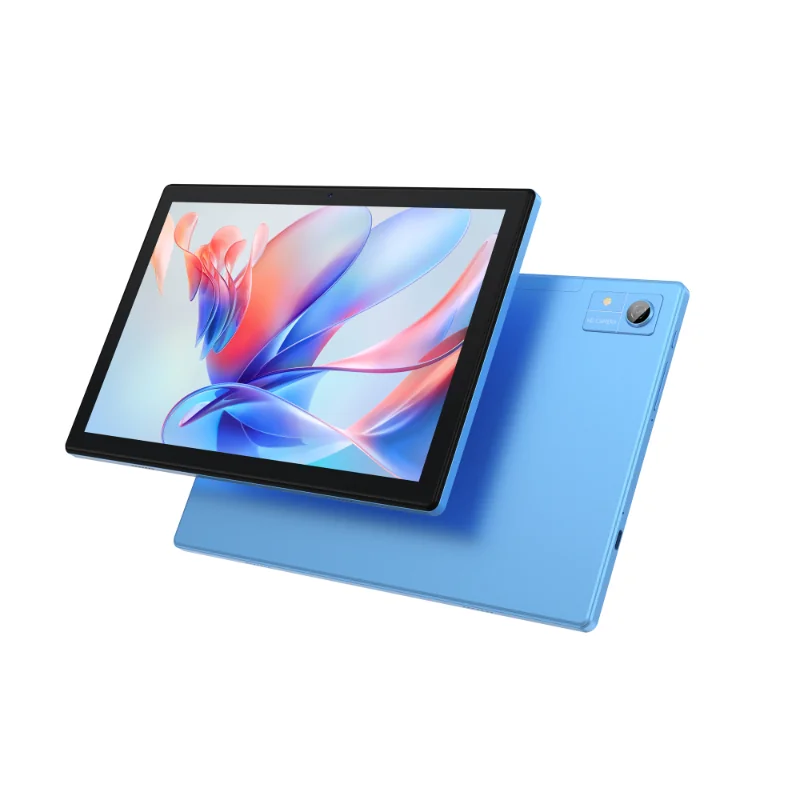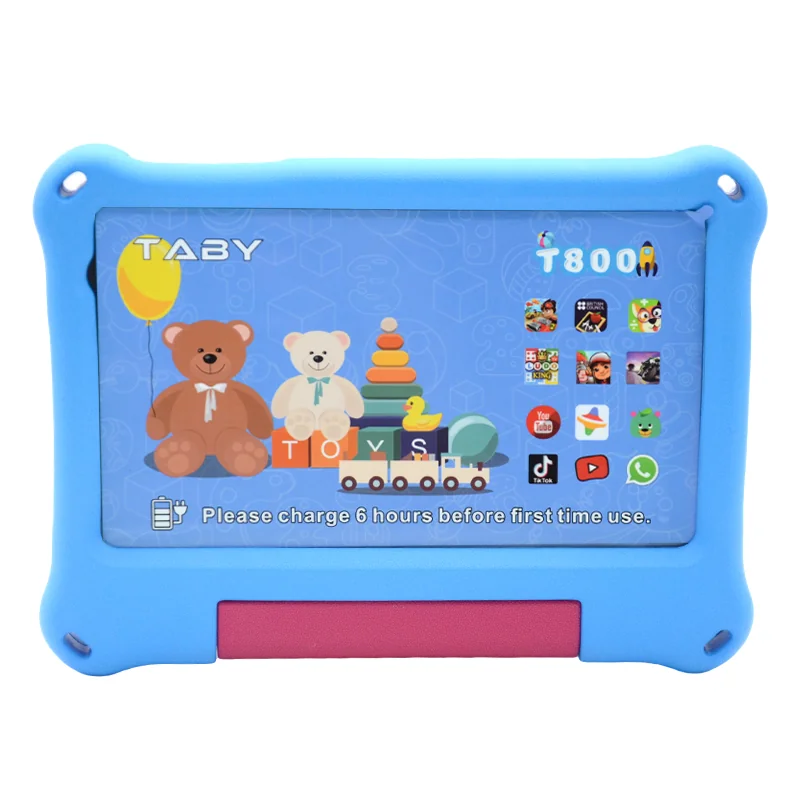

You can split Android tablet volume across two factories safely only if you freeze three things before the second site quotes: the part-number-level BOM and AVL, the firmware build identity, and the ownership of the certification files. Freeze those first and the second factory becomes a qualified duplicate of the first. Skip it and you ship a different product under the same SKU. Everything below is the checklist that closes those three gaps — written for a distributor or integrator sourcing manager who has to defend the decision to a customer, not a supply-chain theorist.
Why dual sourcing a tablet usually fails on execution, not on strategy
The resilience argument is settled. As reported by Amazon Business in its dual-sourcing guide, McKinsey’s 2025 risk survey found 39% of companies pursuing dual sourcing for components or raw materials, and Deloitte reports that 57% of industrial manufacturers with operations in China are considering a supplier+1 strategy (business.amazon.com). Those figures describe intent in general industry; they do not tell you anything about a specific tablet program, and they should not be presented to your own customers as a benchmark for your build.
The failure modes are narrower and more mundane than a supply shock:
- Silent component substitution. The second factory sources an “equivalent” panel, touch controller or memory device that passes its own incoming test but changes colour, touch latency or thermal behaviour.
- Firmware drift. The second site builds from a re-created source tree rather than yours, so build IDs, OTA channels and patch cadence diverge within two releases.
- Certification that cannot travel. Documents are tied to a legal manufacturer, and the second factory is usually a new one.
The same Amazon Business guide notes that tooling, testing, regulatory and customer approvals raise the cost of switching late. That is the practical reason to treat the second source as a specification you write now, not a phone call you make during a shortage.
Step 1 — Decide what you are second-sourcing: line, factory, or component
Three different things get called “dual sourcing” in tablet programs, and they carry different qualification loads:
- A second line inside the same group — lowest qualification burden, because legal manufacturer and quality system are shared. It addresses capacity risk, not tariff or geopolitical risk.
- A second independent factory building the same BOM — what most EU/US buyers actually mean. Highest value, highest qualification work.
- Component-level second sourcing — qualifying an alternate SoC, panel, battery pack or memory device. Best applied selectively where allocation risk actually sits, not across the whole board.
The Umbrex semiconductor explainer makes a distinction worth borrowing: a second source is normally a qualified direct alternative at part level, while multisourcing extends further, and not every part can be dual-sourced economically. Apply that logic honestly to your build — the SoC and the modem module are often the parts you cannot practically alternate, so factory-level dual sourcing diversifies assembly and trade exposure but leaves vendor dependence intact.
One warning: if your “second factory” is a trading company placing orders at the same line, you have bought paperwork, not redundancy. Ask for the legal manufacturer name on the certificate and the factory address on the audit report, and confirm they match the site being qualified.
Step 2 — Freeze the interchangeability spec before you shortlist anyone
Interchangeability is a document, not an intention. Write it as follows:
- AVL at part-number level, with approved alternates listed explicitly. Delete “or equivalent” from the spec pack; it is an invitation to substitute.
- Change control: any substitution requires a written PCN accepted by you before shipment, followed by a re-run of first-article checks at your cost threshold, not the factory’s discretion.
- Cosmetic and mechanical freeze: tolerances, connector and IO layout, speaker/mic placement, and especially the panel–touch IC pairing. This pairing is the most common cause of “same model, different feel” between sites.
- A recorded freeze point — BOM revision, firmware baseline, tooling revision — printed in the purchase order itself, so both sites build against an identified revision rather than a memory.
Step 3 — Make firmware parity a contractual deliverable
This is where second sources diverge quietly, and it is the item competitors’ procurement guides never reach.
- Require a build ID and release notes per lot. The second factory must build from the same source tree you control, not a re-created one.
- Name the OTA channel owner: who signs updates, which server, and whether the second factory is permitted to push firmware at all. Many buyers keep OTA in-house — decide it explicitly.
- Confirm GMS/CTS implications with your compliance contact when the manufacturer identity changes. Treat this as a verification item, not an assumption.
- Agree the security patch cadence and what happens commercially if a patch window is missed — credit, escalation, or allocation consequence.
If you are sourcing cellular units, the firmware and radio configuration questions overlap with the checks in our 5G + eSIM tablets for field work buying guide, which covers eSIM provisioning and radio verification in more depth than this page.
Step 4 — Separate certifications that may be reusable from documents that cannot travel
State this plainly to your own team: a second factory is normally a new legal manufacturer. CE documentation, FCC grantee/applicant records, battery UN38.3 reports and RoHS files are typically tied to the manufacturer identity, so they usually need re-issuing or re-testing rather than copying. Each case depends on the scheme, the lab and the notified body involved, so verify before you budget — and treat every certificate number, notified-body ID and regulatory clause as to be confirmed until your compliance contact validates it against the actual document.
| Document | Usually held by | Reuse at second factory | What to ask |
|---|---|---|---|
| CE declaration & technical file | Legal manufacturer | Conditional — re-issue likely | Which test reports remain valid for the new manufacturer identity? |
| FCC grant / applicant records | Grantee | Usually re-issue or new grantee | Can the grant be transferred, or is a new application required? |
| Battery UN38.3 test summary | Cell/pack supplier | Conditional — scope-sensitive | Does the report cover the exact pack, cell and protection circuit? |
| RoHS / REACH files | Manufacturer | Conditional — re-declaration | Are material declarations traceable to the second site’s actual suppliers? |
Budget re-test as a fixed line in the dual-source business case. It is a known cost, not a surprise.
Step 5 — Duplicate what never appears in the BOM: fixtures, jigs and traceability
A second factory that cannot test cannot ramp. Require test fixtures, burn-in racks, RF test setups and programming jigs to exist at both sites before qualification starts, plus serial-number-level traceability mapped to the same data fields, so field failures remain analysable across sites. Agree golden-sample custody: signed samples held by you, by both factories and by the test lab. Then write down who owns moulds, fixtures and programming files if the relationship ends — ambiguity here is the most expensive clause to litigate.
Step 6 — Set the quality gate in numbers you both sign
- Define AQL sampling level and inspection severity per lot, burn-in/aging duration and pass criteria, and functional test coverage.
- Run the first article on both lines from the same BOM revision and compare measured results side by side — not pass/fail stamps.
- Specify what happens when a lot fails at the second source while the first is still shipping: quarantine, allocation shift, root-cause timeline.
- Keep it honest: these thresholds are commercial agreements between you and the factory, not universal standards. What you hand over should include a first-article comparison sheet, burn-in logs and per-lot inspection reports — ask for those artifacts by name and keep them as your audit trail.
Our rugged tablet RFQ spec-field checklist shows how to express these acceptance fields in the RFQ itself, so both sites answer the same questions.
Step 7 — Plan the split and the ramp, not just the qualification
Start asymmetric. Give the second site a small qualifying share and scale only after two consecutive clean lots — the Amazon Business guide describes the same qualify-small-then-scale sequence. Then define trigger rules in advance: at what tariff, allocation or lead-time event does volume move, by what percentage, within how many days. Check MOQs, capacity reservation and seasonality at the second site before promising a split to your customers. Finally, qualify per configuration you actually ship: a POS or classroom build and a 24/7 signage build stress different components, so one clean lot on one SKU proves less than it appears.
Step 8 — Contract clauses that make the split real
- Capacity reservation and shortage-allocation clause — your guaranteed share during allocation.
- PCN clause with minimum notice and your right to re-qualify.
- BOM and firmware freeze clause tied to the PO, plus audit rights and access to first-article and inspection records.
- Tooling and fixture ownership, price validity, firmware/IP licensing, and a defined exit with data handover.
The 90-day qualification sequence
- Weeks 1–2: freeze BOM revision, firmware build and acceptance criteria; issue one identical spec pack to both sites.
- Weeks 3–6: document and certification review with the second factory; confirm what must be re-issued.
- Weeks 7–10: first article, burn-in and side-by-side comparison; sign golden samples.
- Weeks 11–13: small qualifying lot, logistics and traceability test; then set the split percentage and trigger rules in writing.
When dual sourcing is the wrong answer
At very low volumes, single-customer builds, or products with a short remaining life, duplicated fixtures and certification spend rarely pay back. If a key part is a single-source SoC or locked module, factory-level dual sourcing still leaves vendor dependence — say so rather than implying the risk is gone. The honest trade-off is that a second source buys resilience and optionality at the cost of fixed qualification spend and slower engineering changes.
Questions buyers ask during shortlisting
How long does it take to qualify a second Android tablet factory?
Plan around three months if the BOM and firmware are already frozen and the second site has the fixtures. Add time for any certification that must be re-issued, and for whatever your own customers require in change notification.
Can we reuse our CE and FCC certification at a second factory?
Sometimes partially, often not. It depends on the scheme, the test scope and whether the manufacturer identity on the document changes. Verify with the lab or notified body before committing to a cost model.
Does dual sourcing increase the unit price of an Android tablet?
Unit price may rise through lower volume per site and duplicated setup; qualification cost is a separate one-off. Model both lines explicitly rather than assuming the split is neutral.
Which tablet components should never be dual sourced?
Usually the SoC and the cellular module, where the software stack, tooling and radio approvals are built around one family. Dual-source those only if you are redesigning the platform.
Get the qualification pack
Ask for our dual-source qualification pack and a quote for splitting your tablet program across two lines — the pack includes the spec-freeze template, first-article comparison sheet, golden-sample custody record and the acceptance fields both sites must sign. To start, send your configuration and target split through our RFQ spec-field checklist, or review a representative business platform such as the Wintouch T616 10.51-inch business tablet to see how a frozen BOM is documented before the second line is opened.