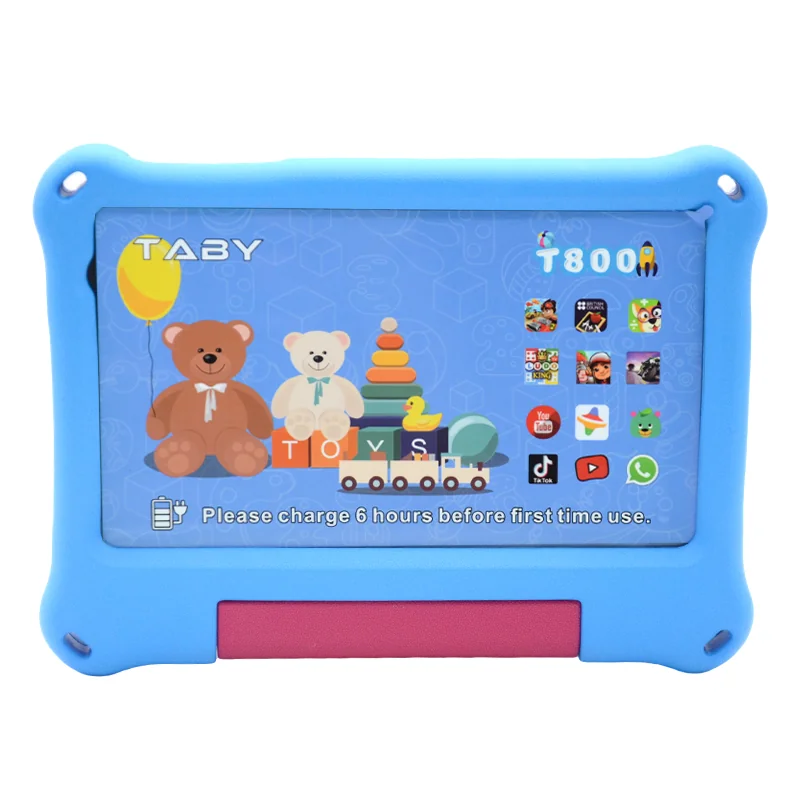

An Android tablet OEM can put in writing: assembly-level BOM material and weight data per configuration, supplier declarations of material composition and compliance, packaging specifications with weights, metered factory energy records for assembly and test, and net/gross weight plus carton volume for logistics. It generally cannot supply first-hand SoC, panel or battery-cell product carbon footprints, mine-to-factory origin data, or a customer-named ISO 14067 verification without a separately funded engagement. Everything in the second list must be labelled as an estimate or a declared gap, never presented as a measured product carbon footprint.
That boundary is what your bid is really being judged on. A tender evaluator who receives six honest fields and one labelled gap can score you. An evaluator who receives a precise number with no provenance behind it has to assume the worst, and increasingly has legal reason to: CO2 AI reports that Canada’s revised Competition Act allows fines of up to C$10 million for environmental claims that cannot be substantiated by “adequate and proper tests” or “internationally recognized methodology,” with private parties able to trigger an inquiry (CO2 AI). Data integrity, not data volume, is the selection criterion.
Why your tablet’s carbon data stops at the chip, panel and cell supplier
A tablet assembled in an OEM plant is mostly a set of bought-in modules: the SoC, the display module, the battery cells, the memory, the camera and the connectors all arrive with their own upstream supply chains already attached. The plant that signs your purchase order performs SMT, assembly, test, burn-in and packing. It does not smelt aluminium, grow silicon crystals or manufacture lithium cells.
The consequence is that the majority of a device’s cradle-to-gate burden sits upstream of the entity you are contracting with. That weighting is frequently asserted in the abstract, so here it is with its source and its limits: sustamize, a carbon-data software vendor, states that “for EU-based manufacturers, 70–90% of total emissions originate in Scope 3 — from purchased materials, energy, upstream production and logistics” (sustamize). That is the publisher’s own claim about EU manufacturers as a population; the page excerpt reports no method, sample, date or device-category breakdown, and it must not be read as a measurement of any tablet. Treat it as directional, and ask your OEM to quantify the split for your configuration rather than quoting a percentage.
Three structural blockers explain why the upstream data does not simply flow down to you:
- Supplier confidentiality. Component makers release sub-component detail under NDA, in aggregated form, or not at all. A BOM extract you receive may be several levels shallower than the one the assembler holds.
- Allocation. Shared SMT lines, shared cleanrooms and a single factory electricity meter serving several product families mean some portion of the burden has to be allocated by a stated rule (mass, unit count, revenue or machine hours). The rule changes the number.
- Second-hand modelling. A component maker’s “PCF” is frequently a modelled estimate built from material databases, not a metered measurement of that specific part. Passing it downstream does not upgrade it.
We publish no tablet-level CO2e figure on this page, and you should be suspicious of any manufacturer that publishes one without a stated functional unit, boundary and data year.
Checklist A — deliverables an assembly OEM can hand over today
This is the inventory a plant can actually produce from its own records, typically without a paid study. Request each item per configuration, not per product family.
- Assembly-level BOM with material type and unit weight. Component list per configuration, identifying material (ABS/PC housing, glass, aluminium, copper, lithium-ion cell chemistry) and the weight of each. This is the backbone of any Category 1 purchased goods calculation your sustainability team will run. Configuration matters: an 11.97-inch Snapdragon 685 unit and a 10.36-inch T606 unit differ in panel area, housing mass and battery capacity, so one BOM cannot cover both. See the Snapdragon 685 11.97-inch business tablet and the T606 10.36-inch business tablet as examples of configurations that need separate BOM extracts.
- Supplier declarations of compliance and composition. RoHS and REACH conformity statements, material composition declarations and the weight figures the component supplier declared. Record the supplier name and declaration date beside every value; a declaration without a date is hard to defend in an audit trail.
- Packaging specification. Carton, inner tray, foam or moulded pulp, bags, cable and adapter, each by material type and weight. In practice this is often the most reliable figure in the pack because the assembler buys and weighs the packaging itself.
- Factory-side activity data. Metered electricity for the assembly and test lines, plus fuel consumption where relevant, with the reporting period and the meter or invoice source stated. This is the activity data behind your own Scope 1/2 view of the supplier, or behind an allocation to a per-unit figure.
- Logistics inputs. Net weight, gross weight, carton dimensions and carton volume per SKU. You need these to run your own downstream transport calculation; they are also the fields most questionnaires ask for and most buyers forget to request.
- Optional, quoted and scoped separately. Third-party test reports relevant to battery documentation, or a commissioned product carbon footprint study. When you receive one, check what was tested, by whom, against which standard and with which boundary.
For every line above, record whether the value is measured, supplier-declared or internally estimated. That single column is what converts a data pack into a defensible one.
Checklist B — what to stop asking an assembler OEM for
Publishing this list is unusual, and that is the point. Asking for items that cannot exist at assembly level wastes tender timeline and pushes weaker suppliers into inventing numbers.
- First-hand PCF for the SoC or display module. Those belong to the component maker’s inventory and are usually released under NDA, aggregated, or withheld entirely.
- Mine-to-factory or raw-material-origin data. An assembler sits several tiers away from smelters and mines and has no contractual route to that data.
- A customer-named ISO 14067 verification report at no cost. Verification is a commissioned, paid engagement with a defined functional unit, boundary and verifier. It is not a document that ships with a purchase order, and no credible OEM should imply otherwise.
- A single “tablet CO2e” number covering every configuration. RAM, storage, panel, battery and housing choices change the result. A single figure is either a category estimate or an average across SKUs; ask which, and ask for the weighting.
- An industry average substituted silently for a measured value. If a database average is used, it must be labelled as an estimate with the database named. An unlabelled average is the exact pattern anti-greenwashing enforcement is designed to catch.
How to label a data gap so it survives audit
A four-label convention you can paste into your own questionnaire, and ask your supplier to adopt:
| Label | What must accompany it |
|---|---|
| Measured | Method, measurement period, meter or test source, and who performed it |
| Supplier-declared | Supplier name, declaration type, declaration date, and the weight or composition figure as declared |
| Estimated | Estimation approach (activity-based or spend-based), the activity data used, and the emission factor source |
| Gap | Why the data does not exist at this tier, and what would be required to obtain it (commissioned study, NDA request, component-maker disclosure) |
A labelled estimate is defensible because its uncertainty is visible. An unlabelled number is not, however precise it looks. Two further points auditors ask about: document the allocation method for shared lines and shared electricity, and document the functional unit (per device, per SKU, per kilogram, or per unit of packaging). Mixed-configuration pallets and shared factory meters are the two places where undocumented allocation most often collapses a claim.
Be realistic about scoring, too. A gap label is disclosure, not a substitute for verification. Some tender evaluators will score an honest unfilled field below a third-party verified value. The trade is that an honest gap survives scrutiny after award, while an invented figure does not.
Seven questions to send the OEM before you accept their carbon pack
Copy this block into your RFQ. Each question targets a field that decides whether the pack is usable.
- What is the functional unit or declared unit — per device, per SKU, per kilogram?
- What is the system boundary — cradle-to-gate, cradle-to-customer, or assembly and test only?
- Which standard or framework was followed — the GHG Protocol Product Standard, ISO 14067, or an internally defined method?
- Which data year does the result cover, and does it match the configuration being quoted?
- Which allocation method was applied to shared lines, shared energy and mixed pallets?
- Has any part of the result been third-party verified, and can the verification statement be shared with the boundary it covers?
- Which line items are estimates, and what activity data sits behind each one?
If the answer to question 3 is “internal method,” the pack may still be useful for pre-qualification, but do not let it be described to your own customer as an ISO 14067 footprint.
Decision table: which data grade clears which milestone
Match the data grade to the actual clause in your customer’s questionnaire. Over-collecting is as much a failure mode as under-collecting: paying for a verification that no clause requires, and that cannot be scoped before the tender closes, helps nobody.
| Data grade | Typically sufficient for | Typically not sufficient for |
|---|---|---|
| BOM material and weight per configuration | Supplier pre-qualification questionnaires; your own internal Category 1 screening | Any published product-level carbon claim |
| Supplier declarations (RoHS/REACH, composition, weights) | Restricted-substance and material-content clauses; supporting evidence behind a BOM-based estimate | A quantified footprint figure on its own |
| Packaging data with weights | Packaging reduction clauses; the packaging line of a customer questionnaire | Device-level footprint |
| Factory energy and fuel activity data | Supplier engagement and Scope 3 Category 1 screening conducted by you, with your own factors | A device-level PCF presented as an OEM result |
| Estimated (modelled) PCF with stated method | Internal decision-making; early tender responses where the clause permits estimates | Clauses that mandate verified product-level data |
| Third-party verified PCF under a named standard | Formal disclosure and tender clauses requiring verification, within the stated boundary | Anything outside the boundary or data year it covers |
Durability interacts with all of this. A device designed for a longer service life and supported with spare parts changes the denominator your customer uses when they amortise embodied carbon across years of service. The right to repair spare parts checklist for rugged tablets covers how repairability documentation is assembled for EU-facing tenders.
Which regulation actually sets your precision bar
Do not let a supplier tell you what the law requires without seeing the clause. Here is what can be said with a source, and what cannot.
Your customer’s own reporting duty is usually the driver. The ISSB’s IFRS S2 requires Scope 3 disclosure where material, with adoption expanding beyond Europe and North America, according to IntegrityNext’s summary (IntegrityNext). That obligation sits with your customer, which is precisely why the request lands on your desk with a specific precision requirement attached.
EU CSRD/ESRS supplier questionnaires are the practical day-to-day driver in Europe. The precise clause wording, thresholds and timing depend on the customer’s own reporting scope and on how the framework has been transposed and phased in their jurisdiction. Verify against the current legal text for the specific customer in front of you rather than relying on a summary.
CBAM, the EU Digital Product Passport and the EU Battery Regulation are repeatedly cited as reasons product-level data will be needed. The sources reviewed for this article do not verify exact applicability dates or which electronics categories fall in scope. Treat every date you are quoted, including any date in this paragraph, as to be confirmed against the current primary legal text before it appears in a tender response.
Our position: we will tell you which of these applies to your order when the customer’s own clause and jurisdiction are in front of us, and not before.
What to put in your inquiry to get a usable answer in one round
Send three things together: the exact questionnaire clause you must satisfy, the configuration or SKUs in scope, and your tender deadline. With those, scoping and quoting happen once instead of across four email rounds.
- Ask for the carbon data availability checklist and the configuration-specific BOM extract with packaging weights.
- State explicitly whether a commissioned third-party study is required and who funds it, so the engagement can be scoped before the deadline rather than after.
- Send the customer’s ESG questionnaire and ask for it back with every field marked Measured, Supplier-declared, Estimated or Gap.
- Confirm commercial terms in parallel, including the quotation validity and memory price lock clause, since lead times for any commissioned study run alongside your production schedule.
If your deployment is in education, the same logic applies to education tablet programmes built for 1:1 classroom rollout, where the volume-per-site profile changes how your customer allocates transport and packaging emissions.
Request our carbon data availability checklist and get your customer’s ESG questionnaire pre-filled by our engineering team. Send the clause and the SKUs, and we will return each field marked Measured, Supplier-declared, Estimated or Gap, with the boundary and data year stated so your bid survives validation.