
Procurement teams in the EU and US evaluating Android tablets for 2026–2027 face a question that barely existed eighteen months ago: should GenAI run on the device or in the cloud? For enterprise buyers with GDPR and data-residency obligations, Android 17’s on-device AI stack changes the answer — and the total cost of ownership.
What does Android 17 On-Device GenAI mean for enterprise tablets?
Android 17 on-device GenAI runs large language and vision models locally on the tablet’s NPU, so sensitive data never leaves the device and AI keeps working without connectivity. For enterprise buyers, the practical result is millisecond-level inference latency, no recurring cloud-AI fees, and materially simpler GDPR and data-residency compliance.
Every major Android release since the evolving AI tablet landscape started maturing has pushed more intelligence toward the edge. Android 17 is the first version where on-device GenAI is a first-class, procurement-grade capability rather than a developer experiment. That distinction matters when you are ordering 500 units against an EU compliance checklist: it changes what you can deploy, where you can deploy it, and what your AI line-item actually costs.
Why enterprise buyers should care about Android 17’s GenAI
The typical competitor article lists Android 17 features for consumers — photo editing, summary tools. Your evaluation is different. Three procurement-level impacts should drive the decision:
- Cost structure. Cloud AI fees are recurring and scale with usage. On-device inference is a one-time hardware investment. For a 1,000-device fleet running vision models at 40 hours per week, the bandwidth and API-cost avoidance alone can shift payback to under 18 months.
- Privacy and compliance. Healthcare and financial deployments under GDPR cannot casually ship patient or transaction data to a third-party inference API. With on-device GenAI, the data subject’s information is processed on the terminal — residency and DPIA paperwork simplifies dramatically.
- Operational resilience. Point-of-sale and field workflows need AI at the counter or in the warehouse aisle, where networks are congested or absent. Real-time inference without network latency keeps revenue-facing processes alive.
Wintouch has already deployed Android 17 on enterprise terminals in pilot programs across retail and logistics, and the pattern is consistent: fleets that move inference on-device see fewer failed transactions, lower support tickets around connectivity, and a compliance sign-off cycle that closes weeks faster.
Three deployment use cases that benefit immediately
Retail: on-device vision at checkout and in the aisle
Inventory recognition and automated checkout run Android 17’s vision models locally. Shelf-scanning pilots with our partners process a frame in under 80 ms on current hardware — fast enough for loss-prevention and self-checkout flows that previously depended on a cloud round-trip.
Education: assistants that work in dead zones
Classrooms in rural districts and across campus buildings frequently have unreliable Wi-Fi. Android 17 powers offline learning assistants — vocabulary, math coaching, and reading support — without sending a single student record to a vendor server.
Logistics: real-time damage detection on the dock
Warehouse workers use on-device GenAI to photograph packages and get instant damage classification. Route optimization hints run against local models, and the terminal keeps functioning even when the WMS connection drops.
Android 17 vs. Android 16: enterprise feature comparison
Below is the feature map your evaluation team will actually test — not a consumer changelog.
| Capability | Android 16 | Android 17 | Why it matters to enterprise buyers |
|---|---|---|---|
| On-device LLM/VLM support | Basic ML Kit execution, limited model sizes | Expanded model formats and larger context windows on NPU | Wider range of deployable use cases per device |
| GenAI memory management | Manual; AI tasks compete with apps | Dynamic model load/unload and RAM budgeting | Lower RAM requirement per device; fewer over-spec purchases |
| NNAPI / accelerator delegation | Present but fragmented | Standardized delegation to NPU/TPU across SoCs | Consistent performance regardless of silicon vendor |
| Security patch cadence | Monthly, mature | Monthly plus stronger biometric and cert controls | Meets EU/US compliance review thresholds out of the box |
| Battery management during sustained AI | Limited thermal awareness | Thermal-aware inference scheduling | Full-shift operation without throttling or overheating |
| Android Enterprise management | Mature | AI-specific policy controls and provisioning integration | IT can govern which on-device models are enabled |
The pattern is clear: Android 17 is not a spec bump, it is the first release where on-device GenAI is manageable, predictable, and audit-friendly for a fleet.
Hardware requirements: which tablets can run on-device GenAI?
Not every Android device can run Android 17 GenAI effectively. The entry threshold for a genuinely useful deployment: a current-generation Snapdragon 8-series platform or equivalent with a dedicated NPU, 8GB RAM minimum (16GB for multi-model workloads), and 256GB storage for model files.
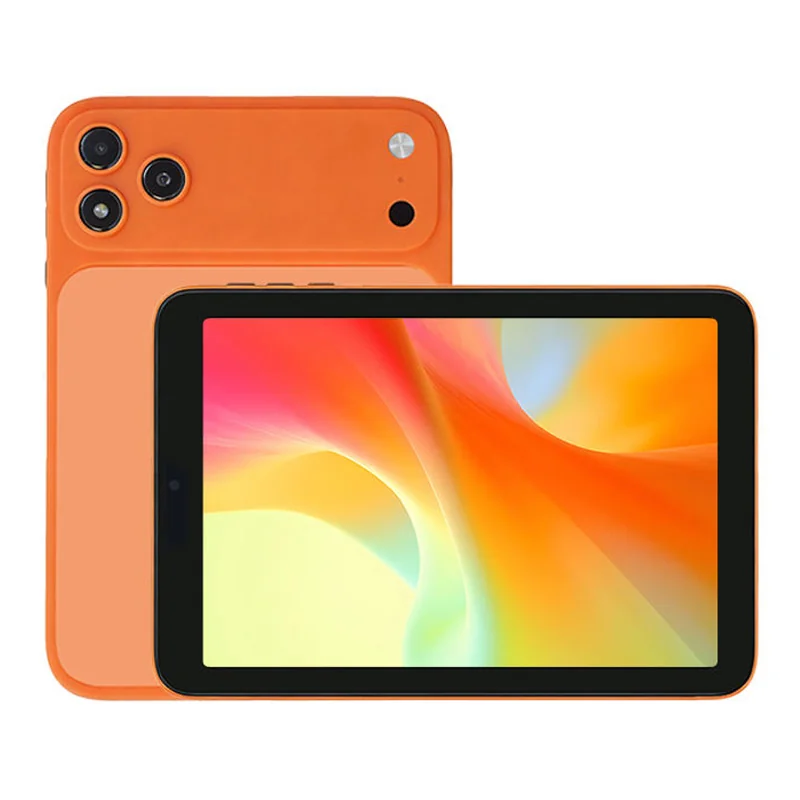
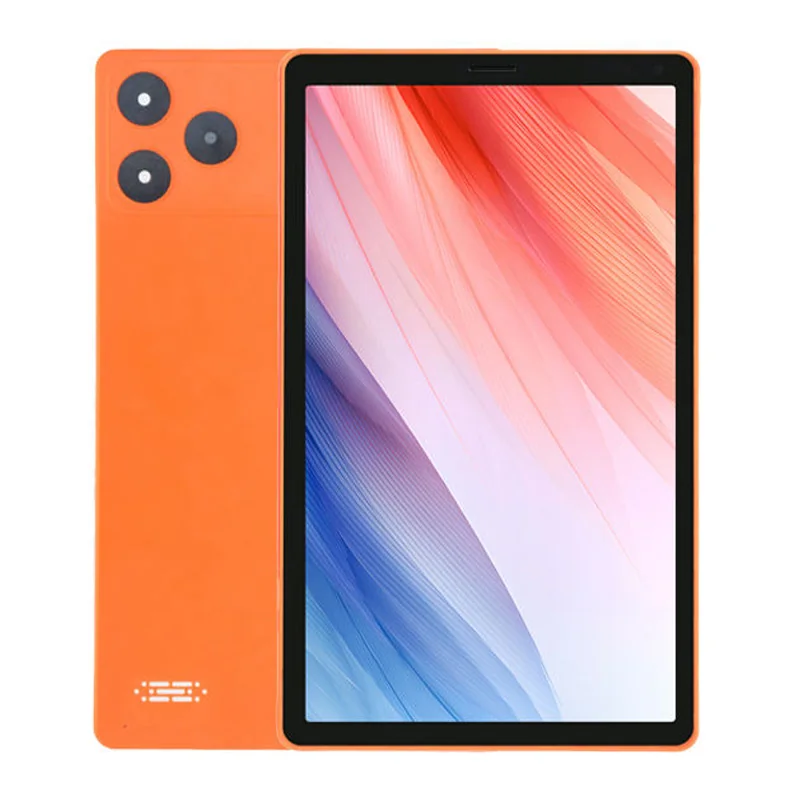
Thermal management is the overlooked procurement risk. Sustained AI inference draws roughly 4–6W continuously; a consumer chassis will throttle within five minutes. Industrial design — the kind Wintouch builds into the WT8662 and A80-A — keeps NPU workloads at sustained speed across an 8-hour shift. Because we control the BOM and firmware, we tune power curves, thermal headroom, and pre-loaded model runtimes per order rather than shipping a generic SKU.
Security and compliance considerations
Android 17’s on-device AI is inherently a compliance feature. With model inference local, GDPR data minimization and residency constraints become far easier to document — there is no data transfer to encrypt, log, or audit at rest in a third party’s region.
For procurement, we recommend cross-checking three things on any shortlist:
- Android Enterprise Recommended status. Devices on Google’s official Android Enterprise Recommended list get validated provisioning, security, and update commitments — a fast filter for EU/US tenders.
- Device certifications. CE and FCC are table stakes; confirm optional HIPAA-readiness documentation if the deployment touches protected health data.
- Update commitment. On-device AI depends on security patches staying current. Android 17 brings stronger biometric and certificate management to that story, but only if the vendor honors a defined update window.
According to IDC’s 2025 enterprise mobility forecast, more than 60% of commercial mobile devices shipped by 2027 will ship with an on-device AI accelerator as standard — the era of buying non-AI fleets is ending for enterprise buyers.
A transparency point from our side: features vary by manufacturer even on Android 17, and our tablets are customized per order — firmware, pre-loaded models, and management integration. We publish clear warranty and support terms (standard 12–24 months, extended available) so your procurement team can budget for the full lifecycle, not just the invoice.
Frequently asked questions
What are the minimum hardware specs for Android 17 on-device GenAI?
Plan on a current-generation SoC with a dedicated NPU, 8GB RAM (16GB for heavier multimodal models), and 256GB storage. Industrial thermal design matters as much as raw specs — without it, sustained AI workloads throttle within minutes.
How does Android 17 GenAI improve data privacy for enterprises?
Inference runs entirely on the tablet, so protected data never leaves the device. That eliminates cloud-API data exposure and simplifies GDPR data-residency documentation, because there is no off-device transfer to audit.
Can Android 17 GenAI run offline on industrial tablets?
Yes. On-device models are designed for no-connectivity operation. POS, warehouse, and classroom workflows keep full AI functionality during network outages or in dead zones.
How quickly will vendors update existing tablets to Android 17?
It depends on the manufacturer’s SoC support and update commitments. Certified devices on Google’s Android Enterprise Recommended list typically receive the update within a defined window; custom OEM hardware may require a vendor-specific port. Confirm the schedule in writing before purchase.
Get the Android 17 Enterprise Tablet Feature Map & Quote
Use this feature map as your evaluation checklist, then test it against real hardware. We’ll send a complete PDF feature map for Android 17-ready tablets — including model-by-model NPU performance, thermal profiles, and certification matrices — alongside a tailored quotation for your deployment size.
Request your Android 17 enterprise tablet feature map and quote today, and we’ll also arrange a pilot unit for your compliance and IT teams to evaluate on-device GenAI in your own environment.