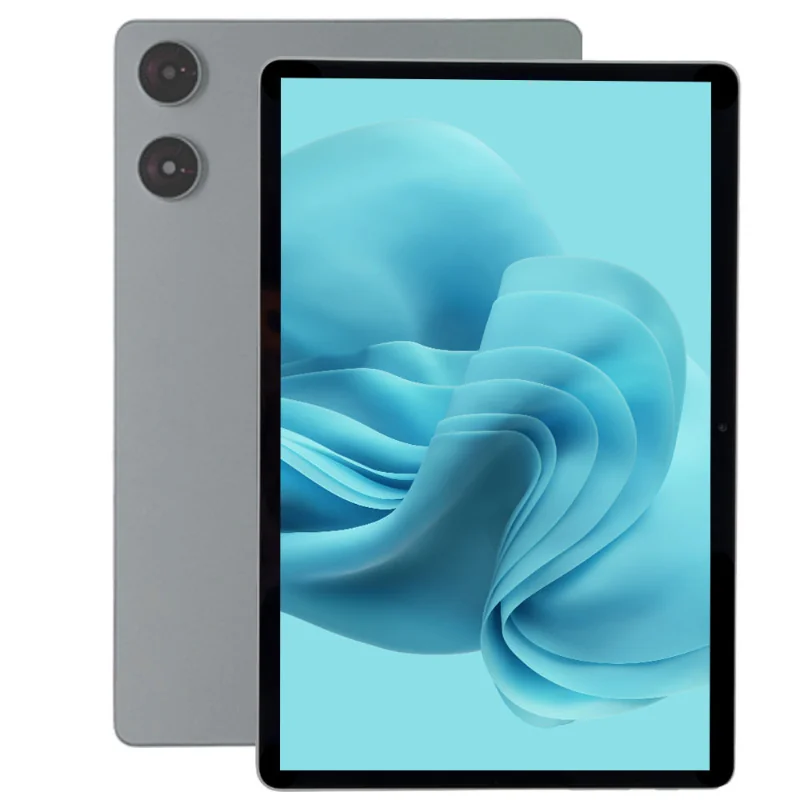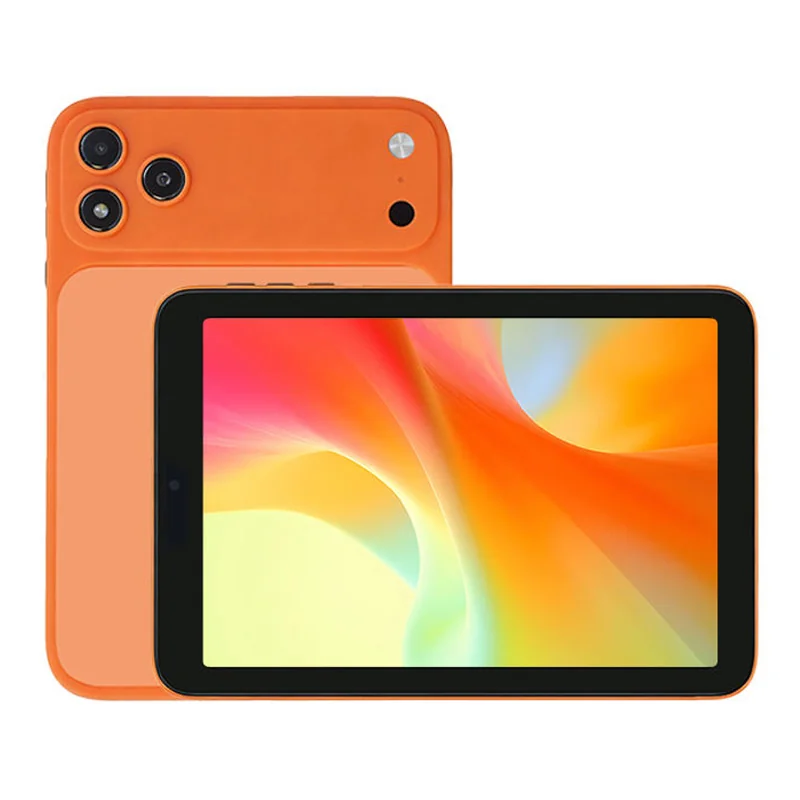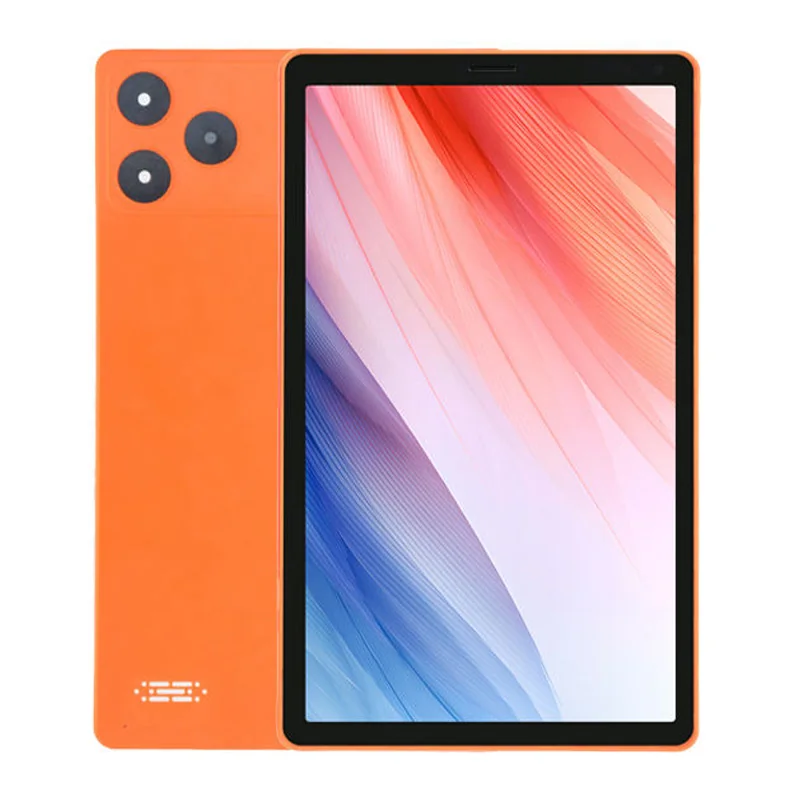

Quick Answer: Are Tablet POS Systems Ready for Commercial Use?
Yes — tablet POS systems have become the dominant form factor in retail and hospitality. The global tablet POS systems market was valued at approximately $8.2 billion in 2025 and is projected to reach $16.8 billion by 2033 (CAGR 9.4%), driven by the shift from dedicated Windows-based POS terminals to multi-purpose Android tablets. Modern commercial-grade Android tablets now offer IP54-rated durability, 8-12 hour battery life, integrated payment module compatibility, MDM/kiosk-mode lockdown, and PCI-compliant NFC/EMV peripherals — matching or exceeding traditional POS hardware at 40-60% lower total cost of ownership. For OEM buyers sourcing tablet POS hardware in 2026, the decision is no longer if to switch, but which device tier and peripheral ecosystem to standardize on.
The Traditional POS Problem: Why Hardware Is Being Phased Out
Legacy POS terminals — those fixed, all-in-one registers with thermal-printed receipts, Windows Embedded, and proprietary peripherals — were designed for a single use case at a single counter. They typically cost $1,200–$3,000 per station, require vendor-locked service contracts, and become paperweights when the payment processor upgrades its interface.
In 2026, retail and hospitality buyers face three structural pressures that legacy POS can’t answer:
- Omnichannel checkouts: Customers expect to pay anywhere in the store — at the counter, on the shop floor via mobile POS, at curbside, or self-checkout. A fixed terminal can’t move.
- Software churn: Cloud-based POS software (Lightspeed, Toast, Square, Shopify POS) updates weekly. Windows Embedded terminals often can’t run the latest Android-native SaaS apps without emulation layers that introduce latency.
- SKU proliferation: In-store inventory management now demands a camera-equipped device for barcode scanning, price lookup, and stock checks — something a register can’t do.
What Makes a Tablet “Commercial-Grade” for POS?
Not every Android tablet is suitable for daily retail use. A consumer tablet (even a premium iPad) lacks the durability, peripheral support, and management features a business needs. Here’s the spec hierarchy that matters for POS deployment:
| Feature | Consumer Tablet | Commercial-Grade POS Tablet | Why It Matters |
|---|---|---|---|
| OS | Stock Android / iOS | Android 13+ with enterprise config | MDM enrollment, kiosk lockdown, managed Google Play |
| RAM / Storage | 4GB / 64GB | 6–8GB / 128GB+ | POS software + payment SDKs + inventory DB run simultaneously |
| Connectivity | Wi-Fi only | Wi-Fi 6 + BT 5.0 + 4G LTE | Payment terminals need always-on internet; floor staff need mobility |
| Ports | USB-C (1) | USB-C + USB-A + micro HDMI + dock pins + RJ45 (via dock) | Receipt printer, barcode scanner, cash drawer, card reader |
| Battery | 4,000–6,000 mAh | 6,000–10,000 mAh + hot-swap option | Full-shift operation (8–12 hours) without recharging station |
| Durability | None (case optional) | IP54+, drop-rated to 1.2m, reinforced USB ports | Dropped terminals in restaurants and warehouse floors are daily events |
| Peripherals | None | NFC/EMV payment sled, thermal printer dock, 1D/2D scanner bracket | EU/US PCI compliance requires certified payment peripherals |
| Management | None (Google Family Link) | Android Enterprise / Zero-touch / MDM-ready | IT admin deploys 100 tablets in 1 hour, not 1 day |
Total Cost of Ownership: Traditional POS vs. Tablet POS
For a typical mid-size retailer deploying 20 checkout stations, the 3-year TCO difference is substantial:
| Cost Item | Traditional POS (per station) | Commercial Tablet POS (per station) |
|---|---|---|
| Hardware (terminal / tablet + dock) | $1,800 | $380–$650 (tablet + dock + peripherals) |
| Payment module (EMV/NFC) | $400 (integrated) | $250 (sled or separate) |
| Printer (receipt) | $300 (built-in or bundled) | $250 (Bluetooth or dock-mount) |
| Software license (3 yr) | $3,600 ($100/mo, often locked to terminal) | $2,160 ($60/mo SaaS, portable) |
| Maintenance / support (3 yr) | $600 (vendor contract) | $150 (hardware warranty + IT self-manages) |
| Deployment cost (per station) | $200 (vendor install) | $50 (IT installs via MDM) |
| 3-Year Total per Station | $6,900 | $3,140–$3,500 |
| 20-Station Fleet Total | $138,000 | $62,800–$70,000 |
Conservative estimates based on 2025–2026 market pricing. Software costs vary by provider and feature set. Tablet POS hardware from OEM manufacturers like Wintouch typically includes volume-discount pricing at 100+ units, further reducing the delta.
2026 Market Data: The Numbers Driving the Shift
The replacement cycle is accelerating. Key data points for OEM buyers evaluating tablet POS sourcing:
- Tablet POS market: $8.2B (2025) → $16.8B (2033), CAGR 9.4% (Dataintelo)
- Mobile POS terminals: $52.5B (2025) → $112.8B (2033), CAGR 9.9% (Grand View Research)
- Android smart terminals now account for over 60% of POS terminal revenue, up from ~35% in 2020 — indicating a clear market preference for Android over proprietary and Windows-based systems (Yahoo Finance / market analysis, 2026).
- Restaurant POS software alone grew 8.3% in 2025, with early adoption of tablet-based POS driving acceleration (The Business Research Company).
- POS terminal market overall: $93.2B (2025) → $190.2B (2033), reflecting the broad hardware refresh cycle underway globally (DataM Intelligence).
Key Considerations for OEM Sourcing: EU/US vs. SEA vs. MENA
EU & US Markets — Compliance Is the Gatekeeper
If your target market is the EU or North America, the tablet must carry CE, FCC, and UKCA certification at minimum. For payment, PCI PTS (PIN Transaction Security) applies to the overall POS terminal — the tablet itself doesn’t need PCI certification, but the payment sled or dock does. EU buyers increasingly require GMS (Google Mobile Services) licensing for the Play Store and MDM enrollment. An OEM with pre-certified hardware saves 8–12 weeks of market-entry delay.
SEA & Middle Markets — Cost & Durability Lead
In Southeast Asia, the Middle East, and Latin America, the priority shifts to price per unit, MOQ flexibility, and ruggedness for outdoor/high-humidity environments. IP54-rated tablets with 4G LTE (bypassing unreliable in-store WiFi) are preferred. Battery capacity becomes critical — many SEA retail environments lack dedicated charging stations per checkout counter.
GMS Licensing & Android Enterprise
All Android POS tablets sold for commercial use should support Android Enterprise Zero-Touch Enrollment and Managed Google Play. Without these, IT admins cannot auto-deploy POS software, enforce kiosk mode (single-app lockdown to prevent staff from exiting the POS app), or remote-wipe lost devices. Confirm with your OEM that the device ships with GMS + Android Enterprise recommended configuration.
Why OEM/ODM Sourcing Makes Sense for Tablet POS Deployments
Retail chains, restaurant groups, and POS software resellers have three tablet sourcing options:
- Consumer off-the-shelf (Samsung Galaxy Tab, Lenovo Tab) — fast to buy, but no customization, no bulk firmware support, and no peripheral integration. Consumer warranties don’t cover commercial daily use.
- Branded enterprise tablets (Zebra, Elo) — purpose-built for POS, but priced at $800–$1,200 per unit, and customization requires long lead times and high MOQs.
- OEM/ODM from China (Wintouch and similar) — 40–60% lower hardware cost, full firmware customization (boot logo, preloaded POS app, kiosk mode pre-config), optional payment-sled integration, and volume pricing from 100–5,000+ units.
For mid-to-large deployments, OEM sourcing offers the best cost-performance ratio, especially when the buyer needs custom branding, GMS pre-certification, or peripheral bundle configurations.
Risk & De-Risk: What Can Go Wrong With Tablet POS
- Overheating in kitchen environments: IP54 protects against dust and splash, not 50°C ambient heat. For restaurant kitchens, specify a fan-less rugged tablet or mount the tablet outside the kitchen zone with a remote receipt printer.
- Payment processing latency: Some EMV/NFC sleds pair over Bluetooth 4.0, introducing 2–3 second delays per tap. Insist on BT 5.0+ or a USB-C connected sled for sub-second transactions.
- Software incompatibility: Confirm your POS app runs on the specific Android version (Android 13/14/16) before committing. Run an APK compatibility test on a sample unit.
- Dock reliability: Pogo-pin docks rated for 10,000+ insertion cycles are standard. Ask your OEM for the dock’s MTBF (Mean Time Between Failures) spec.
Next Step: Sample Evaluation Checklist
Before scaling a tablet POS deployment, request samples from your OEM and verify:
- [ ] GMS certification (Google Play Store + Android Enterprise)
- [ ] Kiosk mode / single-app lockdown via MDM (test with your POS app)
- [ ] Payment sled pairing latency (sub-1 second EMV tap)
- [ ] 8-hour continuous operation with screen brightness at 80%
- [ ] IP54 dust/splash rating on the tablet + dock
- [ ] FCC / CE / UKCA certs provided in PDF
- [ ] Replacement unit lead time (in-warranty turnaround)
Ready to Source?
Wintouch manufactures commercial-grade Android tablets purpose-built for POS deployments — from the A80-A (Android 16, 10.1″, 4G LTE, 6000mAh) to the A50 Business Tablet (Android 13, 10.1″, IP54-compatible dock options). All models ship GMS-certified with Android Enterprise support out of the box.
Request a quote or sample evaluation kit →
Looking for the broader picture on Android vs Windows in enterprise POS? Read: Android POS Market Explosion: How OEM Buyers Can Win the Windows-to-Android Migration.