For a restaurant owner deciding between QR pay-at-table and tabletop kiosk ordering, the short answer is: QR costs almost nothing to start and is the right call for fast-casual, chain, and takeaway-heavy venues, while a tabletop kiosk tablet wins when you need an always-on ordering surface, guided upsell, and a branded in-store experience — at a hardware and maintenance cost QR does not carry. The ROI difference is not about which is “better,” it is about which fixed-cost structure your venue can absorb and which ordering behavior your guests already have. This guide breaks down the actual cost and revenue math so you can pick a model — and the tablet behind it — before you sign an order.
Why “just scan the QR” is not a free decision
The appeal of QR ordering is obvious: zero hardware, no device to buy, mount, or replace. But that is a capex win, not necessarily an operating win. Pay-at-table via QR still needs a POS integration, a stable Wi-Fi layer, staff to prompt guests to scan, and phone-based UX that you do not control. If a guest’s phone has a weak signal, is out of battery, or the user simply does not want to scan a code to order food, the transaction falls back to a server — which means the labour cost you tried to save comes right back.
For a buyer sourcing equipment, the trap is reading QR as “no tablet needed.” The venue still needs a backend device, and the staff-facing order-confirmation screen is often a tablet. Meanwhile the tabletop kiosk moves the ordering surface in-house, under your brand, with a screen you can upsell on. The decision is not hardware vs no-hardware; it is one upfront tablet cost vs ongoing reliance on the guest’s phone and your staff’s prompting.
The ROI math: two different cost curves
The honest way to compare the two is a side-by-side over a 24-month horizon, not a first-month snapshot.
| Cost / revenue driver | QR pay-at-table | Tabletop kiosk |
|---|---|---|
| Hardware capex per cover | ~$0 (guest uses own phone) | ~$120–$260 per tablet + mount |
| Deployment speed | Days — a printed code and a POS link | 1–2 weeks — install, image, test per unit |
| Labour dependence | High — staff must prompt & rescue failed scans | Low — surface is always on, guest self-serves |
| Upsell / average ticket | Limited — depends on menu UX of third-party app | Higher — you control the menu, combos, and prompts |
| Uptime control | Depends on guest’s device & carrier | In your hands; managed via MDM |
| Maintenance / replacement | Minimal | Ongoing — but predictable |
| Branding & in-store experience | Weak — lives on a third-party app | Strong — branded, on-brand menu |
| Best fit | Fast-casual, chain, takeaway, high turnover | Family dining, self-service, venues needing guided ordering |
The practical rule: if you need to order fast and your guests are comfortable on phones, QR wins on cost. If you need to order more — higher ticket, guided combos, longer dwell — the tabletop tablet pays for itself through a higher average order.
When the tabletop tablet wins the P&L
A kiosk tablet’s ROI case is built on three levers a QR flow rarely reaches:
- Guided upsell. Because you control the menu screen, you can surface combos, add-ons, and side orders at the moment of choice. Operators using self-order screens typically report higher average tickets than phone-based flows, where the third-party app controls the menu.
- Reduced serving staff. A tabletop unit removes the “walk the table, take the order, walk back” loop. In a medium family-style venue, one fewer floor staff shift per day can offset the entire device amortisation in months, not years.
- Predictable uptime and management. A fleet of tablets under an MDM lets a manager push menu updates, lock the device to a single app, and reset a unit remotely — no guest-device variables.
The trade-off is real: tablets get dropped, sauces get spilled, and each unit is a fixed cost that sits in the store whether it is used or not. That is why this model fits venues with dwell time — dining that lasts more than a quick grab-and-go — where the device has minutes of active use per cover.
What to look for when you do buy the tablet
If the decision lands on tabletop kiosk, the hardware spec decides your ROI. Source for the real operating conditions, not the showroom:
- 10-inch or larger, indoor IPS — big enough for a readable menu, bright enough for a dining-room glare. A 10.1″ 1280×800 panel is the practical floor.
- Enough RAM to keep the kiosk app stable under constant touch — 4GB is the sensible minimum so the ordering app does not reload between covers.
- MDM / Kiosk-mode ready — the ability to lock the tablet to a single app and push updates remotely is non-negotiable for a fleet.
- Reliable Wi-Fi, with LTE as a fallback where POS connectivity is shaky.
- A durable-enough build for a food environment — splash resistance and a mountable chassis beat a consumer tablet you will replace quarterly.
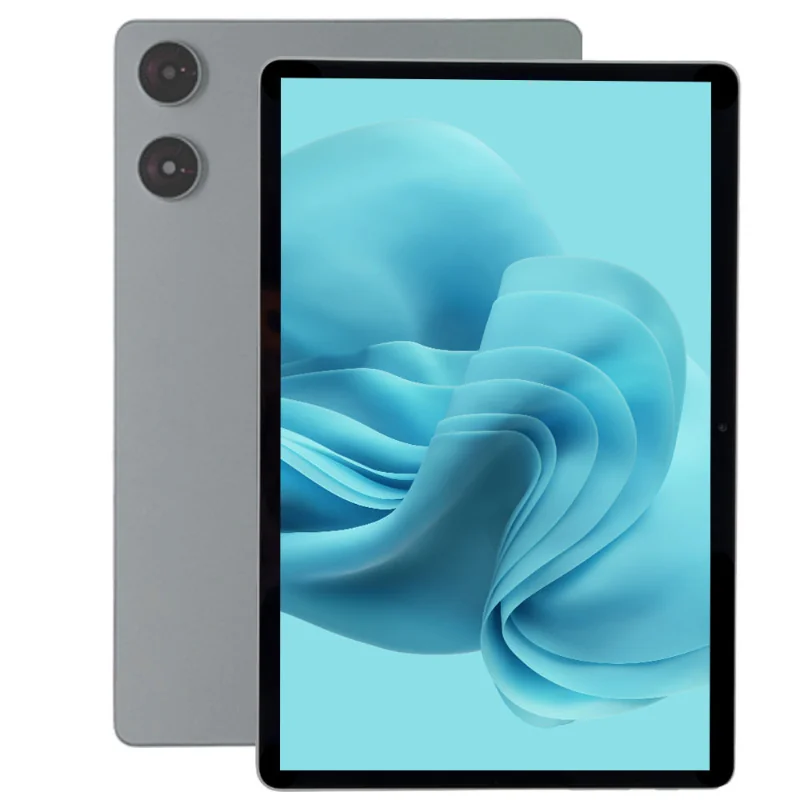
Our Wintouch A80-A (10.1″, Android 16, 4GB RAM, Wi-Fi + optional 4G LTE) is the class of device built for this job — a configurable business tablet you can image, MDM-manage, and lock into a single ordering app before it ships.
For SEA buyers, the decision also hits cost and MOQ
If you are sourcing for Southeast Asia, the model choice overlaps a bigger cost question. QR needs almost no hardware, so it is tempting when capex and import cost are the top concern — but it shifts the burden onto your staff’s prompting and a third-party app you do not control. A tabletop fleet raises MOQ and landed cost, yet turns the ordering experience into an owned asset. For a chain or franchise rollout, the per-unit cost of a well-specced 10.1″ Android tablet is small against the labour it removes — but only if you verify the MDM and kiosk-mode support in the OEM contract before committing MOQ.
Next step: get a device that actually does the job
Do not decide the model on marketing. Map your covers per day, your average ticket, and your staff count — then work out whether a fixed-cost tablet fleet is amortised by the labour and ticket uplift it unlocks. If the tabletop path is the answer, get a spec-confirmed tablet you can image and manage before you pay for the fleet.
Request a quote or a demo unit of the A80-A — we can confirm kiosk-mode/MDM readiness, MOQ, and lead time for your market. Contact our OEM team or ask for a datasheet and we will send it the same day.