The short answer: three buckets, not two markets
Most safety and EMC evidence for a medical Android tablet does travel between a US and an EU submission — what changes is the legal wrapper: the declaration, the signatory and the applicant. Cybersecurity evidence behaves differently. A US labelling track and an EU legislative track are two workstreams, because neither mechanism recognises the other.
That distinction is the whole purchase decision. If you assume one file pack covers both markets, you will discover the gap late — usually after the launch date is committed and the packaging artwork is printed. Procurement teams that get this right sort every artifact into one of three buckets before they shortlist a supplier:
- Reuse as-is — a technical artifact with no national legal wrapper. It describes the product, not the jurisdiction.
- Re-issue — the same underlying test or assessment, but a different declaration, applicant or signatory is required. Re-testing is usually not needed; re-papering always is.
- Separate workstream — no reuse path found. Two processes, two owners, two budgets.
| Artifact in the supplier pack | Bucket | What survives across markets | What must change |
|---|---|---|---|
| SBOM (software bill of materials) | Reuse as-is | The component inventory itself — same hardware, same firmware base | Format, refresh cadence and delivery channel must be contractually pinned; a one-off PDF is not maintainable |
| Vulnerability handling / coordinated disclosure policy | Reuse as-is | The process, named contact and remediation targets | Nothing structurally — but confirm whether it is a supplier policy or a reseller-badged document |
| Security update support-period statement | Reuse as-is (as a fact) / Re-issue (as a commitment) | The number of years and the components covered | Who commits to it, for which SKU, and in which contract |
| Secure-by-default configuration and hardening guide | Reuse as-is | The whole document | Nothing — but missing this artifact transfers configuration risk to you |
| Risk assessment | Re-issue | The method and hazard taxonomy | Intended use, patient population and market-specific harm model differ; the document itself is rewritten |
| EMC test report (IEC 60601-1-2) | Reuse as-is if edition and tested configuration still match | The raw test evidence | Re-test if the edition, cable set, radio configuration or housing changed |
| Safety test report (IEC 60601-1) | Reuse as-is if edition and tested configuration still match | The raw test evidence | Re-test on configuration change; re-issue the accompanying documentation |
| Declaration of conformity | Re-issue | Nothing — it is a legal instrument | Different legal form, different signatory, different applicant entity |
| Label application / registration | Separate workstream | Nothing | Eligibility to apply, who holds the record, and what is publicly disclosed — confirm per market |
Caveat before you copy this table into a launch plan: the cybersecurity rows reflect the published structure of the two mechanisms, not a recognition agreement between them. Confirm current scope, applicable dates and applicant rules against the authorities’ own texts before committing a shipment date.
Why the IEC 60601-1 / 60601-1-2 half is the predictable half
The relationship between the two standards is structural, not optional. IEC 60601-1 is the general standard for basic safety and essential performance; IEC 60601-1-2 is the EMC collateral standard that applies alongside it. A submission normally needs both, which is why suppliers quote them as one line item and why buyers often receive them as one PDF bundle. For a tablet with Wi-Fi and Bluetooth in a clinical environment, the EMC half is not a formality — it is the part that decides whether the device can be used near other equipment.
Two details separate a usable file from a stale one:
- Edition. Edition 4.1, published in 2020, replaced Edition 4.0 from 2014 (Element). Labs note that the change to testing cables longer than 1 m, instead of longer than 3 m, can pull previously excluded ports and cables back into scope — meaning devices tested under 4.0 may need limited re-testing rather than a new file.
- Legacy flexibility. Published laboratory guidance describes the EU position as allowing no grandfathering of existing test results, while the FDA position for legacy devices is described as more permissive (F2 Labs). The practical consequence for a dual-market buyer: the EU side, not the US side, is what usually forces re-testing.
When you evaluate a lab report, ask for the accredited laboratory’s identity — an NRTL in the US, a notified-body-accredited lab in the EU — and whether FDA ASCA status applies, since that programme exists to streamline acceptance of results from qualified labs (MedDeviceGuide). Ask whether you are receiving a full report or an excerpt. An excerpt cannot tell you which configuration was tested, which is exactly the question you need answered.
One limit to state plainly: IEC 60601-1 and -1-2 cover safety and EMC. They do not demonstrate clinical effectiveness or that the tablet performs as intended. A certificate is not a usability or performance evaluation, and it should not be presented to your own customers as one.
Where the cybersecurity half breaks: two mechanisms, not two labels
The two mechanisms have different shapes, and the shape is the problem. The FCC Cyber Trust Mark is a US labelling programme operated under the Commission’s programme rules. The EU Cyber Resilience Act is legislation imposing obligations on products with digital elements placed on the EU market. A voluntary label and a legal obligation are not interchangeable objects, and no recognition of equivalence between them appears in the sources used for this page. This page does not assert mutual recognition, equivalence, or substitution in either direction.
Instead of filling that gap with guesswork, convert it into questions with contractual weight:
- Which product classes are in scope of each mechanism, and does a medical tablet sit inside or outside that scope?
- What are the applicable dates for each obligation, taken from the authorities’ own publications rather than a supplier deck?
- Who is eligible to apply for, or affix, the label — the manufacturer, the importer, or the brand owner?
- What has to be publicly disclosed, and in what form?
- What form must the conformity declaration take, and who signs it?
The reason this matters to the file pack rather than to the marketing plan: the substance of your SBOM, vulnerability handling process and support-period commitment can be identical in both markets. The attestation, the applicant identity and the disclosure surface usually cannot be. That is a re-issue problem with separate-workstream elements — not a translation problem.
This page stays on the dual-market reuse angle deliberately; the underlying obligations of the EU legislation and the anatomy of an SBOM are covered elsewhere on this site.
Document-by-document: what to write into the supply agreement
The table above sorts the pack. This section is about what makes each artifact survive a change of supplier, a firmware bump or an audit two years from now.
SBOM
Reusable in substance, fragile in practice. Pin three things in the agreement: the machine-readable format, the refresh cadence tied to firmware releases, and the delivery channel. An SBOM that arrives as a static PDF at sample stage tells you nothing about the device you will ship in eighteen months.
Vulnerability handling and coordinated disclosure
Ask for a named owner, an acknowledgement target and a remediation target. Then ask the uncomfortable question: is this the supplier’s own policy, or a reseller-badged document that will disappear when the relationship does?
Security update support period
This is a commercial commitment, not a test result — no certificate proves it. Require a start date, an end date, the components covered, and what happens at end-of-support. Put it in the purchase order, not the brochure. A device fielded for a long clinical service life against a shorter support commitment is a risk you should surface to your own customer rather than absorb silently.
Secure-by-default configuration
Consistently the most overlooked document in the pack. Without a hardening guide — default accounts, debug interfaces, update channel, logging — the buyer inherits the configuration risk and has no defensible baseline to audit against.
Risk assessment
Reusable as a method, rarely reusable as a document. Intended use, patient population and the harm model differ by market, so budget for a rewrite even when the hardware is identical.
Test reports and declarations
Raw EMC and safety reports are reusable only while edition and tested configuration still match the shipping SKU. The declaration of conformity is never reusable: different legal form, different signatory, different applicant. Treat the label or registration step as a separate workstream by definition, and confirm who in your chain is eligible to hold it.
If your route to market also involves public-sector or federal channels, the documentation discipline overlaps with what we describe in the TAA/NDAA 889 rugged tablet documentation checklist — same principle: name the artifact, the signatory and the version, or the file fails review.
Medical-tablet traps that break an otherwise clean reuse plan
- Scope ownership. Is the tablet itself the medical device, or a component inside a system someone else certifies? The answer decides who owns the file and whose name sits on the declaration. Get it in writing before you price anything.
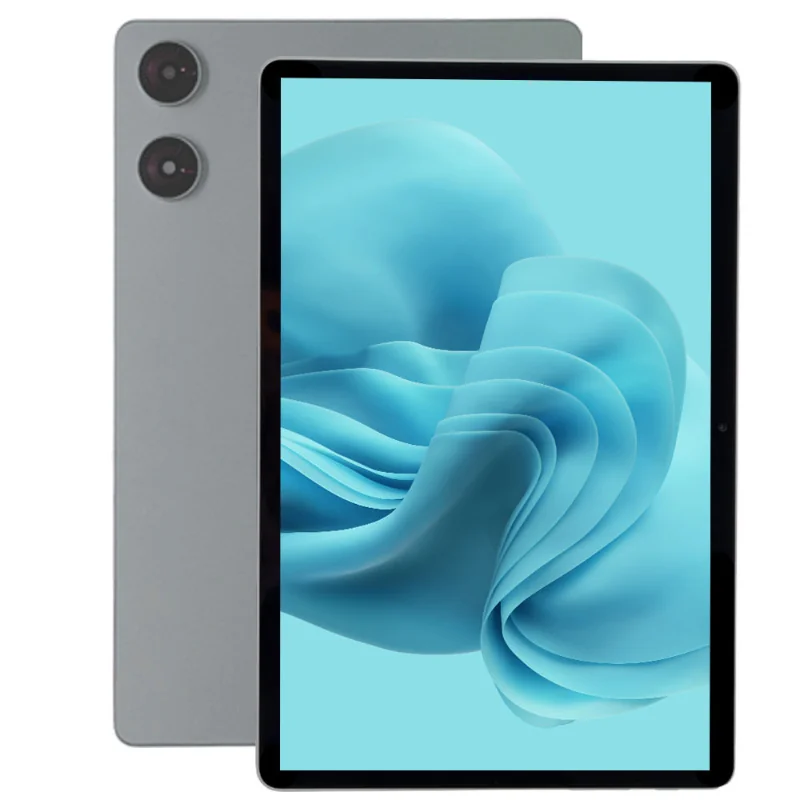
- Radio configuration. Wi-Fi and Bluetooth in patient vicinity is an EMC and risk-management question, not a checkbox. Confirm the radio configuration that was tested is the one that ships — on a configurable Android platform such as the Wintouch T616 11.97-inch business tablet, regional SKUs can differ in ways that invalidate a report.
- Cables and accessories. Under the 4.1 cable-length change, the dock, the charging lead and the probe cable can drag a previously clean file back into test. Ask which accessories were in the tested configuration.
- Single-fault behaviour. Battery and charging behaviour under single-fault conditions belongs in the safety file, not the spec sheet. Ask which conditions were actually evaluated rather than assuming the category was covered.
- Service life versus support period. A device specified for a long field life against a shorter security support commitment creates an end-of-life conversation with your customer that you, not the factory, will have to hold.
The supplier questionnaire to copy into your RFQ
- Which standard editions and amendments were the safety and EMC reports issued against, and what is each report’s issue date? “IEC 60601 compliant” is not an answer.
- Which accredited laboratory produced each report, does ASCA status apply, and can you supply a redacted sample so we can see scope and tested configuration?
- Which markets does the current file already support, and which would require re-issue? A supplier that cannot answer this has not sold dual-market before.
- What is the SBOM format, the refresh cadence, and the vulnerability-handling SLA — with a named owner?
- What is the security update end date, per SKU, in writing — and what happens at end-of-support?
- Who will be the applicant for any US label, and who signs the EU declaration? The entity name must match your distribution chain.
- For each market, which of these are confirmed from the authority’s own current text rather than from a sales deck: scope, dates, applicant eligibility, disclosure content, declaration form?
Three answers are grounds to stop the evaluation: “the certificate covers everything”, “the label is the same as CE”, and any market-access date quoted without a document reference.
FAQ
Does IEC 60601-1 compliance cover cybersecurity for a medical tablet?
No. IEC 60601-1 addresses basic safety and essential performance, and IEC 60601-1-2 addresses electromagnetic compatibility. Neither is a cybersecurity framework. You need a separate document set covering SBOM, vulnerability handling, update support and secure configuration.
Can an FCC Cyber Trust Mark label be used to satisfy EU Cyber Resilience Act obligations?
No such substitution is established. The label is a US programme; the EU instrument is legislation. Treat them as two compliance tracks and confirm scope and dates with each authority before planning a single launch document.
If our tablet already passed IEC 60601-1-2 for the US, do we need to re-test for the EU?
Possibly. Published lab guidance describes the EU as allowing no grandfathering of existing results, while the FDA position for legacy devices is described as more permissive. Re-testing is also triggered by an edition change or a change to the tested configuration, such as the cable-length scope under Edition 4.1.
Is EN 60601-1-2 the same standard as IEC 60601-1-2?
For the 2014 text, the content is the same — the IEC text was approved in Europe as EN 60601-1-2:2015 without technical modification. The designations and dates differ, not the requirements. Verify which amendment state applies to your submission.
What security update support period should we require from a medical tablet supplier?
There is no single correct number, and any figure quoted as an industry norm should be treated with suspicion. Require a stated start date, end date and component coverage per SKU, then map it against your own clinical service-life assumption and your customer’s procurement horizon.
Which documents in a compliance pack can genuinely be reused across both markets?
Substantively: SBOM, vulnerability handling policy, secure-by-default guidance, and raw safety/EMC test evidence where edition and configuration still match. Not reusable: declarations of conformity, risk assessments and any label application or registration.
Next step: get the file pack before you commit the launch date
The decision condenses to this. One supplier can usually carry both markets on the safety and EMC side — but only if it can name, artifact by artifact, what gets re-issued rather than reused. The cybersecurity side is a two-track plan regardless of who you buy from, and the honest position is that the scope-and-dates detail has to be verified against the authorities’ current texts rather than assumed from any supplier’s summary.
We publish the specification and certification detail per model rather than as a generic claim — for example the Wintouch Snapdragon 685 11.97-inch business tablet and the Wintouch T606 10.36-inch business tablet pages list what each configuration is documented against. Where a dual-market route needs a specific artifact re-issued, that belongs in the RFQ response, in writing, with a named signatory.
Request the cybersecurity document-pack checklist and the two-market gap assessment for your SKU. Send us your intended markets, the intended-use statement and the configuration you are considering, and we will return the artifact list mapped to the buckets above, plus the safety/EMC documentation available for that model — or a datasheet and sample request if you are still at shortlist stage. Start from the model page closest to your requirement and ask for the compliance pack with your quote.