How to Verify a GMS-Licensed Android 16 Tablet (2026 Checklist)
Direct answer: how to know an Android 16 tablet really ships with Google Mobile Services
Not every “Android” tablet is equal. A device running Android 16 that ships with Google Mobile Services (GMS) — the licensed Google app stack with Play Store, Play Protect, and Google Account login — is not the same as a device running AOSP (the bare Android open-source project, without Google apps). For an enterprise deployment in 2026, the difference decides whether your line-of-business apps install cleanly, whether security patches reach devices, and how long the fleet stays supported. You verify GMS by demanding four things from your OEM: a declared GMS license, Play Store present and signed, a build fingerprint on Google’s certified-devices list, and a written Android security-patch commitment in the contract.
Why this check matters more in 2026
The enterprise Android market in 2026 is migrating to Android 16, and buyers are getting burned in two opposite ways. Some pay a premium for “GMS certified” labels that the supplier never actually holds. Others buy cheap AOSP units to save money, then discover their MDM enrollment, Play Store updates, and a growing share of business apps silently fail. Both outcomes hit the same budget line — rework, redeployment, and unsupported fleets — which is why GMS verification has become a standard sourcing checkpoint for EU and US procurement, not an afterthought. Google’s own Android Enterprise program exists precisely because managed fleets depend on a properly licensed, secure OS base.
Scenario fit: when GMS vs AOSP actually changes the buying decision
GMS matters for most business, retail, and education deployments because those workloads depend on the Google ecosystem:
- POS & retail — payment and inventory apps typically require Play Services and Google Account auth; AOSP breaks them.
- Education & kids — Google Family Link, Classroom, and curated kids apps need licensed GMS.
- Kiosk & digital signage — less Google-dependent, but OTA security patches still flow through the GMS framework.
- Closed/private-labelled builds — the one case where AOSP is defensible, only if the buyer fully controls apps and update delivery.
If your deployment depends on Play Store installs, Google login, or any Google-backed app, GMS is effectively mandatory. If you are self-hosting everything on a private-labelled AOSP image with your own OTA pipeline, GMS can be optional — but you are taking on the security-patch responsibility yourself.
GMS vs AOSP: the comparison every buyer should see
| Checkpoint | GMS-licensed Android 16 | Bare AOSP Android 16 |
|---|---|---|
| Play Store / Google apps | Included, signed, Play Protect active | Absent unless side-loaded (breaks TOS + security) |
| App compatibility | Line-of-business + Google apps install normally | Many apps fail on missing Play Services |
| Security patch delivery | Google-aligned update framework | OEM-only; your own OTA responsibility |
| Google certification | Device on Google certified-devices list | Not Google-certified |
| Long-term support | Backed by GMS licensing agreement | Contractually you must define it yourself |
| Typical use | POS, education, retail, enterprise fleets | Private-labelled, self-managed builds |
How to de-risk: the 4-point GMS verification checklist
- Ask for the GMS license declaration in writing. A real OEM states its GMS certification and Google-partner status in the quote or contract — not just on a marketing page.
- Check Play Store presence and signing. On the actual device, confirm Play Store is pre-installed, updates normally, and Play Protect shows “certified.”
- Verify the build fingerprint. In Settings > About tablet, the Android build fingerprint should correspond to a Google-certified device; cross-check against Google’s public certified-devices list.
- Put the security-patch commitment in the contract. GMS matters little if the OEM does not commit to a patch cadence — ask for the security-patch level (SPL) and update window in writing.
Frequently asked questions
Can I get the Play Store on an AOSP tablet?
Not legitimately. Side-loading Google Play onto a non-GMS AOSP build violates Google’s distribution agreement, breaks security updates, and many apps still fail because Play Services is missing. For a commercial fleet this is not a supportable path.
Is a GMS-certified tablet more expensive than AOSP?
Usually a small premium, because GMS licensing and Google-certification testing add cost and process. Buyers typically pay the difference to avoid MDM, Play Store, and app-compatibility failures across a fleet — the rework cost is far larger than the per-unit delta.
How often should security patches arrive on a GMS tablet?
A responsible OEM commits to a defined cadence (for example monthly or quarterly Android security patch levels, SPL) in the contract. Always ask for the patch window in writing rather than trusting a marketing claim.
Does GMS matter for digital signage and kiosks?
Less for the app itself, but GMS still routes OTA security patches through Google’s update framework. If you self-host an AOSP build you take on that patching responsibility entirely.
Bottom line and next step
For most enterprise, retail, and education fleets in 2026, a truly GMS-licensed Android 16 tablet is the lower-risk buy — it keeps your apps working and your security patches flowing. The way to de-risk is not to trust a label, but to demand the four verification points above before you sign. For the sourcing decision on OS and update lifecycle, also read how an Android 16 update lifecycle affects fleet planning.
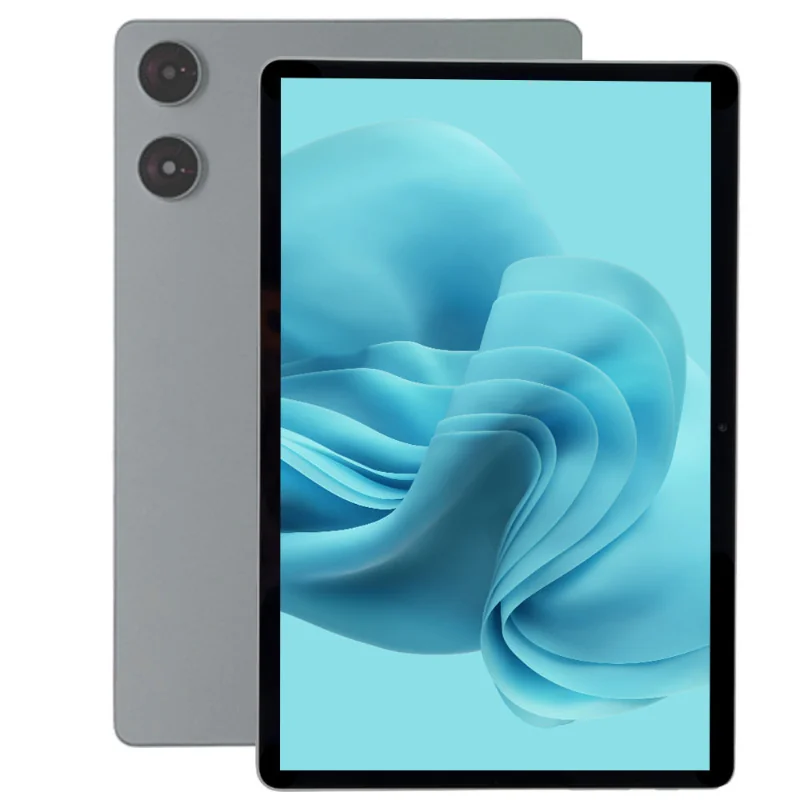
Want a GMS-certified Android 16 model with the paperwork to prove it? Our Wintouch A80 (Android 16, 10.1″, 4+64GB) ships GMS-certified with a full specsheet — or browse our business tablet range. Request a quote or a sample unit and we will send the GMS documentation, datasheet, and a compliance checklist along with it.