Why freezer-room tablets fail at −25 °C: the short answer
Most −25 °C tablet failures are four separate faults, not one. Cold cuts usable battery capacity while the heater spends charge to recover it; thermal shock condenses moisture on the glass and inside the housing; thick dry gloves break capacitive coupling; and pressure cycling pushes humid air past port seals. Each fault needs its own fix, test and RFQ clause.
The compliance context is what makes this a procurement problem rather than an IT annoyance. In EU and North American cold chains the tablet is the device that writes the picking and receiving record, and traceability obligations under EU food law and the US FSMA records rules are satisfied by data that a fogged, dead or unresponsive device never captures. A shift that falls back to paper creates exactly the record gap an audit looks for. So the question is not “which tablet is rated to −20 °C” but “which configuration produces a defensible record for a full shift at −25 °C with gloves on”.
Start by triaging what you actually saw in the trial:
| Symptom you observed | Most likely cause | First test to run |
|---|---|---|
| Runtime collapses in hours 2–4 | Capacity derating under load plus heater draw | Log battery percentage at start, mid and end of shift at −25 °C, heater on |
| Glass fogs on the first door crossing | Panel below dew point of dock air | Time seconds from crossing to clear screen and first successful read |
| Touchscreen ignores presses | Capacitive coupling loss through glove and cover glass | Test your own glove, at your glove thickness, on the actual unit |
| Unit dies or corrodes at the port | Pressure-driven moisture ingress, not a failed IP test | Inspect contacts and port-door gaskets at day 7 and day 30 |
One warning before anything else: a datasheet line reading “operating temperature −20 °C” is normally a self-declared, cell-level, discharge-only figure. It tells you nothing about heater draw, glove touch, condensation or door crossings. Treat it as a starting point for questions, not as a freezer-room qualification.
Symptom 1: runtime collapses in the first hours of the shift
The mechanism is well documented. Cold raises a cell’s internal resistance and reduces available capacity, and under load the voltage can sag below the device’s shutdown threshold before the capacity is actually exhausted — which is why usable runtime is often worse than the derated capacity number suggests. A published cold-chain scanning guide, citing Battery University BU-502, reports that a battery delivering full capacity at 27 °C typically delivers about half at −18 °C, with most batteries near 50 % at −20 °C (alvicstech.com cold-chain scanning guide). The same article offers a 10-hour room-temperature to 5-hour freezer example, but explicitly labels it an illustrative assumption rather than a measurement. Use it as a planning placeholder only; your own trial numbers replace it.
Cell chemistry is a real choice, not a marketing label. Energy-dense Li-ion variants and lithium iron phosphate (LFP) behave differently in cold, and LFP is generally the weaker cold-weather performer — but do not accept a percentage from any supplier without a curve. Ask for a discharge curve at −25 °C, under your load profile, at beginning of life and at end of rated cycle life.
Then charge the heater against that budget honestly. A heated pack spends energy to recover energy, so ask for heater wattage, thermostat setpoint and control logic (continuous, or triggered by temperature sensor), and the duty cycle the supplier expects in a −25 °C room. Subtract the heater’s consumption from the quoted runtime before you compare vendors — a pack with a generous heater can quote a shorter real shift than a smaller pack with a smarter control loop.
Finally, the charging rules that quietly kill fleets: charging a pack below 0 °C, putting a frozen pack straight onto a dock charger, and having no warm charging station or spare-rotation plan. If your site has no warm room near the freezer door, specify how many spare packs a shift needs and who rotates them.
Symptom 2: the glass fogs or frosts the moment the door opens
This is physics, not a defect. A panel at −25 °C carried into warm, humid dock air is below the dew point, so condensation forms within seconds; the reverse crossing frosts the surface. Three fixes exist, and they trade cost against thickness, weight and power:
- ITO film heater bonded to the glass — fastest clearance and the most effective on repeated crossings, but it draws from the same battery budget as the heater pack and adds a control circuit.
- Hydrophilic anti-fog coating — low cost and near-zero power, but it is a consumable that wears with cleaning and abrasion, so specify a reapplication interval.
- Air-gap or double-glazed stack — insulates the outer surface, at the cost of thickness, weight and often touch sensitivity, because the gap separates the finger from the sensor.
Free mitigations belong in the SOP as well: a holster or heated pouch at the door, a heater triggered on wake rather than by the operator, and a rule that nobody wipes a −25 °C panel with a warm cloth or sleeve. In the trial, do not ask operators whether the screen “stays clear”. Log seconds from door crossing to a visible scan window and a successful first read, at every transition.
Symptom 3: the touchscreen ignores thick freezer gloves
A projected capacitive panel detects a change in capacitance, and a thick, dry, fleece-lined or PVC glove decouples the finger from the sensor. Wet gloves behave differently again. Firmware glove mode raises the detection threshold and changes filtering — useful, but it costs a little power and can degrade wet-finger or bare-hand accuracy, so ask whether the mode is switchable and what it costs in runtime.
Hardware explains why a demo unit works and the fleet does not. Cover-glass thickness and the way the glass is bonded to the sensor stack — optical bonding versus an air gap — change how much signal reaches the sensor. Two units with the same “glove touch supported” line can behave completely differently.
Put a number in the spec: minimum and maximum glove thickness in millimetres, glove material, and whether the glove is dry or wet during the test. Reject “glove touch supported” as a statement with no number attached, and test with your own glove, not the supplier’s sample. Keep a physical fallback — hardware keys or a scan trigger — because one operator wearing a different glove on the night shift is enough to stop a line.
Symptom 4: a unit dies at the connector after a week of cycling
A fully sealed housing can still take on water. Repeated freezer-to-dock cycling creates a pressure differential across gaskets and port doors, pushing moist air inward; it condenses when the unit warms. Corrosion at the connector is the visible end of that process, and the unit often passes its IP test the whole time.
Compare four engineering options: a pressure-equalising ePTFE breather vent that lets the housing breathe without letting water in, a sealed pogo-pin dock replacing an exposed USB-C on the production floor, gasketed port doors with a defined open/closed condition, and conformal coating on the board. Clarify what an ingress rating means here: IP65 and IP67 describe specific test conditions under IEC 60529, they are normally supplier-declared, and they do not guarantee against condensation or corrosion. This is also where EU and US procurement files diverge — the declaration and test evidence you can put in a technical file differ from what a US buyer typically receives, so ask which documents exist per model, not just per factory.
Write these clauses into the RFQ so the answers are comparable
| Parameter | RFQ wording | How you verify it |
|---|---|---|
| Operating temperature | Continuous operation at −25 °C ambient, heater active, device under load — not discharge-only at cell level | Full-shift run at site temperature with heater on |
| Discharge evidence | Discharge curve at −25 °C at stated load, beginning and end of rated cycle life | Curve submitted with quote; compared to logged runtime |
| Heater | Heater wattage, thermostat setpoint, control logic and expected duty cycle at −25 °C | Measured runtime with heater enabled vs disabled |
| Charging | Charge temperature window in °C, and the supplier’s warm-spare rotation procedure | Charging log plus pack count per shift |
| Touch | Touch operation with gloves of stated material and thickness range (mm), dry and wet | Operator test with your own gloves, both hands |
| Glass clearance | Time-to-clear after thermal shock, stated as a target in seconds, method defined | Timed at every door crossing for the trial period |
| Ingress and breathing | Ingress rating with test standard named, port-door state during use defined, pressure-equalisation method stated | Connector and gasket inspection at day 7 and day 30 |
| Cold-duty warranty | Whether −25 °C use is inside the warranty, and what exclusions apply | Written confirmation before purchase order |
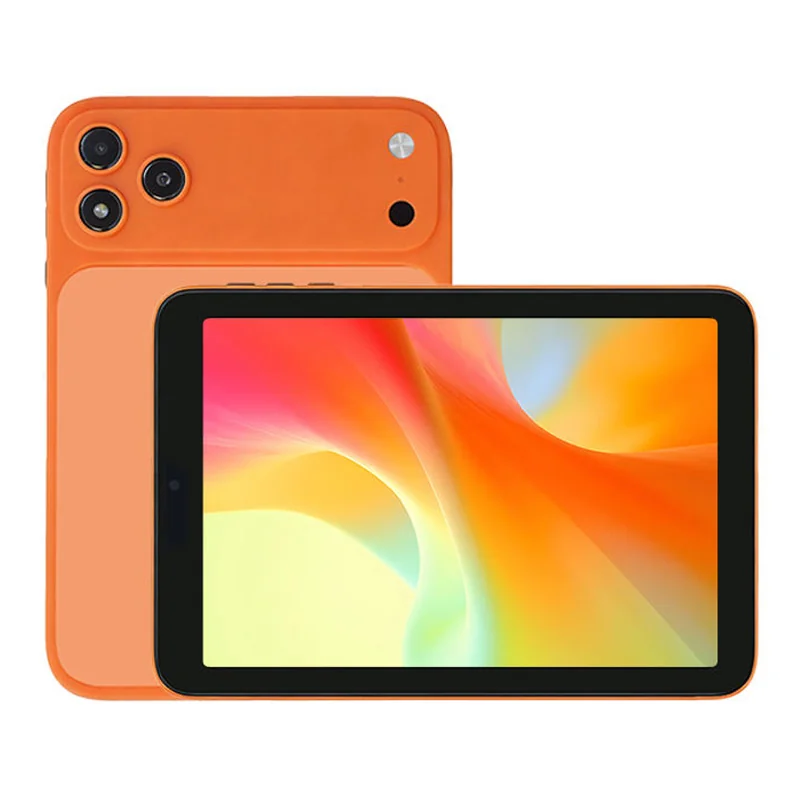
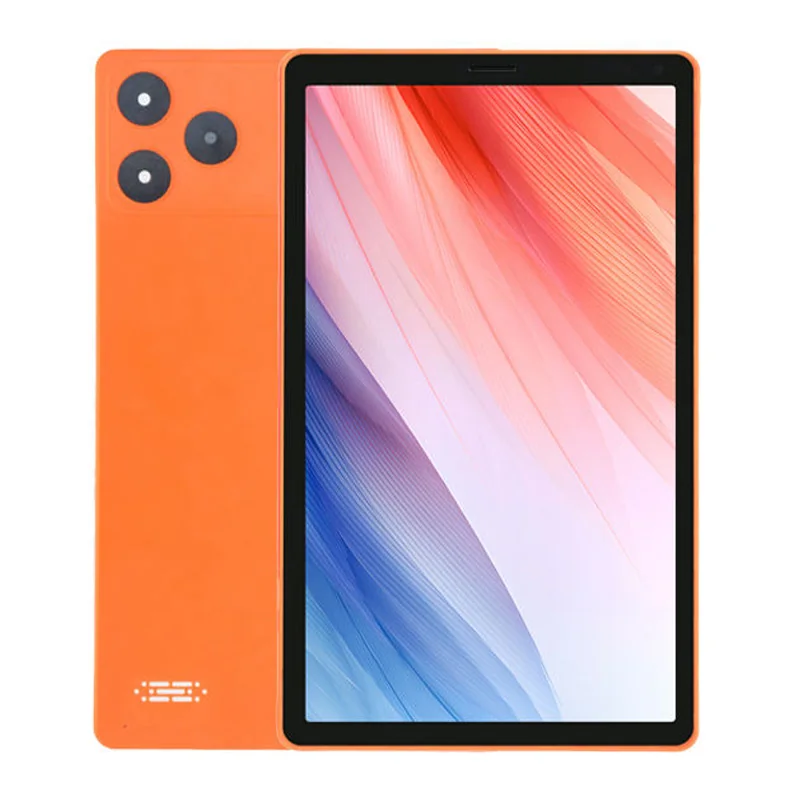
Platform choice sets the ceiling on all of this. Our Android tablet platforms, such as the 11.97-inch Snapdragon 685 business tablet and the 10.51-inch T616 business tablet, are the base hardware; cell chemistry, heater stack, glass treatment and connector sealing are specified per project against clauses like the ones above.
The 30-day trial protocol that produces evidence instead of opinions
- Run full shifts at the real temperature with the real number of freezer-to-dock transitions, recording battery percentage at start, middle and end of each shift.
- Time recovery after every transition — seconds until the scan window is clear and the first read succeeds — rather than asking whether it “seems fine”.
- Scan your actual labels, including frosted ones and stock that has been through freeze-thaw cycles, and log the first-read rate.
- Test with gloves on for touch input, on-screen keys and scan-trigger reach, using the gloves your night shift actually wears.
- Agree pass/fail thresholds in writing before day one, and count failures per unit-shift so one bad unit cannot be dismissed as an outlier.
- Inspect hardware at day 7 and day 30: connector contacts, port-door gaskets, seal compression, any green or white corrosion, photographed and logged.
Be clear about what this protocol cannot settle. It measures your site, your gloves, your label stock and your transition pattern; it does not replace a supplier’s cold-qualification data, and that data does not replace your trial. You need both, because vendor ratings are usually self-declared discharge figures and site trials are usually single-unit anecdotes.
Questions to put to your supplier before you commit
- Can you supply the discharge curve at −25 °C under load, at beginning and end of cycle life?
- What is the heater wattage, setpoint and expected duty cycle, and how much of the quoted runtime does it consume?
- Which glove materials and thicknesses have you tested, on which cover-glass stack?
- How does the housing equalise pressure during freezer-to-dock cycling?
- Is −25 °C continuous use inside the warranty, and what documentation supports the temperature claim?
- Can you provide a unit for a 30-day site trial under the pass/fail thresholds we agree?
Tell us your room temperature, shift length, transfer frequency and glove type so we can propose a freezer-room configuration and a sample for a cold trial. Send those four inputs and we will come back with a configuration proposal and a trial unit matched to your shift pattern.