Is Android POS replacing Windows POS in 2026? Yes. The Android POS terminal market reached $15.34B in 2024 and is forecast to grow at 27.2% CAGR to $133.72B by 2033 (SkyQuest). Three structural forces are driving the shift: Windows 10 POS support ended in 2025 leaving millions of legacy terminals unpatched; Android POS hardware costs 50–70% less than equivalent Windows industrial POS systems; and major POS ISVs (including Toast, SpotOn, and Lightspeed) now ship new features to their Android builds first, with Windows relegated to maintenance mode. For OEM buyers and brand owners sourcing from China, the migration represents both a timing opportunity and a spec-negotiation risk — hardware decided in 2026 will define the product’s competitive lifespan through 2030.
The Number That Changes Everything
In June 2026, Flagship Advisory Partners declared Android the “clear winner” of the POS terminal operating system wars. The data backs the headline: Android’s share of new payment-terminal deployments crossed 50% in North America in early 2026, and the trajectory points to 70%+ by 2028.
For OEM/ODM buyers sourcing from China — whether you are a European retail-chain distributor, a Latin American POS brand launching your first terminal, or a US-based ISV bundling hardware with your software — the Windows-to-Android transition is the single biggest product-line decision you will make in 2026. Get the spec, certification, and supplier right now, and you ride a 27% CAGR tailwind. Get it wrong, and you are holding inventory that the market has already moved past.
Why the Market Is Moving — Three Forcing Functions
1. Windows 10 POS — The Expiration Clock Has Run Out
Microsoft ended support for most Windows 10 Enterprise editions — including the WES and IoT variants widely deployed in POS terminals — in late 2025. Terminals still running Windows 10 today receive no security patches. For retailers handling payment-card data, this is a PCI-DSS audit failure waiting to happen.
The result: a forced replacement cycle that will cascade through 2026–2027. Multi-store operators are not choosing between Windows and Android — they are choosing between Android and an expensive Windows 11 upgrade that delivers little new value at 2–3× the hardware cost.
2. Android Hardware Cost — 50–70% Lower at Comparable Performance
A mid-range Windows industrial POS terminal with a Celeron processor, 4GB RAM, and a 15-inch touchscreen retails in the $500–$800 range. An Android POS tablet with equivalent or better real-world performance (octa-core processor, 6–8GB RAM, 10-inch touchscreen) lands at $150–$300 at OEM pricing.
The savings come from Android’s ARM-based SoC ecosystem: MediaTek, Unisoc, and Rockchip processors cost a fraction of x86 industrial motherboards, and the entire supply chain — touch panels, batteries, enclosures — is commoditized at scale.
3. ISV Investment — Android-First Is Now the Standard
Every major POS ISV is following the same playbook, according to Rospertech’s 2026 analysis:
- Stage 1 — Android Beta: Launched a “tablet companion” or “mobile POS” app
- Stage 2 — Feature Parity: Android build matches Windows build feature-for-feature
- Stage 3 — Android-First: New features ship to Android first, Windows gets them 3–6 months later
- Stage 4 — Windows Maintenance: Windows locked to security patches only, no new features
By mid-2026, most Tier-1 POS ISVs serving the US and EU markets are at Stage 3 or entering Stage 4. If you are sourcing hardware for an ISV-certified program, the certification path will increasingly require Android compatibility.
Android POS by Application — What Spec Goes Where
| Application | Key Hardware Requirements | Recommended Spec Floor | Typical OEM Price Range (FOB) |
|---|---|---|---|
| Retail POS (Countertop) | 10–15″ touchscreen, printer/scan bracket, payment module | 4GB RAM, 64GB storage, Android 13+, GMS certified | $120–$250 |
| Restaurant / Hospitality POS | Ruggedized, drop-resistant, splash-proof, dual-display option | 6GB RAM, 128GB, Android 14+, IP54 minimum | $180–$350 |
| Mobile POS / mPOS | Lightweight, LTE/5G, barcode scanner, built-in NFC payment | 4GB RAM, 64GB, Android 13+, PCI PTS 6.x ready | $100–$200 |
| Self-Service Kiosk | 7×24 operation, high-brightness panel, Ethernet, remote management | 6GB RAM, 128GB, Android 14+, 500nit+ brightness | $200–$400 |
| Digital Signage POS (POP) | Large display, media playback, CMS client pre-installed | 4GB RAM, 64GB, Android 13+, WiFi 6, 1080p+ | $90–$180 |
Certification Roadmap — What the Factory Should Pre-Certify
Unlike consumer tablets where the buyer handles compliance, POS hardware enters a regulated payment environment. These certifications should be confirmed with your OEM before tooling:
| Certification | Applies To | Lead Time | Who Pays |
|---|---|---|---|
| CE / UKCA | EU + UK | 2–4 weeks | Factory (typically) |
| FCC / IC | US + Canada | 2–4 weeks | Factory (typically) |
| Google GMS | Global (Play Store, Google Maps, Gmail) | 6–12 weeks | Factory + Google fee ($10K/sku) |
| PCI PTS | Secure payment processing | 12–24 weeks | Buyer (terminal-level, not factory) |
| EMV Level 1/2 | Chip-card acceptance | 4–8 weeks per kernel | Buyer + payment processor |
| UL / ETL | US safety (optional but recommended) | 4–8 weeks | Shared |
Key insight: Android POS terminals certified with PCI PTS 6.x go through certification cycles 30–50% faster than equivalent Windows terminals because the Android SDK stack is shared across hardware variants (Ingenico / Verifone / SUNMI / unbranded OEM). If your ISV plans to certify on Android, the certification cost per SKU drops significantly.
Windows vs Android POS — The 2026 Decision Matrix
| Decision Factor | Windows POS | Android POS |
|---|---|---|
| Hardware cost (mid-range) | $500–$800 | $150–$300 |
| Security patch frequency | Monthly (Windows Update) | Quarterly (OEM + Google) |
| ISV app ecosystem | Legacy, maintenance mode | Growing, Android-first |
| Payment certification speed | Slower (per-OEM driver stack) | Faster (shared Android SDK) |
| Remote management (MDM) | 3rd-party tools | Native Android Enterprise + zero-touch |
| Multi-region SKU complexity | High (per-region hardware OEM) | Low (one Play Store build) |
| Supply chain availability (2026) | Constrained, long lead times | Commoditized, 25–35 day lead |
Five Risks OEM Buyers Must Navigate (and How to De-Risk)
- Android version fragmentation. Not all Android POS terminals ship with the latest OS. Insist on Android 13+ minimum — Android 10/11 terminals will not pass Google GMS certification for new builds after 2026.
- GPU/decoder bottlenecks for kiosk use. If your terminal runs 4K video loops or heavy animation, verify the SoC supports hardware decoding (H.265, VP9). Allwinner and entry-level Rockchip SoCs may struggle.
- PCI scope creep. Android’s open ecosystem means anyone can side-load apps. If your terminal processes card data, require the OEM to lock the bootloader, disable USB debugging in production firmware, and support verified boot.
- Battery safety for mobile POS. CE and FCC do not cover battery safety. Request UN38.3 and IEC 62133 reports for any terminal with a built-in battery. Shipments held at customs for missing battery certs cost $500–$2,000 per container in demurrage.
- MDM compatibility. Confirm MDM enrollment works before production — some white-label Android builds strip Google Play Services components that Android Enterprise requires.
Why OEM Sourcing from Wintouch Makes Sense for Android POS
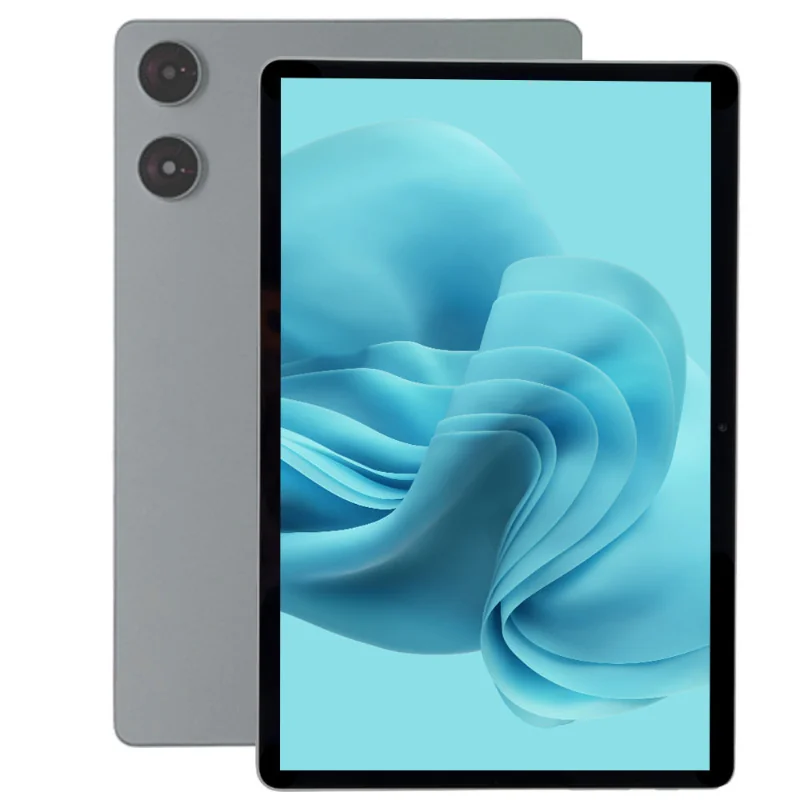
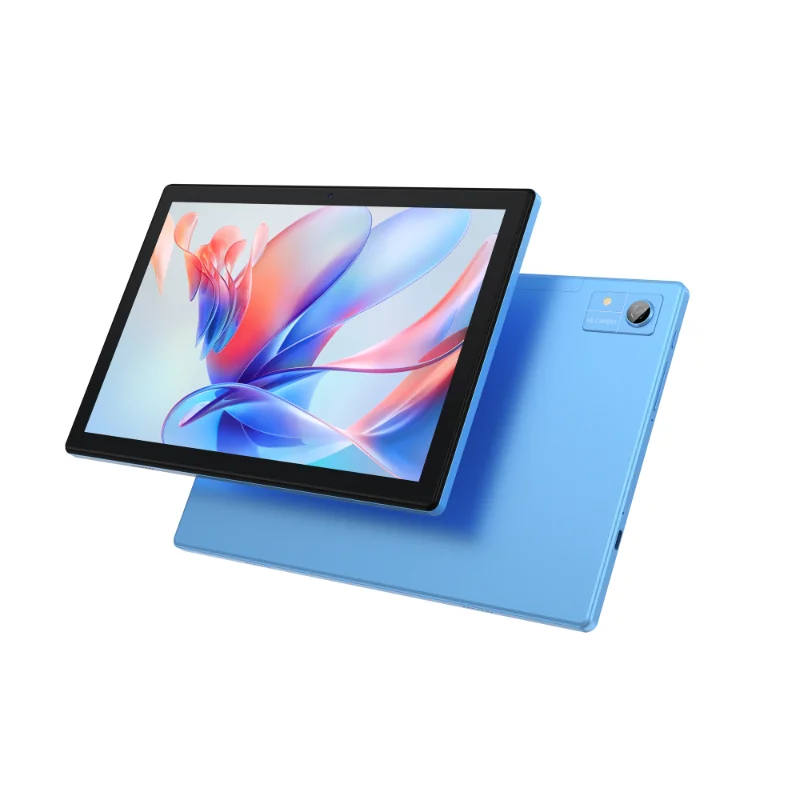
Wintouch’s business-tablet lineup — including the A80-A (10.1″, 4G LTE, 6000mAh), the A50 (10.1″, Android 13, 5000mAh), and the A136 Premium (MTK G99, 8GB RAM, 2K display) — ships with Android 12–16, Google GMS pre-certified, and supports Android Enterprise zero-touch enrollment. All models are available for OEM/ODM customization: firmware branding, pre-loaded POS/kiosk apps, custom Launcher, NFC module integration, and PCI-ready boot-lock.
For volume buyers (500+ units), Wintouch offers direct factory pricing, certification support (CE/FCC/GMS), and full spec-sheet transparency before tooling.
Your Next Step
The Windows-to-Android POS migration is not a future trend — it is the dominant procurement cycle of 2026–2027. Whether you need a 10″ countertop POS tablet, a ruggedized restaurant terminal, or a kiosk-grade Android base station, the OEM partnership you choose now will determine your cost position and certification timeline for the next 3–5 years.
→ Request a quote or sample for your Android POS project. Include your target market (EU / US / LATAM / SEA) and approximate volume, and we will recommend the optimal hardware-configuration + certification package within 48 hours.
Sources: SkyQuest Android PoS Market Report 2025; Flagship Advisory Partners “Android is the Clear Winner” June 2026; Rospertech POS Migration Guide 2026; YCR Distribution Android POS vs Windows 11 POS analysis 2026.