AI Learning Assistants in Classrooms: Who Owns the Compliance Risk — School, EdTech Vendor, or Tablet OEM? (2026)
Generative AI did not change the question of who owns child-data compliance in education — it changed the number of parties who can be blamed. When an AI learning assistant runs on a tablet in a classroom, the risk is no longer held by a single operator. It is a compliance chain: the school, the AI/EdTech app vendor, and the tablet OEM each carry a distinct, non-transferable slice of FERPA, COPPA, GDPR-K and EU AI Act exposure. For a buyer sourcing education tablets, the smart purchase is not the cheapest device — it is the vendor chain that can document a defensible compliance posture for every party on the RFP.
Why the default answer — “the school is responsible” — is dangerously incomplete
Most distributors assume that because FERPA and COPPA bind the school or the online service operator, the hardware vendor can stay out of it. In practice, three forces collapse that assumption:
- COPPA now has teeth and a 2025 date. The FTC’s amended COPPA Rule went into effect June 23, 2025 — the first major update since 2013. It tightens the definition of personal information, adds new verified-parental-consent requirements, and the FTC explicitly did not create a blanket “school-authorized” exception. Operators that rely on school consent must verify it directly. [1]
- FERPA pushes accountability down the chain. When an AI tool accesses education records, the school must execute a data protection agreement (DPA) with the vendor — with purpose limitation, a no-model-training clause, breach notification, and a re-disclosure prohibition. That DPA is where the risk formally transfers, and it names every party in the chain.
- EU AI Act adds a transparency layer. AI systems that interact with minors trigger transparency obligations, and certain uses can be treated as prohibited practices. Education is classified as a high-risk application domain, and Article 50 transparency duties take effect in stages. The EU/UK education market is no longer “COPPA plus GDPR” — it now includes an AI-specific compliance layer. [2]
The result: the school, the app vendor, and the tablet maker are a compliance chain, not independent actors. A buyer that buys hardware without understanding that chain is buying the chain’s weakest link.
What the OEM actually controls — and what it must refuse
When an OEM signs an education tender, the pressure is to accept “full compliance responsibility” clauses. A disciplined OEM does the opposite: it scopes hardware responsibility to what it can verifiably deliver, and it refuses the rest.
- A kid-safe device baseline: a parental-controls layer that works out of the box (time limits, app allow-lists, web filtering) so the school can configure the fleet without depending on a single AI app vendor.
- Per-tenant lockdown: the ability to flash or configure each unit to a school-approved app profile — this is what lets a district say “we control what runs on the device.”
- Encryption and deletion support: hardware and OS hooks for full-disk encryption and secure, verifiable data deletion at contract end — the two things FERPA/GDPR-K DPAs always require.
- A clean liability line: the OEM certifies the device and its own software, and points third-party AI-app compliance at the app vendor. Signing “OEM liable for everything on screen” is how a hardware maker becomes the target of a classroom data incident it never controlled.
What belongs in the school’s RFP before tablets ship
For education distributors and procurement leads, these are the clauses that separate a defensible tender from a liability time-bomb. Put them in writing before the PO:
- Data ownership: the district owns all student data, not the vendor or the OEM.
- Strict usage limitation: data used only for the agreed educational purpose — no advertising, no profiling, no model training.
- DPA coverage: every vendor whose software touches student data signs a DPA with purpose limitation, breach notification, and re-disclosure prohibition.
- AI disclosure: each AI feature must be disclosed, described, and risk-assessed before deployment — no silent “we added an assistant” updates.
- Deletion on termination: full deletion, including backups, with proof, when the contract ends.
- Verified parental consent (US): where COPPA applies, the 2025-approved consent methods are in place and documented.
FAQ: AI learning assistants and education compliance
Who is primarily responsible for an AI learning assistant in the classroom? No single party. The school, the AI/EdTech app vendor, and the tablet OEM form a compliance chain. The school and app vendor carry most FERPA/COPPA/GDPR-K duties; the OEM is responsible for the device baseline (parental controls, per-tenant lockdown, encryption, verifiable deletion) and must not sign clauses that extend its liability to third-party apps.
What did the 2025 COPPA amendment change for schools? The FTC’s amended COPPA Rule took effect June 23, 2025 — the first major revision since 2013. It broadens the definition of personal information, tightens verified-parental-consent methods, and the FTC did not create a blanket school-authorization exception, so operators relying on school consent must verify it directly. [1]
Does the EU AI Act treat education AI as high risk? Yes. Education and vocational training is among the high-risk application domains under the EU AI Act, and AI systems that interact with minors also trigger transparency obligations under Article 50. Any education AI sold into the EU/UK needs a documented transparency and risk-assessment posture, not just a GDPR privacy notice. [2]
If the OEM only supplies hardware, does it still carry data-compliance liability? The OEM carries hardware-layer responsibility — the kid-safe baseline, lockdown, encryption and deletion capabilities — and must scope its liability to what it actually controls. It should refuse “liable for everything on screen” clauses and direct third-party AI-app compliance to the app vendor.
Compliance is a buying decision, not a feature
The 2026 education tablet buy is no longer “which screen and battery.” It is “which vendor chain can produce a defensible FERPA/COPPA/GDPR-K/AI-Act posture for every party on the RFP.” A tablet with a great screen but no verifiable delete path is a procurement liability dressed as a spec sheet.
Next step: scope your compliance position before you price a tender
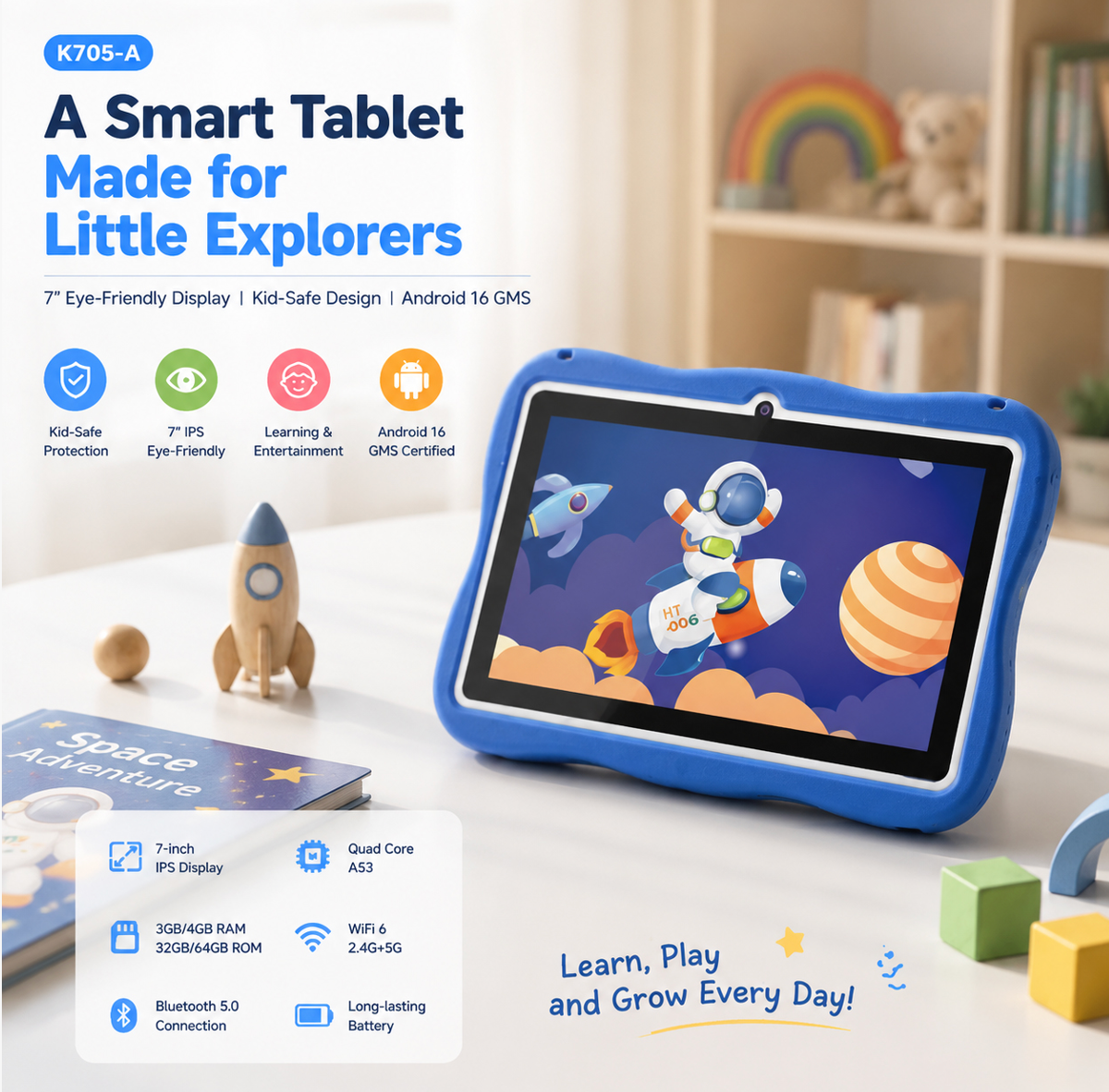
If you are sourcing education tablets for schools or government bids, start from the responsibility map above, not from a spec sheet. We build kid-focused Android tablets with parental controls and per-device configuration, and we scope our liability line to what we verifiably control.
Get our education-tender readiness pack — the RFP clause list and compliance mapping template — plus a sample T755 kids tablet configuration. Request a quote or sample and tell us the school market and AI apps you plan to run; we’ll map the responsibility split before you price the tender.